


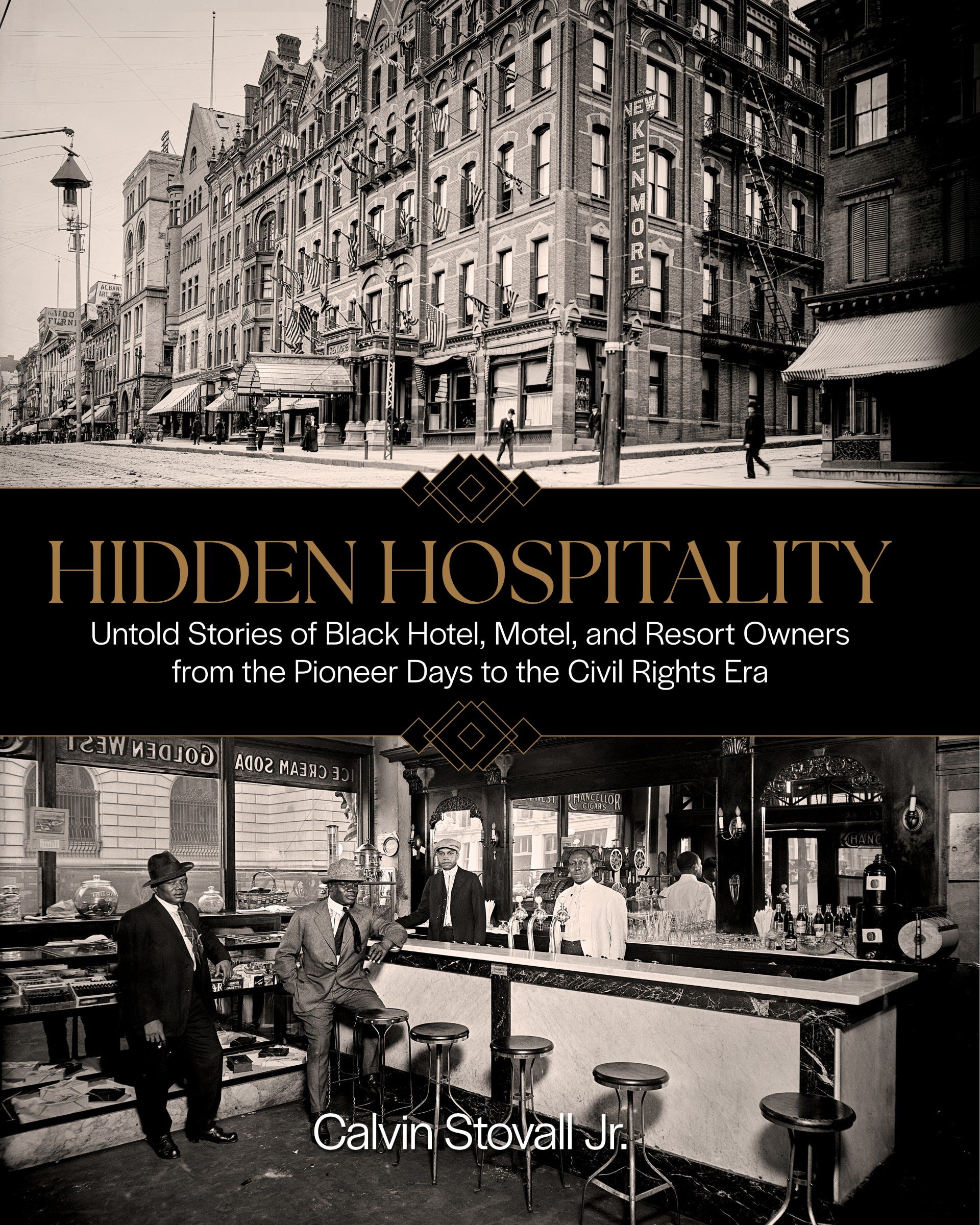
The long shadow of the interstate, with its predictable string of neon-lit chains, often obscures the quieter, harder-won landscapes of American travel. Yet, it is within these forgotten contours that Calvin Stovall, in his meticulous and moving new book, Hidden Hospitality: Untold Stories of Black Hotel, Motel, and Resort Owners from the Pioneer Days to the Civil Rights Era1, invites us to pull over and look closely. Stovall, a veteran observer of the industry and a narrator of uncommon grace, hasn’t just written a history; he’s provided a vital map to a world built on defiance and grace, where the simple act of offering a clean room and a warm meal was, quite often, a radical political statement.
The prevailing narrative of mid-century travel is a grim taxonomy of exclusion, defined by the “sundown towns” and the notorious, yet necessary, Green Book2. Stovall, however, shifts the focus from the act of being denied to the profound effort of creating. His subjects are not merely footnotes in the Civil Rights struggle, but economic architects who carved out havens—sometimes opulent, often humble—where Black travelers could find dignity, safety, and community.
Consider, for instance, the remarkable figures who ran resorts like Idlewild, Michigan, or the entrepreneurs who maintained sophisticated establishments in the heart of bustling Northern cities. They navigated a financial landscape designed to crush them, securing mortgages with difficulty and fighting off discriminatory practices while simultaneously training staff, managing supply lines, and maintaining a standard of service often superior to their white counterparts. Stovall captures the duality of their existence: they were business owners chasing the American dream, but their very survival was an act of civic responsibility, ensuring that teachers, doctors, musicians, and families could move across a hostile nation.
Stovall’s prose is neither sentimental nor academic. It possesses a cool, investigative rigor that unearths the granular details—the invoices, the advertisements, the personal letters—that bring these forgotten figures to life. We read not just about the grand openings, but the persistent, everyday labor: the constant fight to maintain plumbing, the challenge of securing liquor licenses, the delicate dance of serving an elite clientele while supporting the local community.
The book’s emotional core resides in the understanding that this “hidden hospitality” was about more than commerce. These hotels and motels often served as clandestine meeting spots for activists, a vital logistical network for the movement, and, crucially, as incubators of Black middle-class aspiration. They offered a glimpse of an America where service and entrepreneurship transcended the strictures of Jim Crow.
Hidden Hospitality is a necessary corrective, challenging the facile notion that Black agency in America was solely reactive. Stovall shows that long before the sit-ins, there were check-ins—small, continuous acts of self-determination that built an infrastructure of refuge. It is a stirring, artful chronicle that reminds us that true history often resides not in the grand pronouncements of leaders, but in the quiet, persistent work done behind the counter. Calvin Stovall has given us the keys to these lost establishments, and in doing so, unlocked a fuller understanding of the American journey itself.
Hear Calvin Stovall’s story on Spotify and wherever you get your podcasts.
Sources:
https://www.barnesandnoble.com/w/hidden-hospitality-calvin-stovall-jr/1146347081?ean=9781612547114
https://www.ebsco.com/research-starters/history/sundown-town