

Sponsored by 3137 Capital
Good morning. Phew, what a wild 7 days! I’m still digesting the events but I’m all ready to jump in…
Be First —
I have to start here first.
Elections are also economic events, and last week’s midterms matter for travel in ways that have little to do with who you voted for. Democrats won control of both the House and the Senate, with a couple of Senate races still being counted. That produces divided government, which markets have historically found perfectly tolerable, mainly because it tends to mean fewer surprises. For travel, I’d split the consequences into what Congress can change and what it can’t. Congress controls the money, and the first deadline is close: government funding runs out on December 11, and the U.S. Travel Association wants it renewed, along with permanent protection for TSA officers’ and air traffic controllers’ pay during any future shutdown, before the holiday rush rather than in the middle of it. Next year, the industry’s wish list includes renewing and fully funding Brand USA, the country’s tourism marketing body, lowering visa fees and speeding up visa processing, and modernising air traffic control. Some industry voices also hope a stronger check on the White House will soften the U.S.’s image abroad, which a Louisiana tourism official at WTM London said “would certainly boost” it. I’d be more cautious.
Tariffs, border procedures and immigration enforcement remain largely in the president’s hands, and Miami International’s aviation director made the case that high fuel prices and the rising cost of travel are doing more damage than politics. The numbers show how much ground there is to make up. U.S. Travel now forecasts international visitor spending to fall nearly $11B this year, or 6.3%, to $163B, and expects international arrivals not to regain 2019 levels until 2030, while France, Spain and Japan have pulled well ahead. As Canadian visits have already shown us, price cuts don’t bring back visitors who feel unwelcome.
The election gives the travel industry a more receptive audience in Congress, not a new policy, and I’d treat the December 11 funding deadline as the first real test of whether that difference matters.
My immediate comment / reaction on the recent 2026 midterm election results can be found here👇🏾
America Chose “Host”

The English words “host” and “hostile” descend from the same ancient root, a word that meant, roughly, a stranger: someone with whom you had to decide, at the threshold, what kind of relationship to have. Every country makes that decision over and over, at airports and border crossings and the windows of consulates, and for two years the United States h…
Be Smarter —
Airports like to present themselves as neutral infrastructure, but anyone who has looked at slot and terminal allocation knows they are also in the business of picking winners. Heathrow, as Simple Flying reports, citing Sky News, has told Delta to move from Terminal 3 to Terminal 4 in 2028, which would separate it from joint venture partner Virgin Atlantic for the first time since 2016. Heathrow’s case is about efficiency across the whole airport: it says the reshuffle adds capacity, eases congestion and controls costs, and that airlines carrying 81% of its passengers support it. I’d note that a vote weighted by passenger numbers is one that the largest airline at the airport is well placed to win. Delta’s chief executive, Ed Bastian, has now made his view clear in a LinkedIn post, calling the decision “short-sighted, deeply disappointing and bad for airline consumers,” and saying that splitting the two airlines “undermines years of investment.” His central argument is about competition. I find it a smart tactic to call out an issue, seemingly out of a firm’s control, to clear any potential frustrations in the future.
The British Airways-American Airlines joint venture already carries close to 70% of Heathrow-U.S. traffic, and Bastian presents Delta and Virgin as UK consumers’ “valuable competitive alternative across the Atlantic.” Separating them adds friction for exactly the transfer passengers that alternative depends on: longer connections, an extra security check, and premium customers losing the Clubhouse and Upper Class Wing. One source described the move to Sky News as “one monopoly reinforcing another monopoly.” When both partners of a joint venture vow to fight in almost identical terms, Bastian promising to “pursue all available remedies” and Virgin’s Corneel Koster weighing “all available options,” I take it as a fairly reliable sign that the lawyers have already been briefed. That fight could go to the Civil Aviation Authority, the Competition and Markets Authority or the courts.
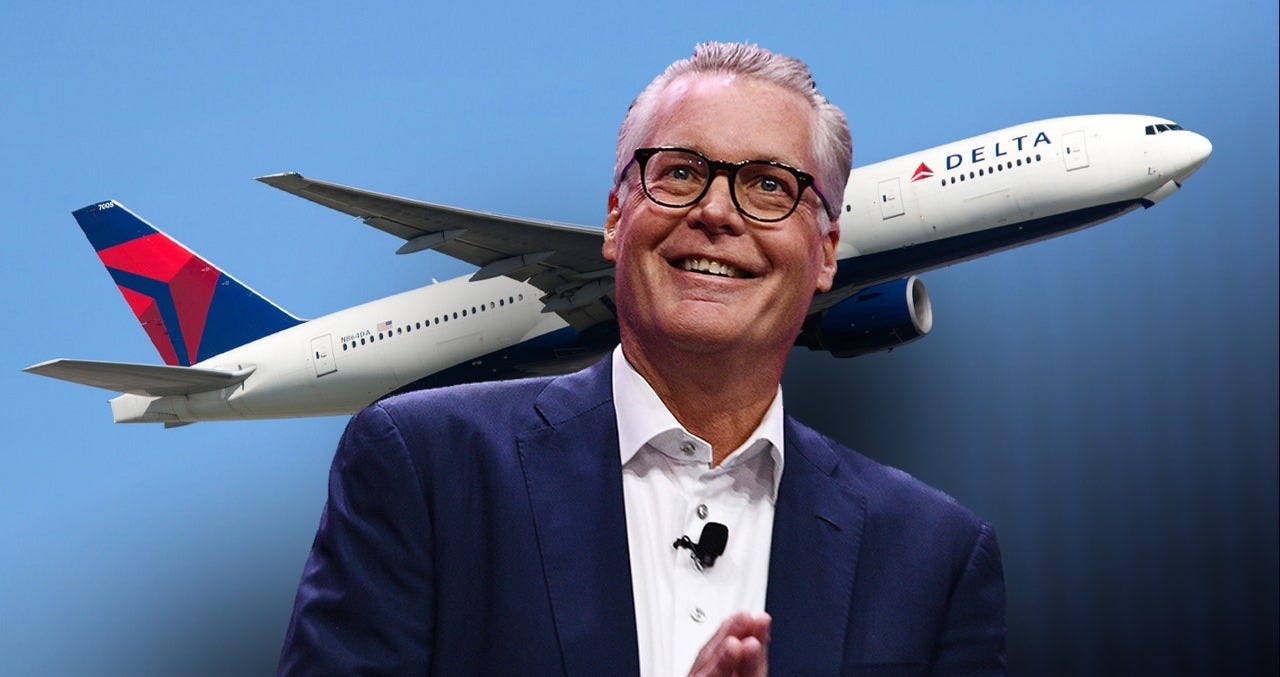
The lesson is that a joint venture’s value depends partly on how easy it is to connect between its partners’ flights, and that is set by the airport as much as by the agreement. I’d expect transfers at Heathrow to get slightly worse before anyone resolves whether they should. And with a third runway still years away, the airport is likely to keep using terminal allocation to manage a shortage of space, with airlines left to argue over who gets the inconvenience.
Or Cheat —
Now, I don’t golf although, I’ve always thought sports leagues are the purest test of the old line about markets staying irrational longer than you can stay solvent. LIV Golf has now shown what happens when the irrational money stops. According to reporting on its bankruptcy hearing, the Saudi-backed league is winding down after BC Partners walked away from a proposed $300M rescue that would have funded a slimmed-down “LIV 2.0.” That came after the Public Investment Fund, Saudi Arabia’s sovereign wealth fund, which had put an estimated $5B to $6B into the league in under five years, stopped paying in April. LIV filed for Chapter 11 on September 8, its lawyers told the court they are now “toggling to a value-maximizing wind down,” and there will be no 2027 season, a simple cheat. For those keeping score, that’s roughly $1B a year to build a league that couldn’t raise a twentieth of one year’s spending to save itself, while still finding $15.6M in retention payments for seven executives.
The loss is more concrete than the economics. LIV Adelaide was one of the few genuine successes: attendance grew from 77,076 in 2023 to 115,000 over four days this February, a national record for professional golf in Australia, backed by South Australian public money and contracted to stay through 2031. The 2027 event at Kooyonga is now off, and South Australia’s premier, Peter Malinauskas, summed it up as “game, set and match.”
The one I’d give any tourism board that pays to host events: the hotel nights and flights an event brings in are only as dependable as whoever is paying for the event, and this one depended on a single investor that stopped paying.
Stay blessed and focused! ✊🏾 Margin Call is issued weekly on Tuesdays, found only on Pay Me in Plane Tickets!