


Sponsored by 3137 Capital
Good morning. Welcome back to the grind, after the holidays left us with much to discuss and dissect. The flights continued to take off, the hotels enjoyed some bookings, simply, the world didn’t stop.
Be First —
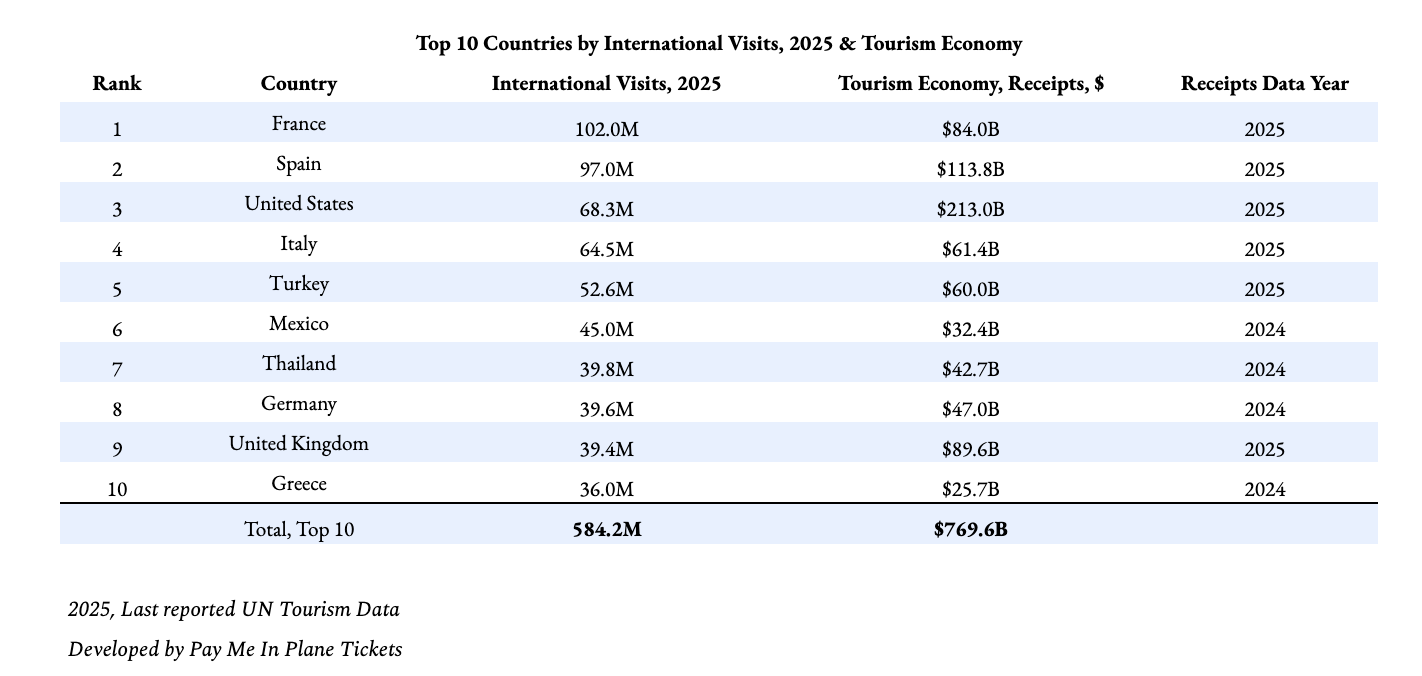
We missed the “meeting of the minds” when travel executives met with President Trump and a few administrators to discuss possibly reaching 100 million international visitors by year, 2030.
Ambitious without a doubt. Currently, the US rests around 68 million international visitors recorded in year, 2025. 86% of the pre-pandemic average but 5.5% decreasing year over year. With this moving trend, it goes without saying that the US will have to shift towards becoming a favorable destination especially to international visitors to fill the 32 million travelers gap. So who invented the 100 million international visitors goal?
Well, the formula isn’t rooted in much of any mathematical basis — as in, it’s not following a normal growth percentage that would be applied to annual tracker for international visitors. But rather, rooted in vanity. The rub is that France and Spain take the top two spots with 102 and 97 million international visitors in year 2025. As always the goal with the administration is to be first, not proper. Its kwahsawn not kruhsahnt. I’d assume that the administration baked into the model expectations that France and Spain are on the decrease along with the middle stragglers.
Although, the data shows that France and Spain shouldn’t be the US’s concern, if we focus soley on the competitive field. While the US is only netting 68 million international visitors, the US remains the world largest tourism economy. But for how long, China’s major post-pandemic rebound, China is currently on track to overtake the US by 2036 as the world’s largest tourism economy.
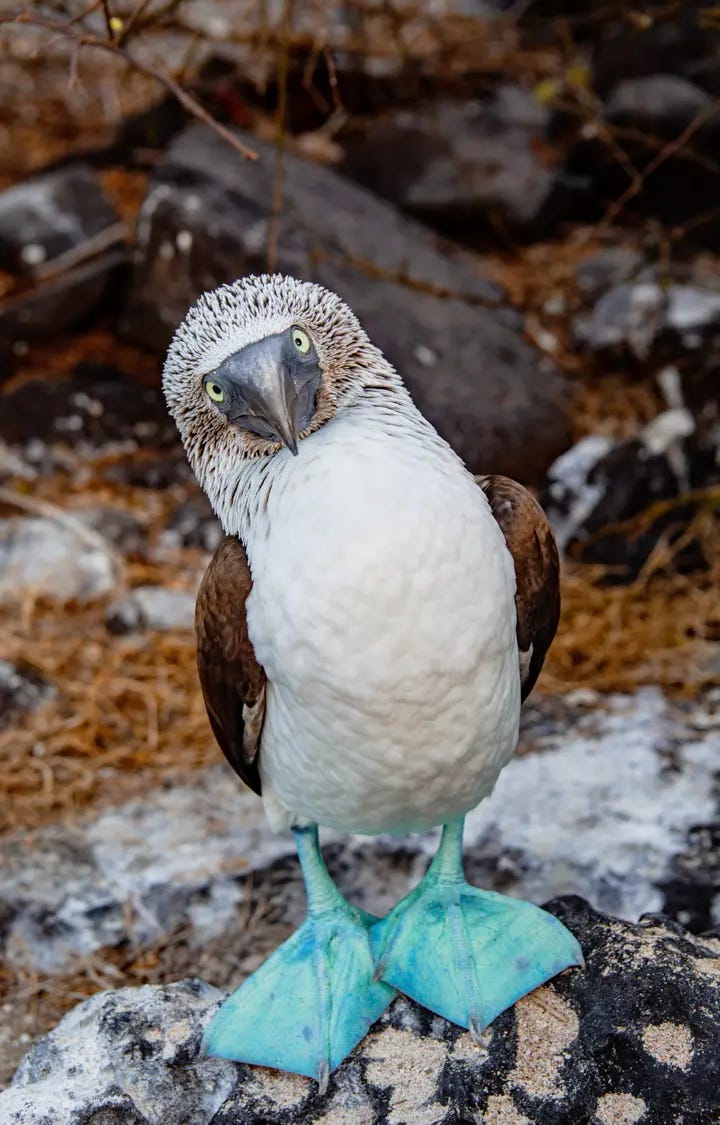
And we could focus on the proposed benefits of the 100 million international visitation goal figures such as an additional $81b in spending or the 400K American jobs to be added. But it would be nonsensical. Like all the proposed benefits if I had $100M deposited into my bank account such as finding the cure for rabies in blue footed boobies whom exist exclusively on the Galapagos coast.
Be Smarter —
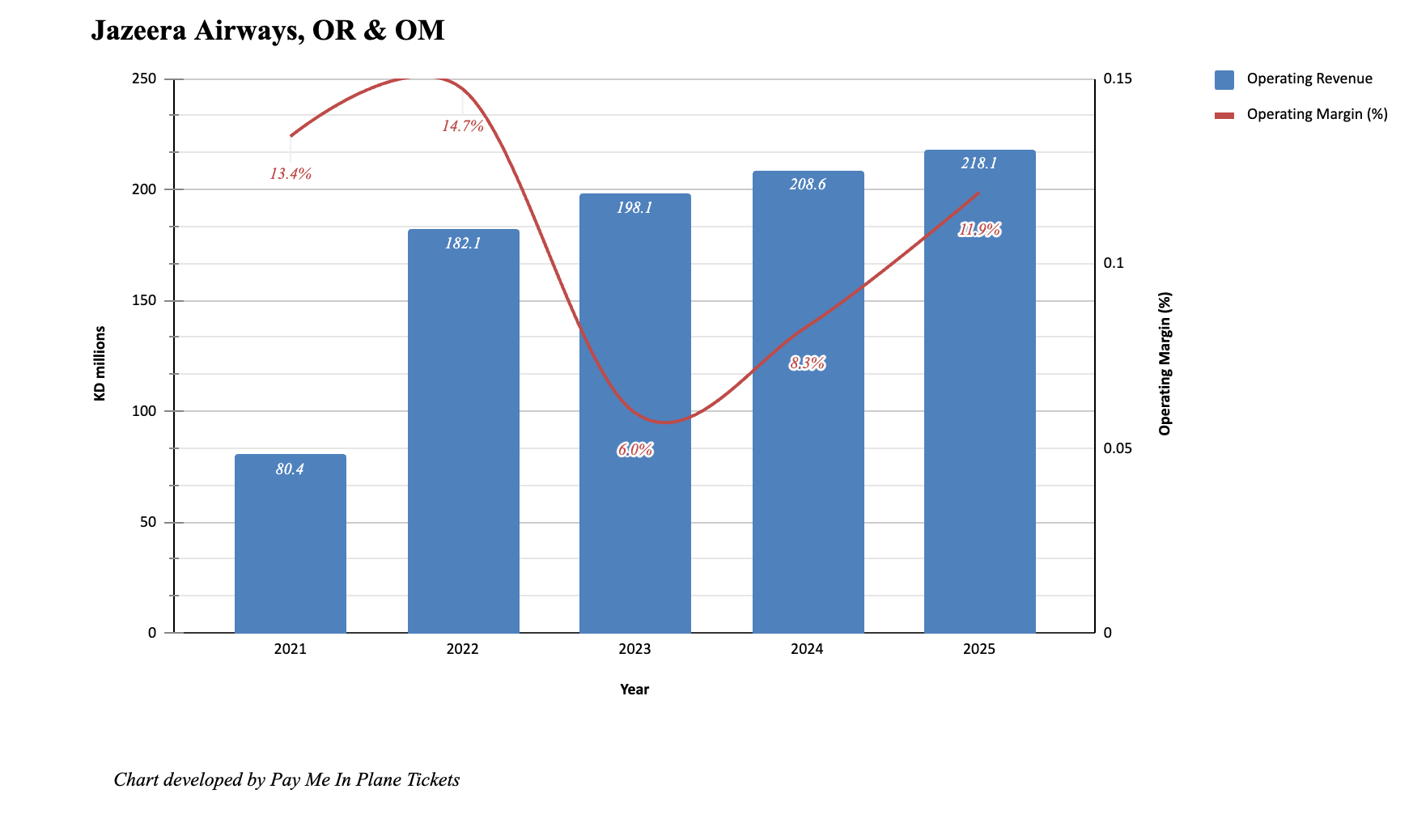
I found it interesting that Jazeera Airways just posted the best operating margin of any airline to report this earnings season, which is the kind of sentence that usually comes with an asterisk the size of a 787. Here’s the asterisk: the Kuwaiti low-cost carrier flew 44% fewer seats in the second quarter than a year earlier, after its home hub, Kuwait International Airport, shut down for part of the quarter amid regional instability. Flying half as much is not, generally, an airline’s preferred growth strategy. And yet Jazeera grew group operating revenue 46% year-on-year, landing a 17% operating margin — a number most full-service carriers would frame and hang in the boardroom.
The trick, if you can call supply and demand a trick, is that an airport closure is an excellent way to make your remaining seats feel exclusive. With half its network grounded, the flights Jazeera did operate were suddenly in high demand, and fares climbed to match — no fare sale, no seat-filling gymnastics required. It’s a useful reminder that airline profits depend less on how many seats you fly and more on your nerve about what you charge for the ones you’ve got, and Jazeera apparently had plenty of nerve to spare. The real test comes once Kuwait’s airport reopens fully and the airline has to prove it can be just as profitable with all its planes back in the air — thriving on scarcity is one thing; thriving on abundance is the harder trick. Jazeera will have to be smart when navigating this eventual change.
Or Cheat —
Here’s the trouble with boutique hotels: the thing that makes them lovable is the thing that makes them sellable. Take Sharan Pasricha. He built The Hoxton out of one hotel in Shoreditch, made it into one of the defining brands of its type, and then — sensibly, in this columnist’s view — merged it into Accor’s lifestyle arm in 2021, keeping a third of a company now worth, per the bankers Accor has hired to explore a New York listing, somewhere between $3.4bn and $5.8bn. He also still owns Estelle Community, three hotels, fully his, no board to answer to. One man, two structures, and the contrast tells you most of what you need to know. Skift’s Rafat Ali details the trend perfectly, Hilton has bought Graduate and NoMad, Hyatt has bought Standard International, Marriott has bought citizenM, and in every case the buyer wants the same narrow slice: the name, the management contracts, the pipeline. Not the buildings. The founder keeps those. Which is another way of saying the big chains have figured out it’s cheaper to let small, talented people invent the next cool hotel brand than to invent it themselves — and then simply buy the invention once it works.
Is it a cheat? And why do founders take the deal? Not, mostly, because they’re tired of it, though I’m sure some are. It’s distribution, and distribution is boring, and boring is usually where the real explanation lives. An independent hotel gives up 15 to 25 per cent of every booking to the OTAs; Marriott or Hilton can offer a lower toll road and tens of millions of loyalty members who’ll book direct. At some point that gap stops being an inconvenience and starts being the whole argument. The holdouts — Firmdale, Peninsula, Oberoi, Oetker, Hoshino — aren’t holding out through force of personality. They’re holding out because somebody, usually a family, owns the real estate outright and isn’t on a fund’s clock. That’s the asset that patient capital actually buys: time. And it’s precisely the asset that gets stripped out of the asset-light deals that make a brand easy to acquire in the first place — which leaves the open question, one I don’t think the industry has answered yet, of whether a big hotel company can buy “taste” thirty hotels at a time and still have any left by hotel three hundred.
Glad to be back at the desk, I love that we all grind in this industry. ✊🏾 Margin Call is issued weekly on Tuesdays, found only on Pay Me in Plane Tickets!
“Distribution is boring, and boring is usually where the real explanation lives” - yep. The founder creates the taste; the chain buys the toll road around it 😅 The hard part isn’t scaling rooms. It’s scaling without turning the thing people loved into a loyalty-program skin.