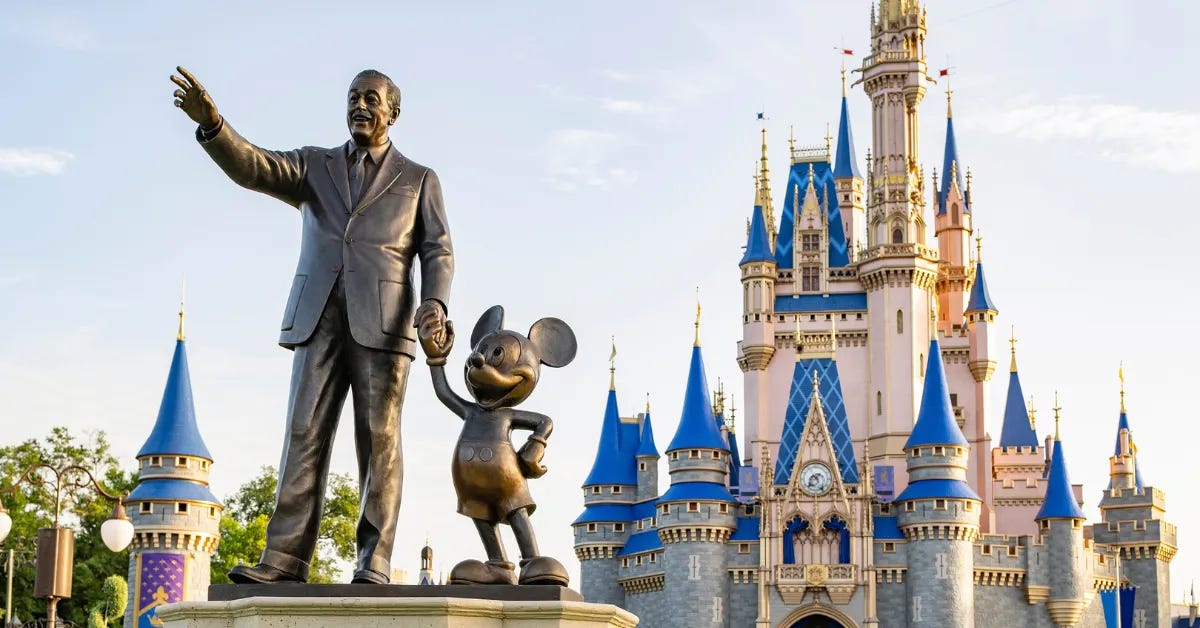

On a Tuesday morning in late February, a family of four from Columbus, Ohio, arrived at the Magic Kingdom’s main gate to discover something that would have been unthinkable to their parents: each of their tickets — booked months in advance, purchased during what Disney’s website cheerfully called an “off-peak” window — had cost them a hundred and forty-nine dollars. Per person. For a single day. They had not budgeted for Lightning Lane. They did not know, until they were standing beneath the spires of Cinderella Castle in the already-thickening crowds, that not purchasing Lightning Lane essentially meant surrendering themselves to a kind of slow, ambient suffering, waiting two hours for a ride that lasted four minutes, watching other guests glide past them in a separate, faster, quieter queue, as if invisible to the same gravity.
This is the experience that Walt Disney World now sells: not quite equality, and not quite magic, but an elaborate, tiered system of access — one that mirrors, with uncanny precision, the broader architecture of American economic anxiety in 2026. You can be in the park. You just can’t quite be in the park.

A Kingdom and Its Discontents
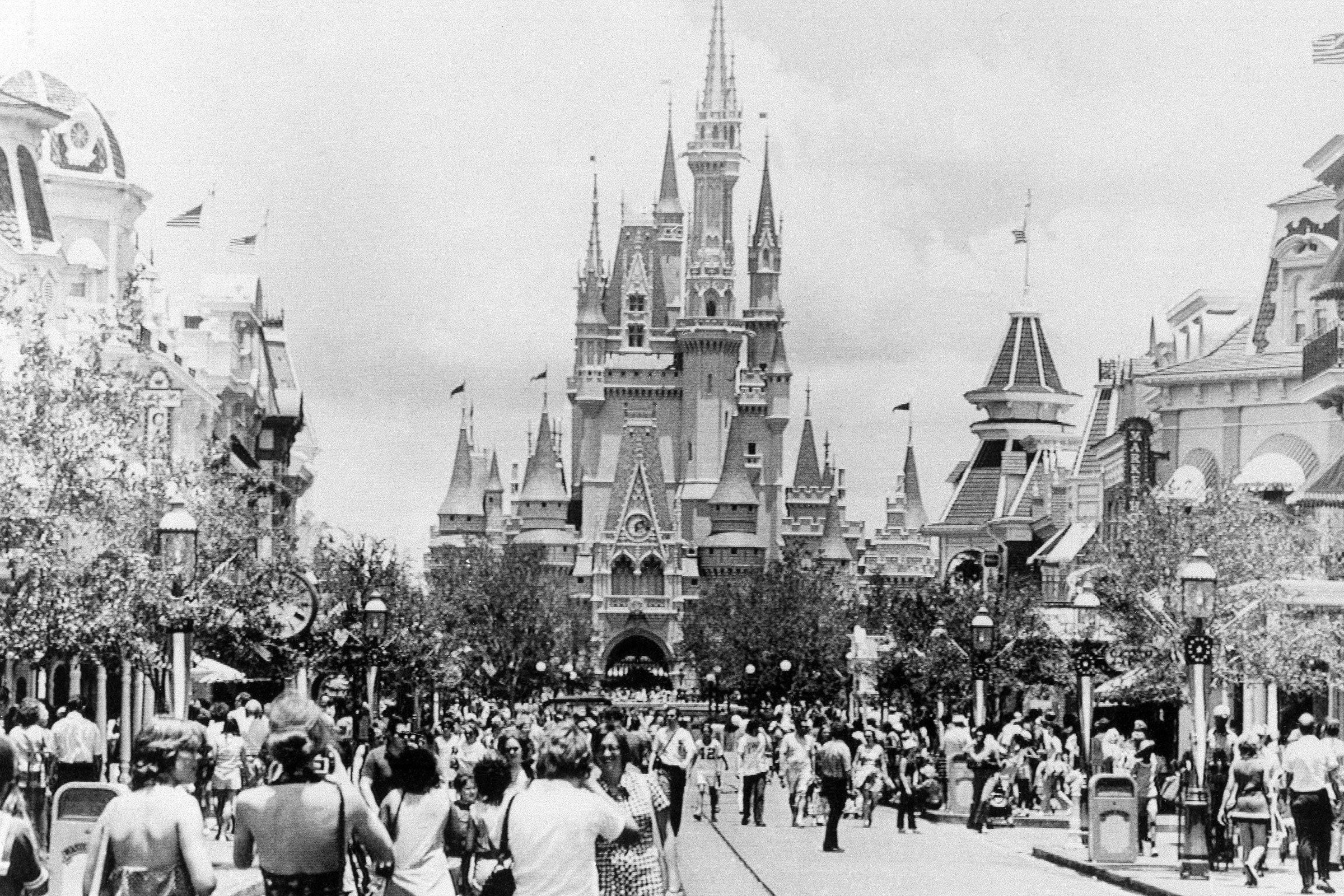
Walt Disney World opened in October 1971 with a one-day admission price of $3.50, a figure that, adjusted to today’s dollars, amounts to roughly twenty-seven. What this means — and the arithmetic here has a kind of tragicomic clarity — is that inflation alone would have produced a ticket priced around twenty-seven dollars. The actual price of that same ticket today is anywhere from a hundred and nineteen to two hundred and nine dollars, depending on the date and the park. The remainder, the gap between what economic forces alone would have produced and what the company actually charges, is not inflation. It is something else. It is strategy.
For decades, Disney managed to maintain the illusion that its parks were a democratic destination — the place where middle-class aspiration met manufactured wonder, where a family from Akron or Albuquerque could share an experience with a family from Westchester or Marin, all of them equally dazzled, equally damp from Splash Mountain. That illusion has not entirely dissolved, but it has thinned considerably. And the thinning has been deliberate.
“Disney park-goers tend to be at the higher-income deciles, and those consumers continue to do well. So we certainly broadly feel good about where the consumer is.”
That was Disney’s Chief Financial Officer, speaking at the Wells Fargo Technology, Media, and Telecom Summit in November 2025. The remark, offered with the breezy confidence of someone reading a favorable earnings slide, provoked a small firestorm online. But it was, in its own way, simply an honest articulation of a business reality that the company had been quietly engineering for years. Disney was no longer particularly interested in the Akron family. It had found wealthier guests, and it liked them.
The Men Who Ran the Kingdom
To understand how this happened, one must understand the peculiar drama at the top of the Walt Disney Company over the past six years — a drama that would have made Walt himself, a man not known for his tolerance of corporate chaos, profoundly uncomfortable.
Bob Iger ran Disney for fifteen years with the authority and personal mythology of a Silicon Valley founder. He acquired Pixar, Marvel, Lucasfilm, and 21st Century Fox, turning Disney into something less like a studio and more like a sovereign nation with a stock price. Under Iger, the parks flourished through expansion and branding — Star Wars: Galaxy’s Edge, the Avatar-themed land at Animal Kingdom, the relentless absorption of intellectual property into physical space. He was, by nearly any measure, an extraordinarily successful chief executive. His one significant failure, as history would record it, was his successor.
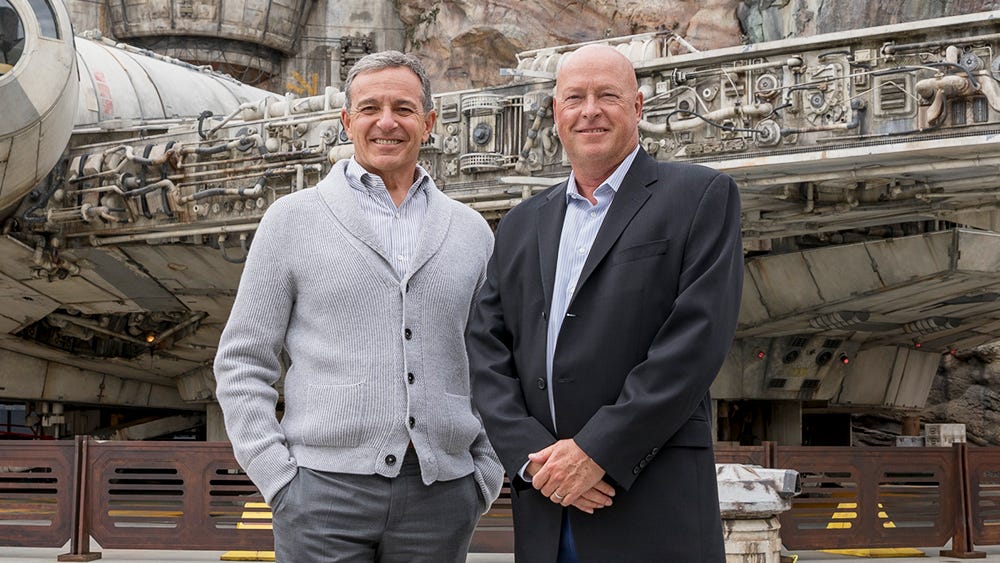
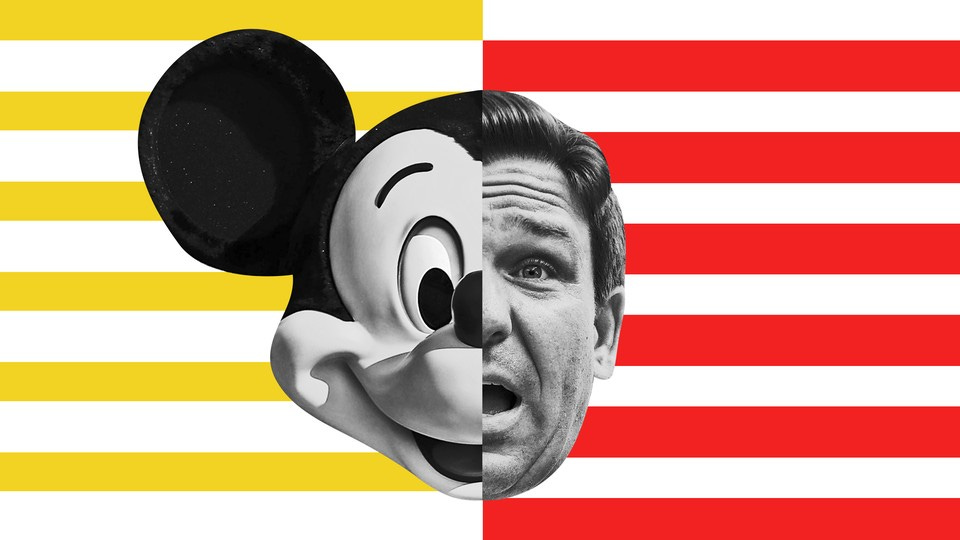
Bob Chapek, a parks veteran who had overseen the ticketing and pricing apparatus that now defines the Disney experience, became CEO in February 2020 — weeks before the pandemic shuttered every Disney park on earth. The timing was catastrophic, and Chapek never recovered from it, not operationally, and not politically. When Florida’s Governor Ron DeSantis introduced the legislation critics called the “Don’t Say Gay” bill, Chapek initially declined to oppose it publicly, infuriating Disney’s own workforce. He then reversed course under employee pressure, infuriating DeSantis. The governor retaliated by stripping Disney of its Reedy Creek Improvement District — a special self-governing status the company had held since 1967 — a move that threatened to saddle Florida taxpayers with nearly a billion dollars in Disney bond debt while simultaneously forcing the company into a prolonged, expensive, and deeply embarrassing legal and political battle that it had not sought and could not easily win.
By November 2022, Disney’s stock had fallen nearly fifty percent. The board had seen enough. Chapek was fired on a Sunday evening — the terseness of the announcement felt almost theatrical — and Iger was reinstated with the slightly bewildered air of a man summoned back from a retirement he had enjoyed. He returned to find the company diminished in ways that went beyond the balance sheet.
The Price of Everything
What Iger inherited was a pricing structure that Chapek had, in fairness, helped build. The shift began years before Chapek became CEO, when Disney introduced date-based dynamic ticketing — a system in which the same ride, the same park, the same castle cost more on busy days than on slow ones, and the definition of “busy” expanded with each fiscal year. Then came Genie+, the paid replacement for the free FastPass system that had once allowed all guests to skip certain lines without additional charge. Genie+ — rebranded as Lightning Lane — now costs up to forty-five dollars per person, per day, at Magic Kingdom alone, on top of admission. Its introduction was among the most quietly radical things Disney had ever done to its own customers: it effectively monetized the queue. Waiting in line, that most egalitarian of human activities, became a product to be upsold.
A four-day trip to Walt Disney World for a family of four that cost approximately $3,230 in 2019 now costs an estimated $4,266 — a thirty-two-percent increase in five years, at a time when real wages for the median American household have not remotely kept pace. The Bureau of Labor Statistics Consumer Expenditure Survey tells a particularly clarifying story: American households in the bottom eighty percent of income collectively spend less on annual travel than the cheapest Disney World vacation costs. Only the top quintile — households earning, on average, more than a hundred and twenty-five thousand dollars a year — spend enough on travel to make a Disney trip even theoretically feasible without significant financial strain.
Waiting in line, that most egalitarian of human activities, had become a product to be upsold.
Disney, to its credit, has not entirely ignored this problem. It has periodically offered discounts aggressive enough to suggest genuine corporate anxiety about affordability — slashing hotel rates, bundling park tickets, resurrecting the spirit of the old “Free Dining” promotions that once served as a reliable middle-class subsidy. One observer compared Disney’s pricing model to Kohl’s, the department store chain famous for marking up its sticker prices specifically to make the discounts look more generous. The analogy was not meant as a compliment, and it was not entirely unfair.
The Politics of the Mouse
The DeSantis episode illuminated something that most major American corporations spend considerable resources obscuring: that their operations are not politically neutral. Disney employs approximately seventy-five thousand people in Florida. It is among the state’s largest private-sector employers, and its presence in Orange County has shaped the physical and economic geography of Central Florida for more than half a century. The company has long traded on this civic footprint, presenting itself as a partner to the communities it inhabits.
The conflict with DeSantis made that relationship complicated in ways that money alone could not resolve. It also demonstrated how thoroughly the cultural valences of the Disney brand had shifted. The company that once avoided political commentary almost as a matter of corporate theology — Walt himself was a conservative, a friendly witness before the House Un-American Activities Committee — had, under Iger, become associated with a broadly progressive cultural identity. This was good for the brand in some markets and catastrophic in others. When Iger returned, he moved to lower Disney’s public temperature on political matters, settling the legal dispute with DeSantis’s appointees and promising a seventeen-billion-dollar investment in the Florida parks — a number large enough to function as both a capital plan and an olive branch.
The resolution produced its own discomforts. Critics on the left argued that Disney had capitulated to authoritarian pressure; critics on the right remained unpersuaded that the company had genuinely changed. Disney found itself in the position that major consumer brands increasingly occupy in polarized America: too large and too visible to avoid the culture war, too profit-dependent to fight it cleanly.
The Workforce Question
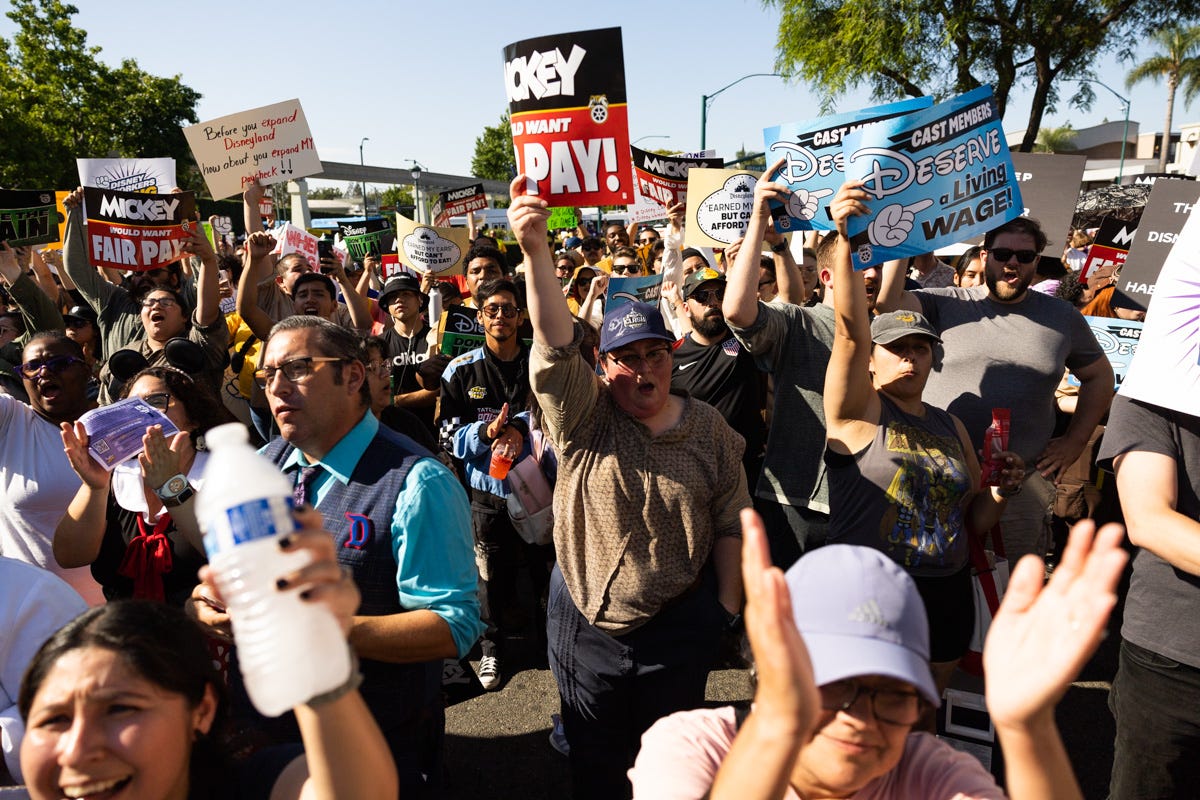
There is another cost that rarely appears on the brochure. Disney’s parks are staffed by tens of thousands of workers — the “cast members” in the company’s preferred vocabulary — who operate in the visible theater of magic and the invisible economy of service. In the summer of 2024, cast members at Disneyland organized a strike authorization vote, driven by wages they argued had not kept pace with the cost of living in Southern California. The strike was averted, but the underlying tension remained. Disney’s parks depend, structurally, on a workforce that cannot afford to visit the product they help create.
Construction costs, meanwhile, have surged. The Producer Price Index shows that construction materials in the United States increased more than forty percent in the five years ending in 2025. Disney has committed to a sixty-billion-dollar global parks expansion over ten years — a figure that implies sustained investment in new attractions, hotels, and infrastructure. That investment, naturally, requires returns. Those returns come from the family standing at the gate, recalculating, wondering whether the Lightning Lane is worth it, whether the Mickey bar — now approaching eight dollars, more than double what inflation alone would have produced — is an indulgence or a ritual.
What the Kingdom Is Worth
The honest answer to the question of whether Disney World is “worth it” depends entirely on who is asking. For a family in the top income quintile, for whom a five-thousand-dollar vacation represents a meaningful but manageable expense, the answer is probably yes — conditionally, strategically, with careful planning and a willingness to absorb the friction of a system designed to extract maximum revenue at every turn. For a family in the middle three quintiles, for whom that same expenditure represents the entirety of their annual travel budget, the calculation is different, and harder, and increasingly it is producing a different answer.
Disney’s fiscal 2025 parks revenue of more than nine billion dollars in a single quarter suggests the company is not suffering. Attendance dipped slightly — one percent for the year — but per-guest spending rose five percent, which is the point. Fewer guests, more money. The parks are operating as a luxury product while maintaining the cultural language of a democratic one, and the tension between those two identities is the defining contradiction of the contemporary Disney experience.
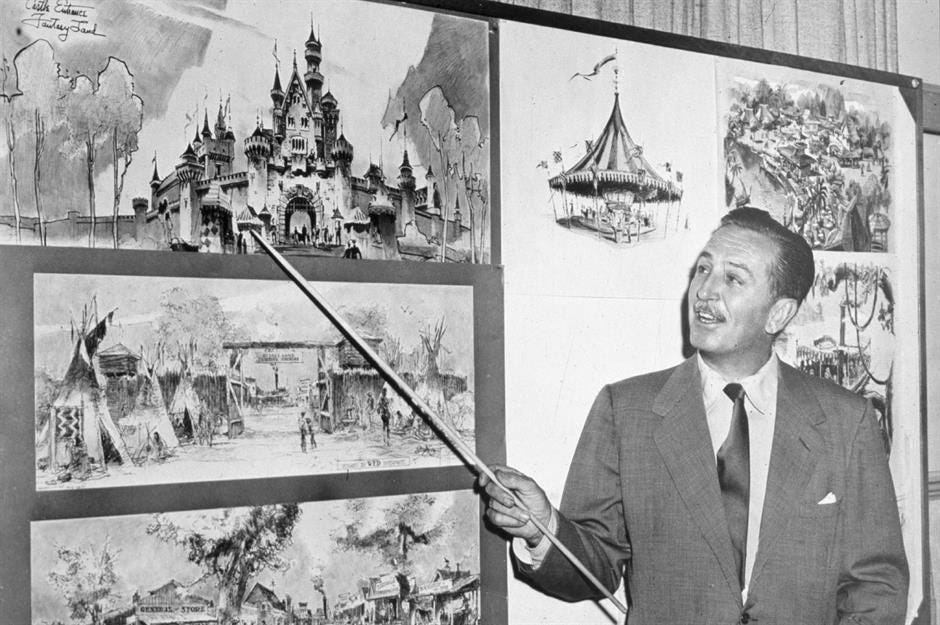
What Walt Disney imagined in 1955 was a place where “people of all ages and backgrounds” could find common ground. That phrase, from his own dedication speech, has the quality of an artifact now — the record of an intention that the company bearing his name has not so much abandoned as priced out of practical reach. The castle is still there. The fireworks still burst above it at nine o’clock. But the audience standing in the dark below has changed, and continues to change, and Disney, by its own cheerful admission, is fine with that.
The Columbus family, for what it is worth, did not purchase the Lightning Lane. They waited. They rode seven rides in eleven hours, ate two counter-service meals at prices that startled them, bought a single souvenir — a small stuffed animal, forty-two dollars — and drove back to their hotel at ten-thirty in the evening, the children already asleep in the back seat, the parents in the particular silence of people who have spent a great deal of money being gently disappointed, but who will probably, in a year or two, do it again. The magic is in that compulsion. It is also, for Disney’s shareholders, the business model.