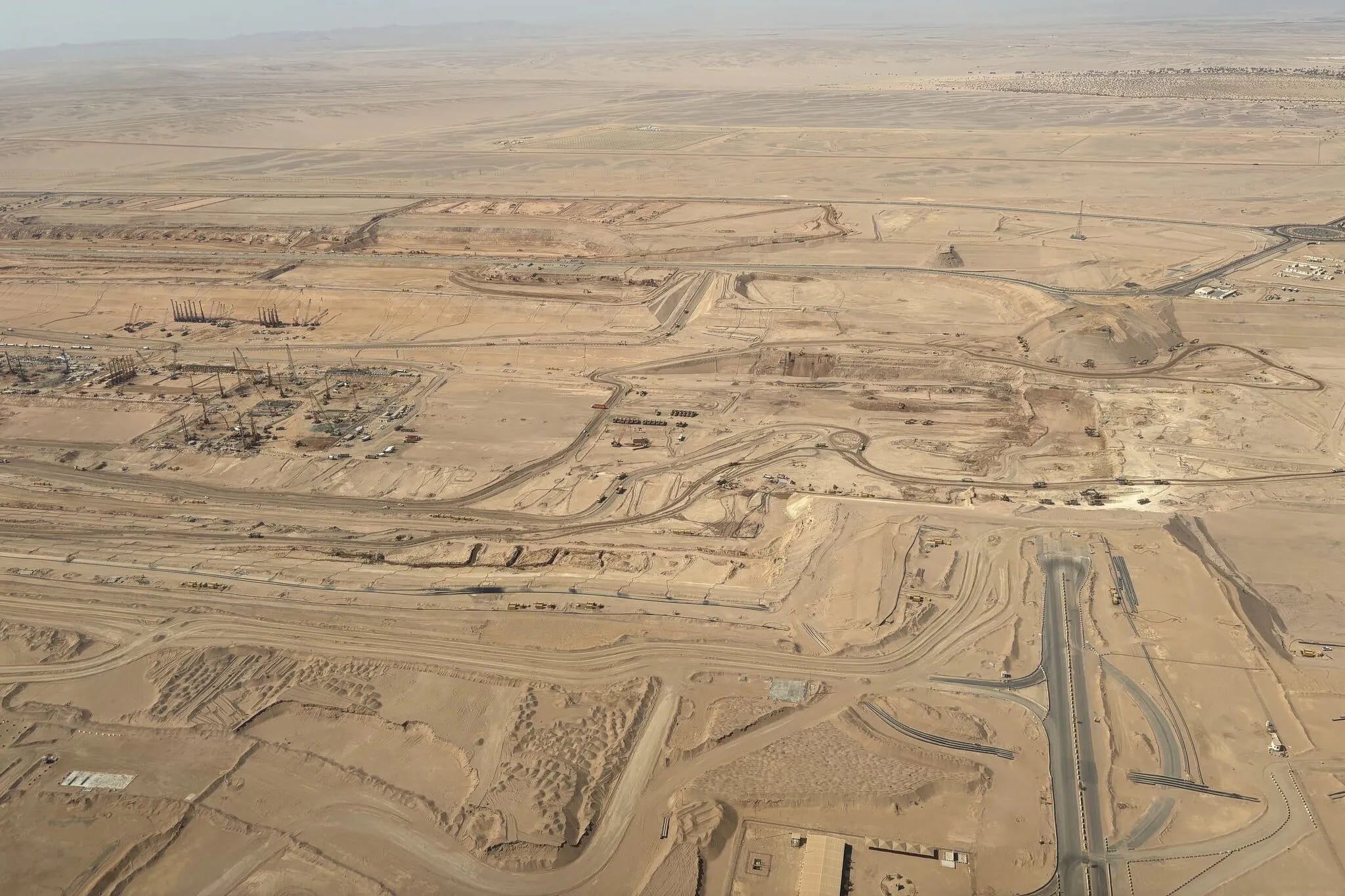

For five years, the message from NEOM never wavered. The Line, Crown Prince Mohammed bin Salman’s mirrored city in the desert, was on schedule. When reports of downsizing surfaced, officials said the project had never been scaled back. When an internal audit leaked, a spokeswoman said NEOM was demonstrating tangible progress. As recently as April, the governor of the kingdom’s sovereign wealth fund said no NEOM project had been canceled.
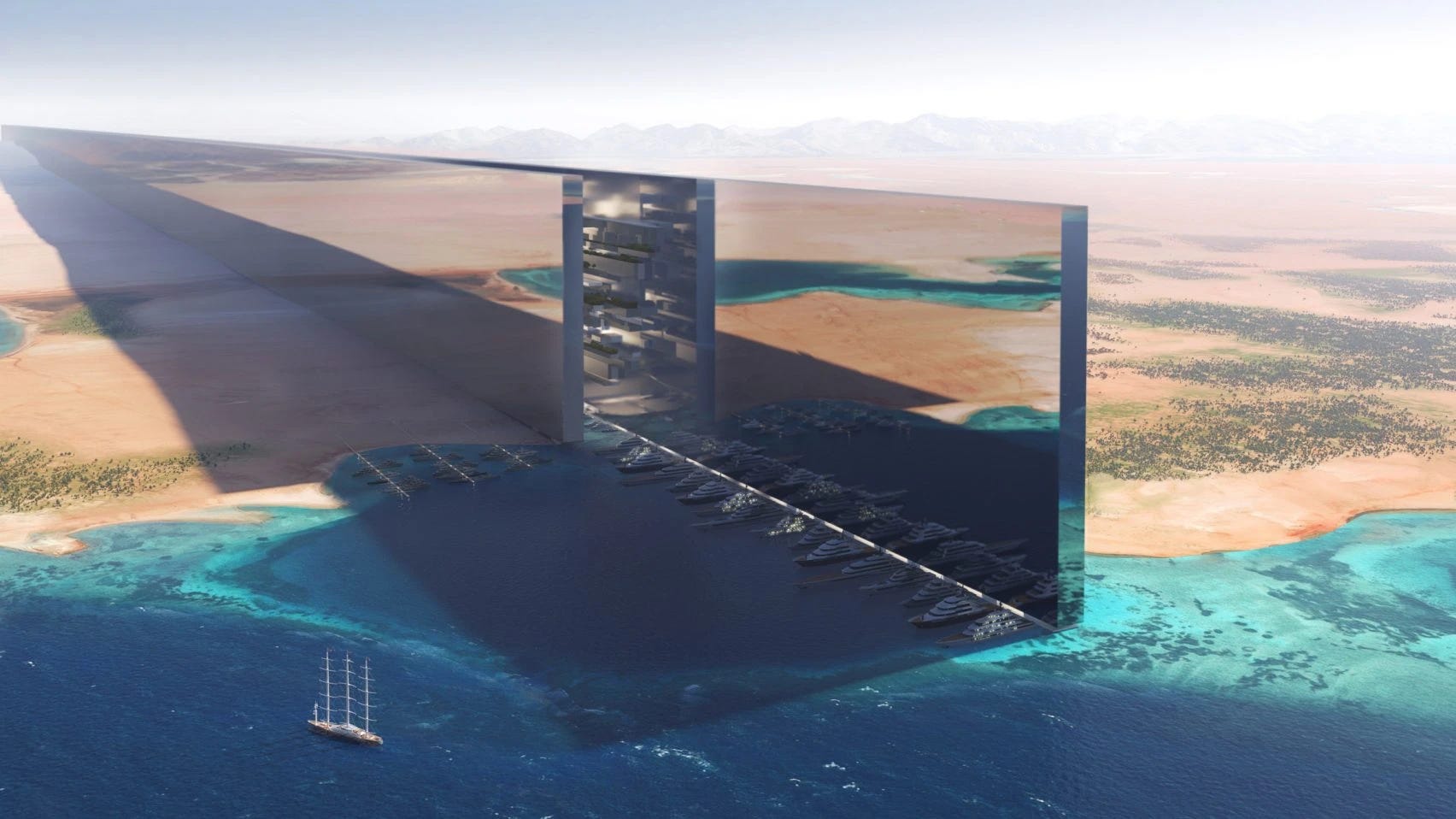
The record tells a different story. Construction on The Line has been suspended since September 2025. In May, the news outlet Semafor reported that work would not resume until at least after 2030. On Oct. 4, Reuters reported that a 46,000-seat World Cup stadium designed to hang 1,150 feet above the desert inside the structure had been shelved indefinitely. NEOM did not reply to requests for comment.
What remains, after an estimated $50 billion or more spent across NEOM, is roughly 1.5 miles of foundations, a single resort island and an unresolved question: who knew the plan was unworkable, and when?
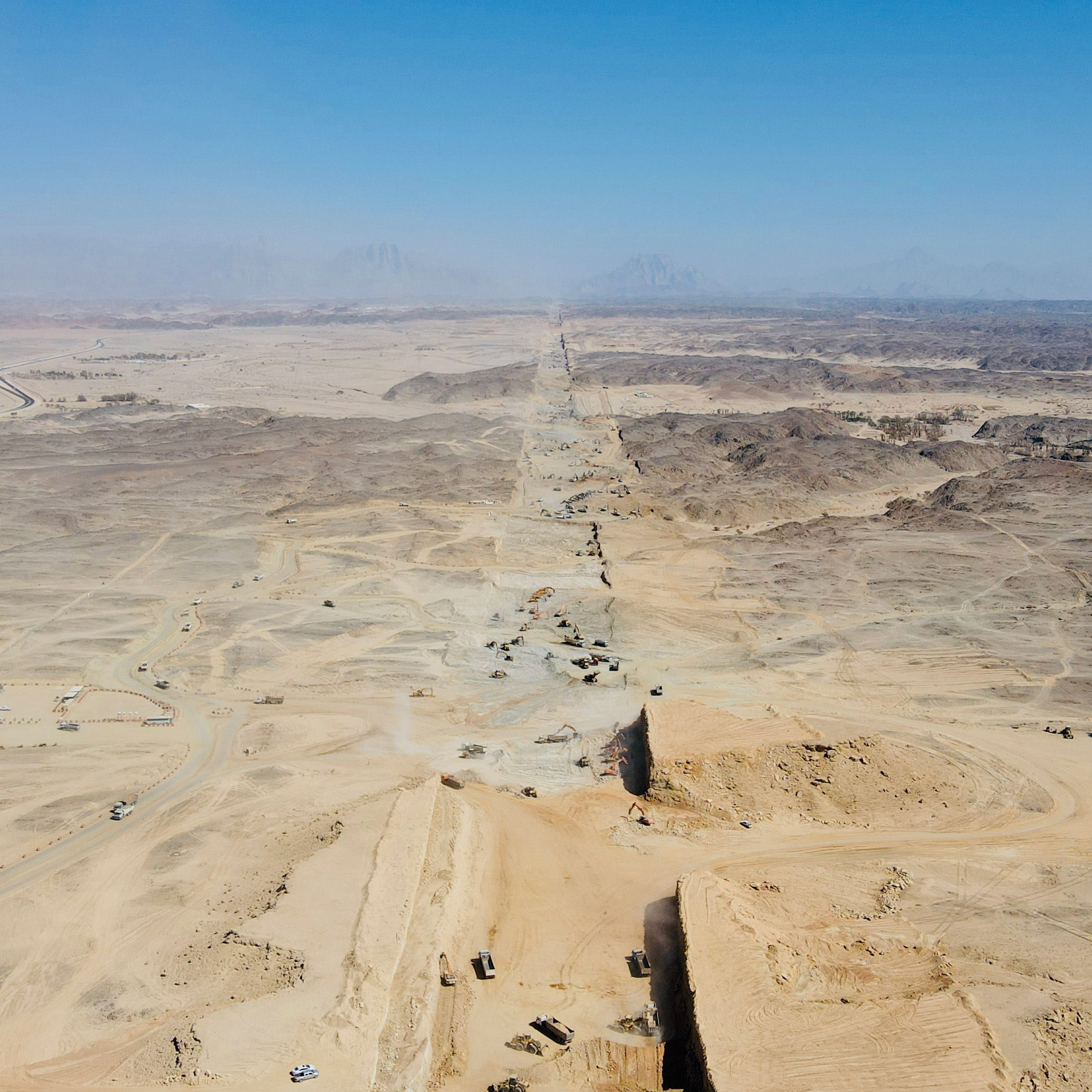
The engineering warnings were there from the start. The Line called for a continuous glass-walled structure about 1,640 feet tall and 650 feet wide, running 106 miles from the Red Sea across valleys and mountain ranges, eventually home to nine million people with no cars and no streets. Urban planners noted that a city with almost no width would need dozens of stations to honor its promise of a five-minute walk to everything, and that a sealed wall of that length would have to withstand seismic risk, sandstorms and the expansion of steel in desert heat.
Rather than resolve those problems, NEOM poured concrete. The Wall Street Journal reported in 2024 that foundations were laid before architects had finished designing what would stand on them, in part so the crown prince could see progress. When the site shifted, those foundations were abandoned. Excavated earth was dumped where a waterway was planned, and a compound housing NEOM’s own engineers turned out to sit in the structure’s revised path. Thousands of deep piles went into the desert floor. The structural steel never followed, and the mirrored façade has never left the renderings.
The finances were worse and, by NEOM’s own internal accounting, knowingly so. The publicly stated budget for all of NEOM was $500 billion. In March 2025, The Journal reported on an internal audit that put the cost of building the development to its full “end state” by 2080 at $8.8 trillion, more than 25 times Saudi Arabia’s annual budget. The auditors found evidence of deliberate manipulation by managers: revenue projections, including expected hotel room rates, had been raised to make spiraling costs look justified. Staff proposals to save money, such as lowering The Line’s height, were reportedly rejected by the crown prince. McKinsey, NEOM’s principal strategy consultant, helped build the financial models and validate them, a dual role The Journal said raised potential conflicts of interest.
For the hospitality industry, that detail should land hardest. Hotel operators signed agreements for a destination whose business case, according to its own auditors, rested on room rates inflated to keep the project alive.
The unwinding has been quiet but relentless. Nadhmi al-Nasr, NEOM’s chief executive since 2018, left abruptly in November 2024 with no reason given. His successor, Aiman al-Mudaifer, ordered a strategic review. In January, The Financial Times reported that The Line would be recast as a far smaller project built around industry and data centers for artificial intelligence. In March, NEOM terminated more than $5 billion in contracts on The Line and Trojena, its mountain resort, including a $4.7 billion dam being built by the Italian contractor Webuild. Semafor reported that NEOM now aims for up to 100,000 residents by 2030, a fraction of the 1.5 million once envisioned, and is shifting about $3 billion to Oxagon, its port and industrial zone. No official statement has ever announced a reduction in scope.
The human costs were visible early, too. The land NEOM occupies was home for generations to the Huwaitat tribe. In 2020, Abdul Rahim al-Huwaiti, who had posted videos objecting to the evictions, was killed by Saudi security forces. In 2022, the rights group ALQST reported that three tribesmen who resisted displacement had been sentenced to death. Saudi Arabia told the United Nations the men were terrorists, denied that any forced evictions occurred and said more than 6,000 people had been relocated. In 2024, the BBC reported that Saudi forces had been authorized to use lethal force to clear villages in The Line’s path.
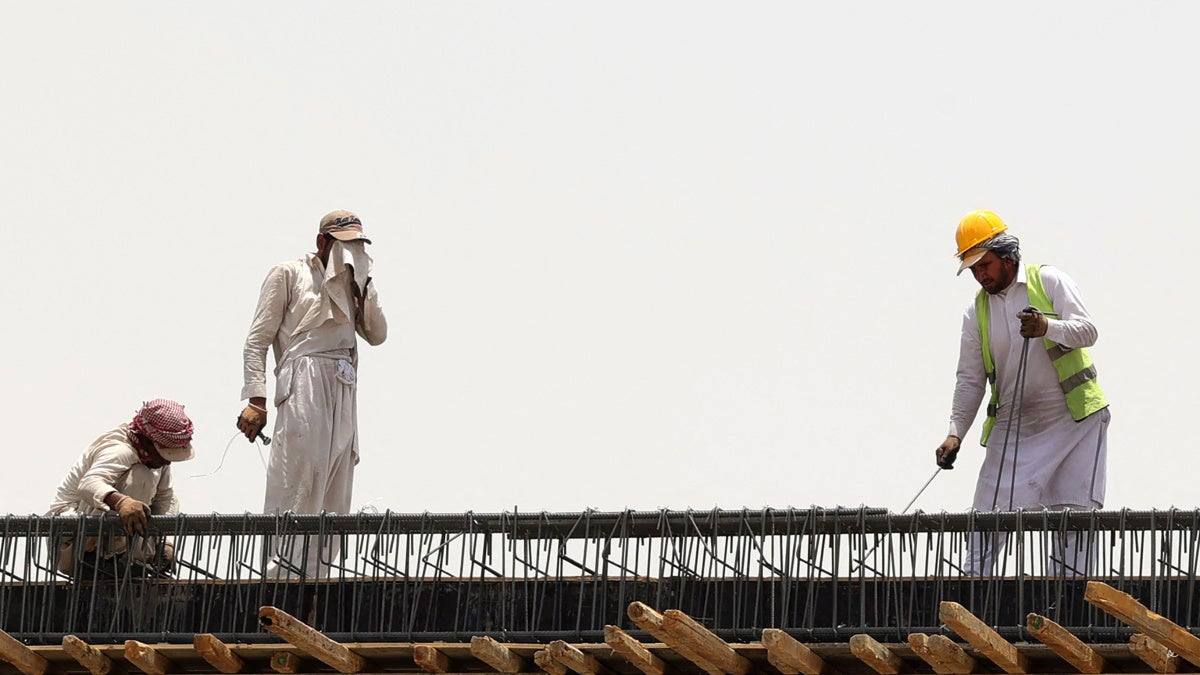
Then there is the labor. A 2024 ITV documentary, “Kingdom Uncovered: Inside Saudi Arabia,” reported that some 21,000 workers from India, Bangladesh and Nepal had died in the kingdom since the Vision 2030 program began. The figure covers the whole country, not NEOM alone, but workers on The Line told the filmmakers of 16-hour days, denied leave and little time to sleep. Saudi safety officials rejected the findings, citing a fatality rate of 1.12 per 100,000 workers, and NEOM said its contractors must follow a code of conduct based on International Labour Organization standards. Several architecture firms walked away from NEOM over rights concerns; others among the industry’s biggest names did not respond when asked about the documentary.
The hotel brands, meanwhile, are left holding announcements. Marriott, Four Seasons, Ennismore, Minor Hotels and Hyatt all unveiled NEOM projects during the boom years. Today the only operating hotel sits on Sindalah, a Red Sea yachting island that opened in October 2024 with an 86-berth marina and Oraya, a Marriott Autograph Collection property. Four Seasons now lists its Sindalah resort for 2028. Trojena, marketed as a year-round ski destination, lost the 2029 Asian Winter Games, which Saudi organizers postponed in January; the Games have since been linked to Almaty, Kazakhstan. Semafor reported that NEOM’s other Red Sea resorts will not be developed before 2030.
For travelers, the practical answer is simple. The Line is a closed construction site, with no visitor center and no tours; the kingdom’s more established resort developments lie farther south on the Red Sea coast and inland at AlUla.
The harder questions belong to the industry. Which companies tested NEOM’s revenue assumptions before signing? What diligence was done on how the land was cleared, or on the conditions of the people pouring the foundations? And what does it mean that the most ambitious hospitality pipeline in the Middle East was, by its own auditors’ account, propped up by room rates that did not exist?
In the desert north of the Gulf of Aqaba, the piles remain in the ground, waiting for a city that may never come.