


There is a particular kind of American export that resists easy categorization—not quite diplomacy, not quite literature, not quite science, but some hybrid of all three—and Lisa M. Randolph has, almost by accident, become one of its more compelling practitioners. Randolph is the author of The Wildlife Divas Adventure Team: Saving the Endangered Mountain Gorilla, a children’s book that began, as these things often do, with a fairly modest ambition: to put girls who looked like her own daughters at the center of a story about the natural world. What has followed has been less modest. Randolph’s book has opened doors to the Uganda Wildlife Authority, drawn the attention of the Jane Goodall Institute, and earned her an audience with Dr. Gladys Kalema-Zikusoka, the veterinarian and conservationist whose decades of work protecting mountain gorillas in the Virunga Massif have made her something of a secular saint among primatologists. Randolph, an author with no formal training in wildlife biology, now finds herself in rooms with people who have devoted their lives to it.
“I wanted them to see themselves not as visitors to these stories, but as the ones leading them.”
-Lisa Randolph has said of her young readers
Listen to Lisa Randolph on Pay Me In Plane Tickets Radio

The premise of the Wildlife Divas series is, on its face, simple: BIPOC girls—curious, capable, undaunted by the usual narrative furniture that keeps children of color at the margins of adventure stories—travel the globe engaging with science, conservation, and the animals most in need of saving. But the simplicity is deceptive. Randolph is attempting something that publishing has historically been reluctant to do, which is to suggest, without lecturing, that the fields of STEAM are not foreign territory for Black and brown girls but home ground. “I wanted them to see themselves not as visitors to these stories,” Randolph has said of her young readers, “but as the ones leading them.” It is a modest sentence that carries a fair amount of freight.
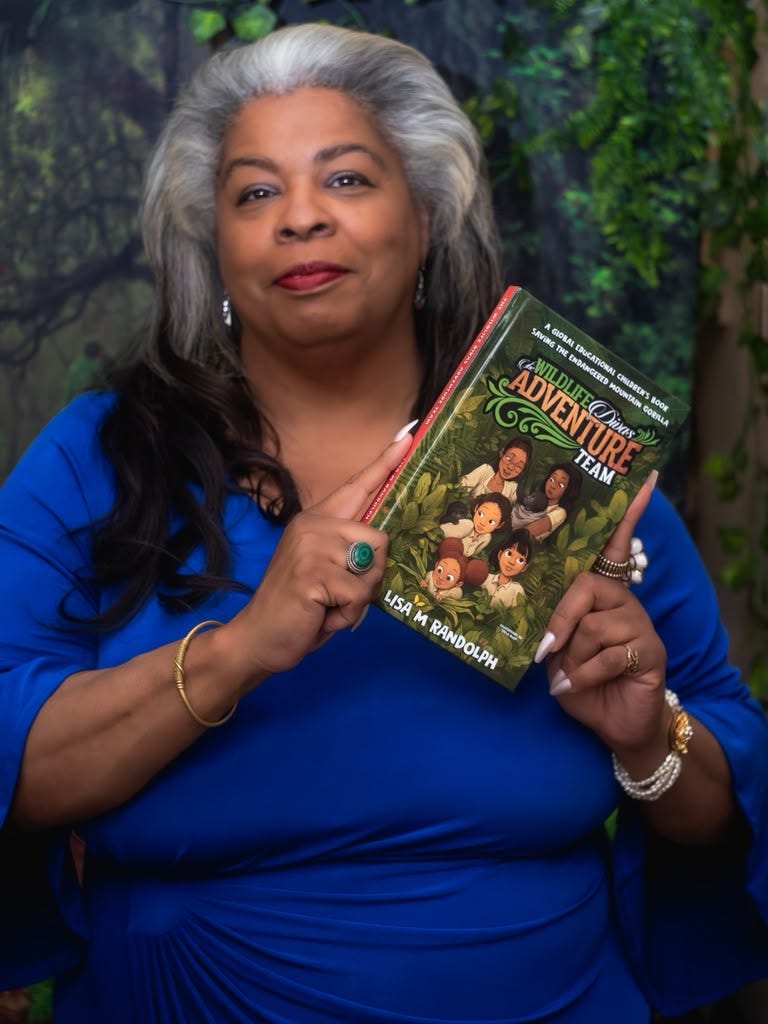
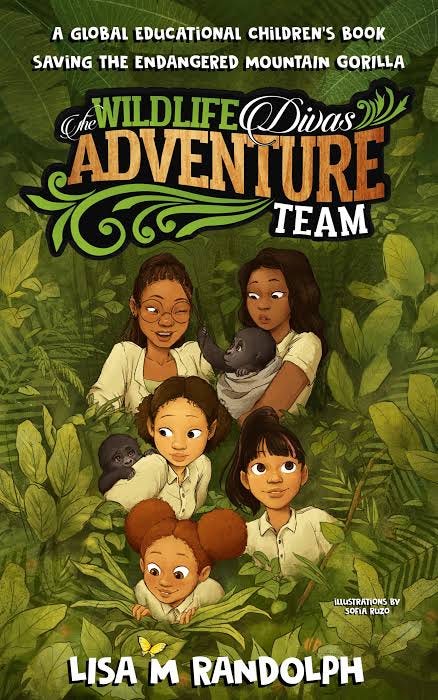
The mechanics of the debut book bear this out. The story is organized around Ravenswing Academy and its instructor, Cherie, who assembles a team of five girls, each rendered with the kind of specificity that separates a real character from a diversity placeholder. There is Ebony, the artist and social-media-savvy diva with a wide public following; Kyloni, small in stature and large in vocabulary, an aspiring scientist; Valerie, fluent in technology and rather less fluent in people; Yalani, an engineer-in-training who moonlights as a future skateboard champion; and Storm, a math whiz and bug enthusiast whose name, the book insists, is no accident—she is quick, sharp, and impossible to overlook. Together they fly to Uganda for what the book calls the trip of a lifetime, deploying science, technology, engineering, arts, and mathematics on their first international mission: the protection of endangered mountain gorillas. Randolph does not let the mission go smoothly. The girls’ trek is interrupted by poachers, and the resulting complication is less a plot device than a fairly accurate rendering of what conservation work in the Virunga region actually entails—stakes that are real, adversaries who are real, and a species whose survival cannot be taken for granted.
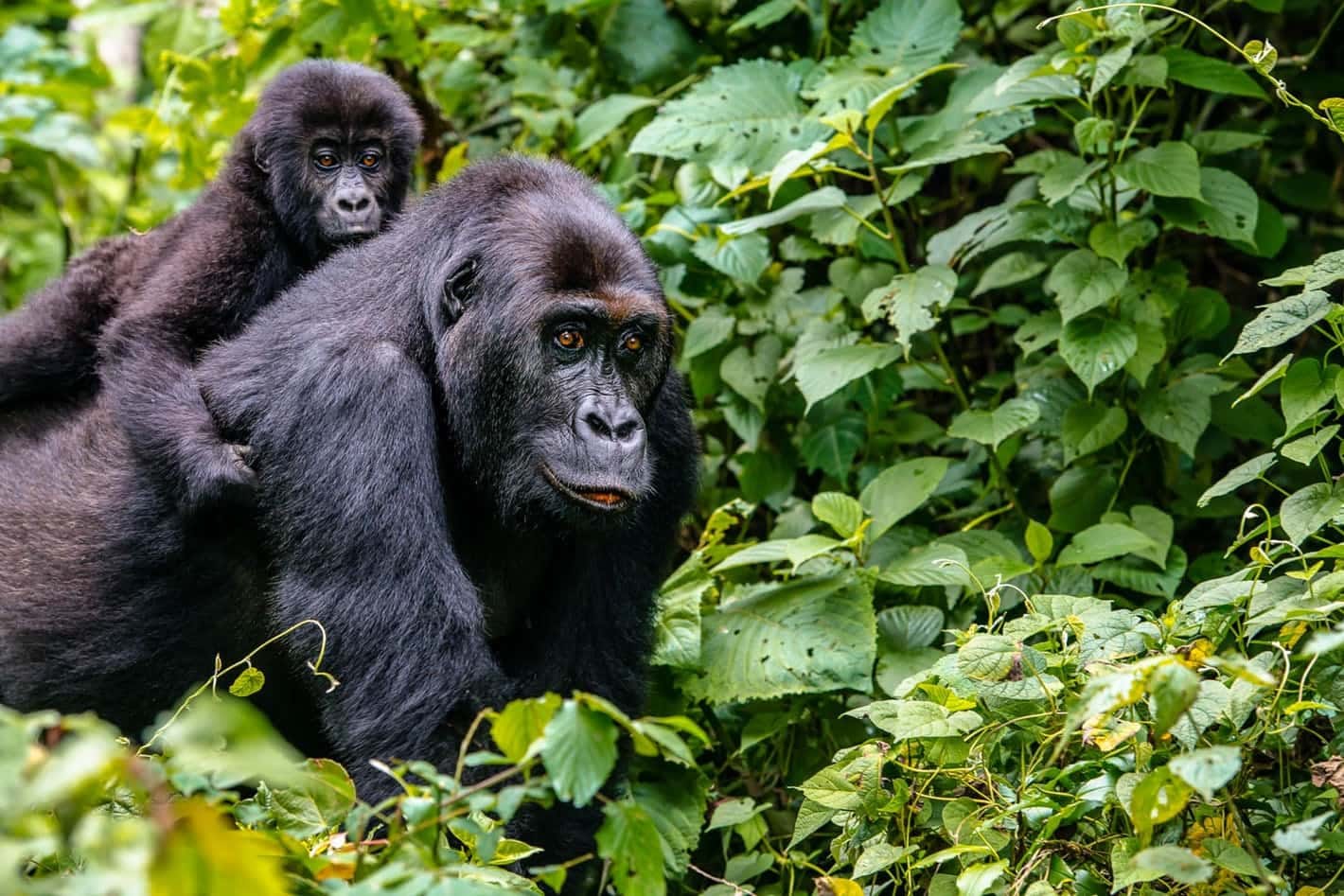
What distinguishes Randolph from the shelf of well-meaning diversity-minded children’s authors is the degree to which her fiction has bled into the world it describes. She did not simply invent a fictional gorilla sanctuary and move on; she went to Uganda. She has appeared on Good Morning Uganda, toured internationally with the support of U.S. embassies, and built relationships with the very conservationists her characters are modeled after. The mountain gorilla, a species that numbers only in the low thousands and exists almost entirely within a sliver of contested, volcanic terrain spanning Uganda, Rwanda, and the Democratic Republic of Congo, is not an obvious subject for a picture book, precisely because its survival is bound up in geopolitics, poaching economics, and public-health crossover risks that Kalema-Zikusoka herself has spent a career untangling. That Randolph’s book found its way into that world, rather than merely gesturing at it from a distance, says something about the seriousness with which she has approached what could have remained a modest publishing project.
There is a lineage here worth noting. Jane Goodall built an empire of empathy by insisting that children could be scientists before they were taught otherwise; Kalema-Zikusoka has spent her career proving that conservation and community health are inseparable in places where humans and gorillas share fragile terrain. Randolph, working in a different register—picture books rather than field studies, adventure rather than data—is nonetheless part of that same tradition: the conviction that saving a species requires, first, convincing a child to care about it, and that the child doing the caring should not have to imagine herself as someone else in order to belong in the story.
Randolph is now at work on the next installment of the series, and it is worth watching what she does with the platform she has built somewhat unexpectedly. Children’s publishing rarely produces figures who move fluidly between embassy tours and gorilla sanctuaries, between bedtime reading and species-survival plans. But conservation, like storytelling, has always depended on unlikely messengers. Randolph, it turns out, is one of them.
The Wildlife Divas Adventure Team: Saving the Endangered Mountain Gorilla