


"These mountains and my childhood home have a special place in my heart. They inspire my music and my life. I hope being here does the same for you.”
-Dolly Parton
Sevier County, Tennessee, is the kind of place that used to appear in economic surveys mostly as a cautionary example—a swath of the Smokies where subsistence farming gave way, slowly and without much fanfare, to not much of anything. Dolly Parton, who was born there in 1946, the fourth of twelve children in a one-room cabin with no running water, liked to tell the story a particular way: she promised herself, before she had any reason to believe the promise was keepable, that if she ever made it out she would find a way to bring the jobs back in with her. That promise took a long and circuitous route before it became Dollywood.
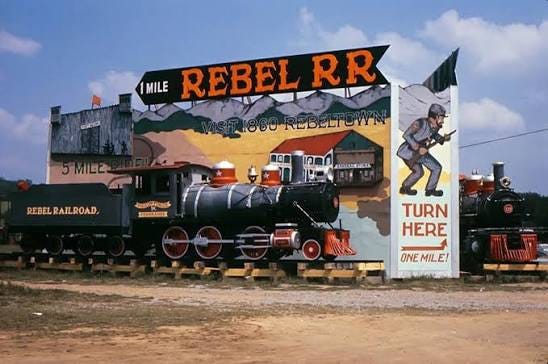
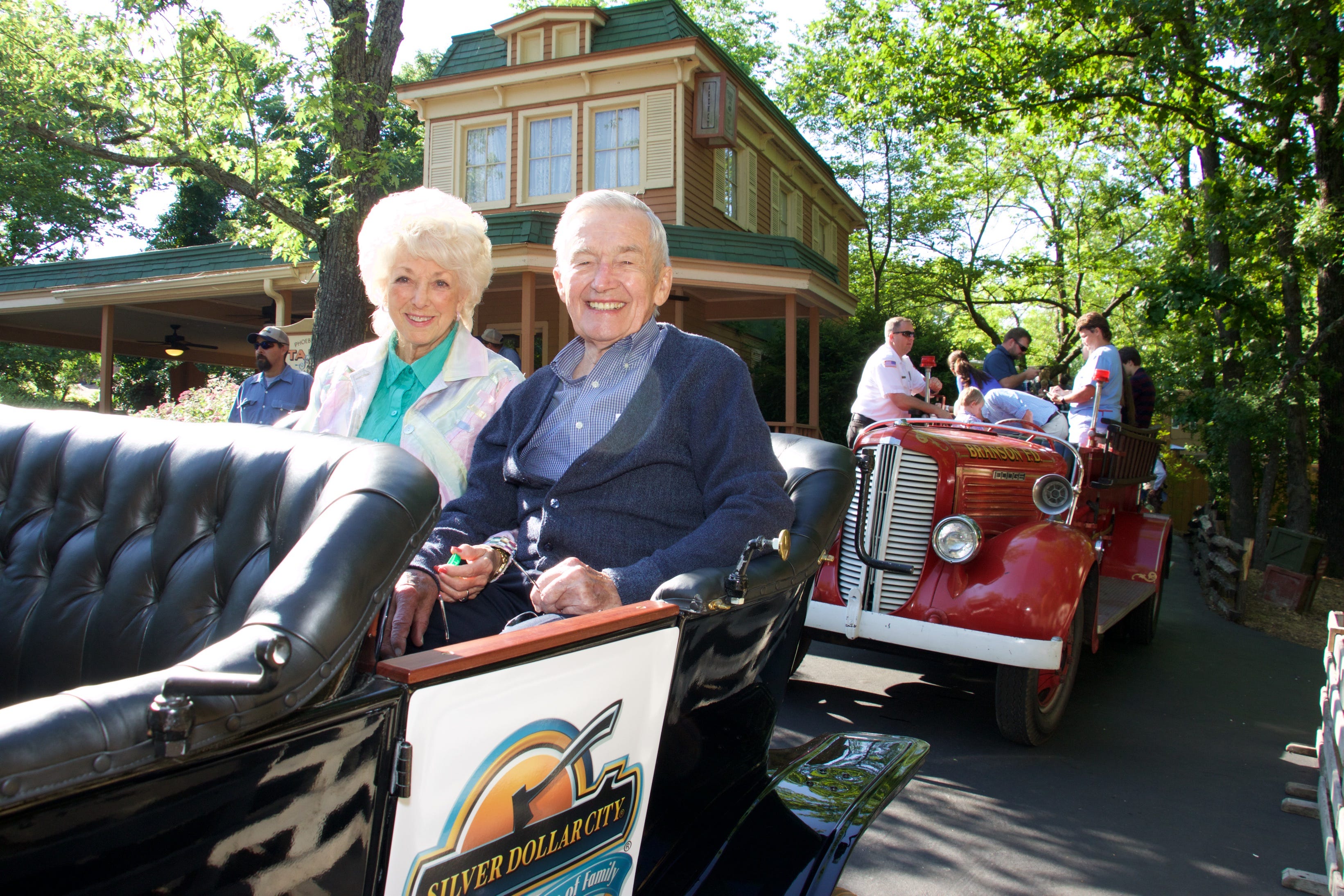
The land itself had already lived several lives by the time Parton got to it. In 1961, it opened as Rebel Railroad, a modest Wild West attraction built around a coal-fired steam train, the kind of roadside stop that once dotted the approach to the Smokies. Art Modell, who would go on to own the Cleveland Browns, bought the property in 1970 and renamed it Goldrush Junction, a title that lasted only as long as his enthusiasm for it. In 1977, the Herschend family—Ozark showmen who had made their name running Silver Dollar City, an 1880s-themed park in Branson, Missouri, built around a cave they’d once leased from its original owners—purchased the land and rechristened it Silver Dollar City, Tennessee, folding in the blacksmiths, the gristmill, and the general run of Appalachian craft demonstrations that were their specialty. It grew, steadily and unremarkably, through the early eighties: a respectable regional attraction, the sort of place a family might stop for an afternoon on the way to Gatlinburg.
What changed its fortunes was a television interview. Sometime in the mid-eighties, Parton, by then a bona fide star with “9 to 5” and “Jolene” behind her, told Barbara Walters that she dreamed of building a theme park in her home county—something that would bring tourism, and with it employment, to a corner of Tennessee that had historically exported its young people rather than employed them. Silver Dollar City’s general manager happened to catch the interview and made the call. The pitch the Herschends offered was simple enough: rather than build a “Dollyland” from scratch, as she’d apparently imagined, she could take a controlling stake in an operation that already had the infrastructure, staff, and thirty-thousand-square-foot commissary of a working park, and remake it in her own image. She said yes. The skeptics were not impressed. People magazine, previewing the rebrand, dismissed it in print as Dolly’s “$20 million hillbilly park,” and the market-research consensus at the time held that swapping the Silver Dollar City name for Dollywood might net an extra ten thousand visitors a year, if that.
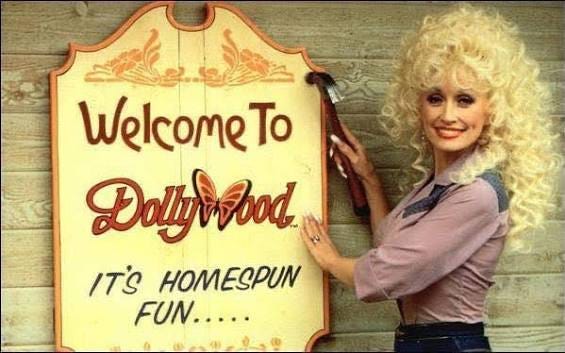
On May 3, 1986, the park reopened as Dollywood, with a new entrance called Rivertown Junction, a whitewater raft ride, and a scale replica of the cabin Parton had grown up in, furnished, down to the detail, with the poverty she’d once lived through. Parton herself would later admit that she spent much of opening day not greeting guests but watching the parking lot, convinced that no one was going to come. She was wrong by a considerable margin. Attendance for the season came in at 1.3 million—more than double what Silver Dollar City had drawn the year before, and more than a hundred times what the experts had forecast for the name change alone. It was, by any reasonable accounting, an act of economic alchemy: a woman who had once picked cotton and coal-mined poverty out of her own childhood had built, almost overnight, the single biggest tourist draw in the state.
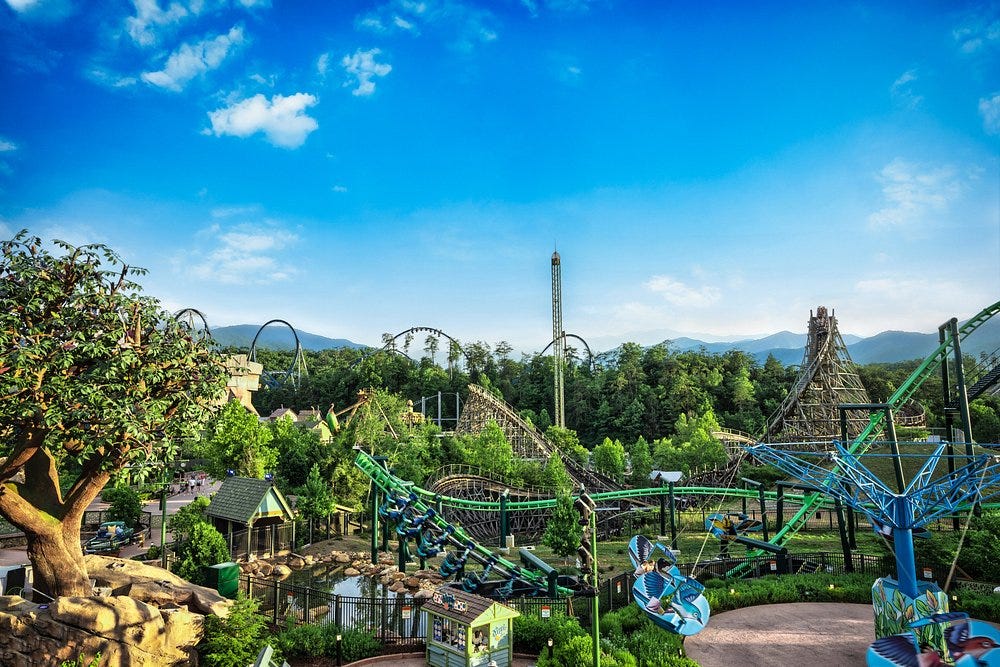
Four decades on, the figures involved have a way of sounding invented, the sort of round, triumphant numbers that press releases are made of, until you notice how consistently they check out. Annual attendance had climbed, by 2025, to roughly four million, making Dollywood, by a comfortable margin, the most visited ticketed attraction in Tennessee, ahead of any museum, aquarium, or stretch of Nashville honky-tonk. A state-commissioned study put the park’s yearly economic footprint at some $1.8 billion, a sum that diffuses outward from the ticket booths into the region’s hotels, pancake houses, taffy shops, and the small, half-hidden businesses that a tourist economy tends to spawn without anyone quite planning it. More than twenty-three thousand jobs in the area trace back to it. Sevier County, which ranks near the bottom of Tennessee counties by population, ranks third in the tax revenue it sends back to Nashville—an inversion that flatters no spreadsheet quite so much as it flatters the woman who engineered it.
What distinguishes Dollywood from the ordinary run of tourist-economy success stories is the degree to which Parton treated the park as an instrument of social policy rather than an end in itself. In 1991, the Dollywood Foundation introduced what it called the Buddy Program, a modest scheme of encouragement and small cash incentives designed to keep Sevier County students from dropping out of high school. It is not the kind of intervention that usually makes a dent—until you look at the dropout rate, which fell, in the years that followed, from thirty-five per cent to six. There is a plausible argument that this single, unglamorous statistic did more to alter the trajectory of the county than the roller coasters ever did, though the roller coasters, admittedly, paid for it.
The rest of Parton’s philanthropy in the region reads almost as an accumulation of quiet corrections to circumstances she herself had once lived through: disaster relief funds distributed to families burned out of their homes by the 2016 Gatlinburg wildfires; an Imagination Library that has, by now, mailed free books to children well beyond the borders of Tennessee, in the kind of scaling that most nonprofits only aspire to. None of it was accidental, and none of it, on close inspection, was sentimental in the way the songs sometimes were. It was infrastructure, built slowly, and disguised as generosity.
Parton died on August 25th, at eighty, after a brief illness, and the tributes that followed tended toward the predictable notes—the wigs, the one-liners, the voice. Less remarked upon, though arguably more durable, is the fact that a woman who grew up without indoor plumbing left behind a functioning regional economy, still operating on schedule, its payroll still meeting, its dropout rate still low. Dollywood’s gates did not close for her passing; they are not expected to. That, perhaps, is the more fitting monument—not the rhinestones, but the fact that the jobs are still there on Monday morning.
In addition, Dolly Parton’s Nashville SongTeller Hotel to open later this month.
The SongTeller Hotel, dedicated to the life and legacy of the late country music star, is slated to open Sept. 29, featuring a 20,000-square-foot immersive museum.