


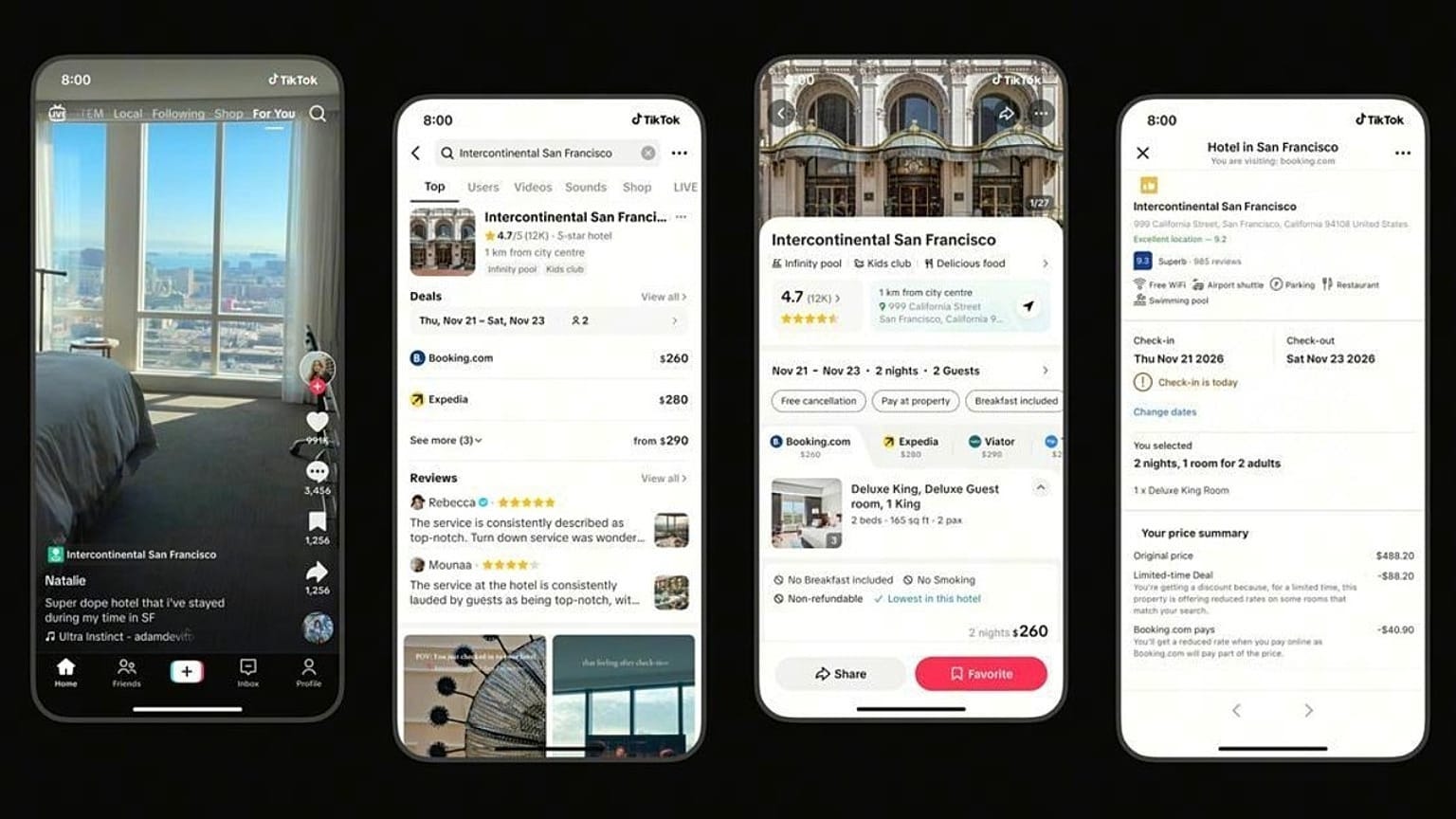
The pond looks serene. The floor-to-ceiling windows catch the light just right. A young woman leans toward the camera to say she has never seen a view like this one, then directs her more than 300,000 viewers to a booking link below.
None of it is real. Not the pond, according to the owner of the Arizona resort the video claims to show. Possibly not even the woman: an AI-detection company, Resemble.AI, flagged her as synthetic with near-total confidence.
The video is one of dozens circulating on TikTok Go, a feature the company introduced this year to let users book hotels and travel experiences directly from videos in their feed, through partners including Expedia, Booking.com, Viator and Trip.com. Creators earn a commission, typically around 5 percent, on each booking their content produces. It is, in effect, TikTok Shop for travel.
It is also, increasingly, a showcase for hotels that do not look anything like their videos suggest.
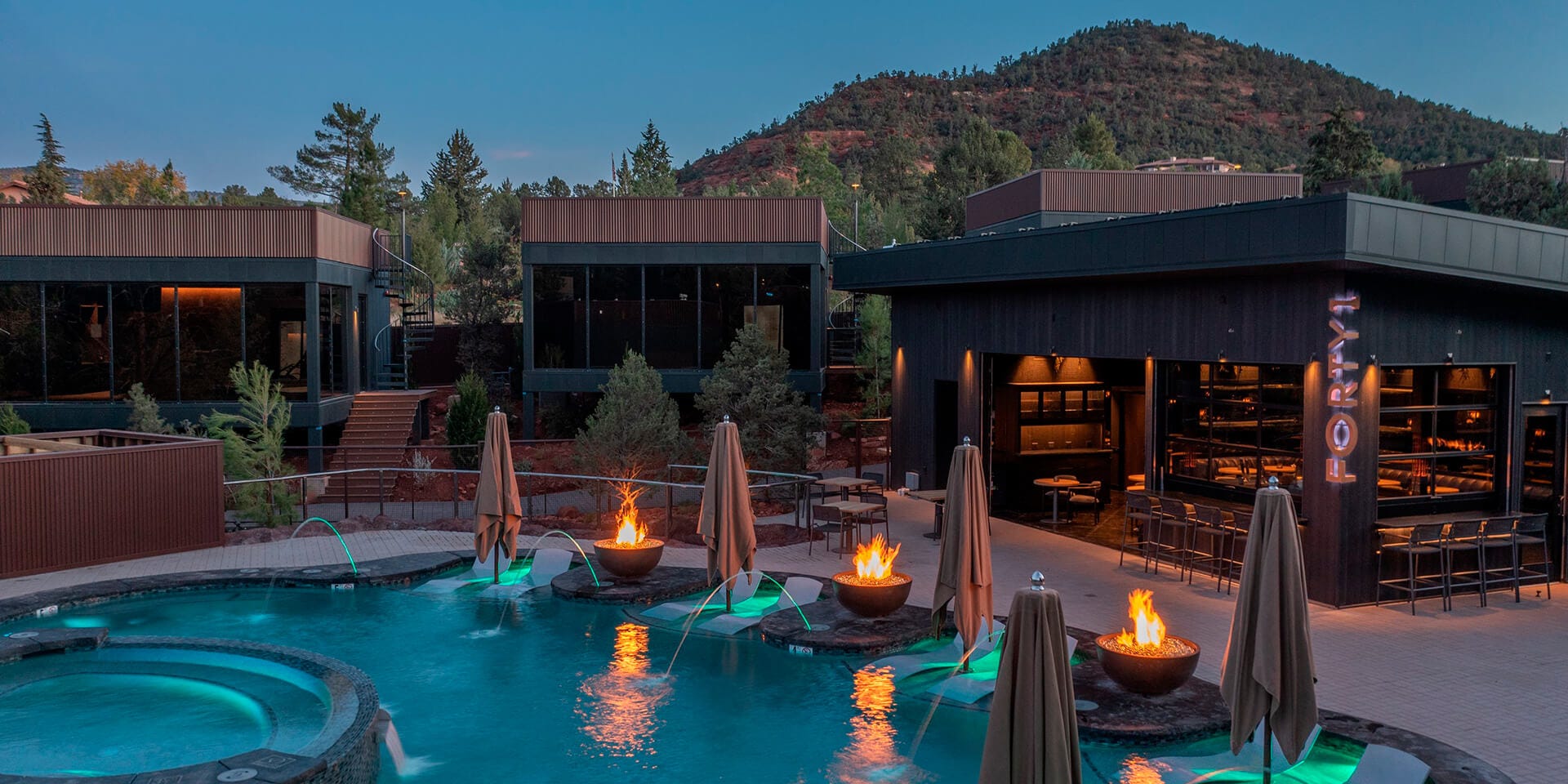
At the Ambiente Sedona, a luxury adults-only resort known for its red-rock views, Resemble.AI identified 17 videos it assessed as AI-generated with at least 80 percent confidence. Some spliced in footage from other properties. One transformed the adults-only resort into a family destination, complete with children playing by a pool that, like much else in the clip, does not exist. Only one of the 17 videos carried any label disclosing that it might be artificial.
The appeal to creators is straightforward. A conventional travel video requires airfare, a hotel stay and hours of filming and editing. A fabricated one can be generated in minutes, at negligible cost, and pays the same commission if it converts a viewer into a booking. Some accounts have gone further, tagging affiliate links to hotels that are not even available through TikTok Go, betting that volume and spectacle will outrun scrutiny.
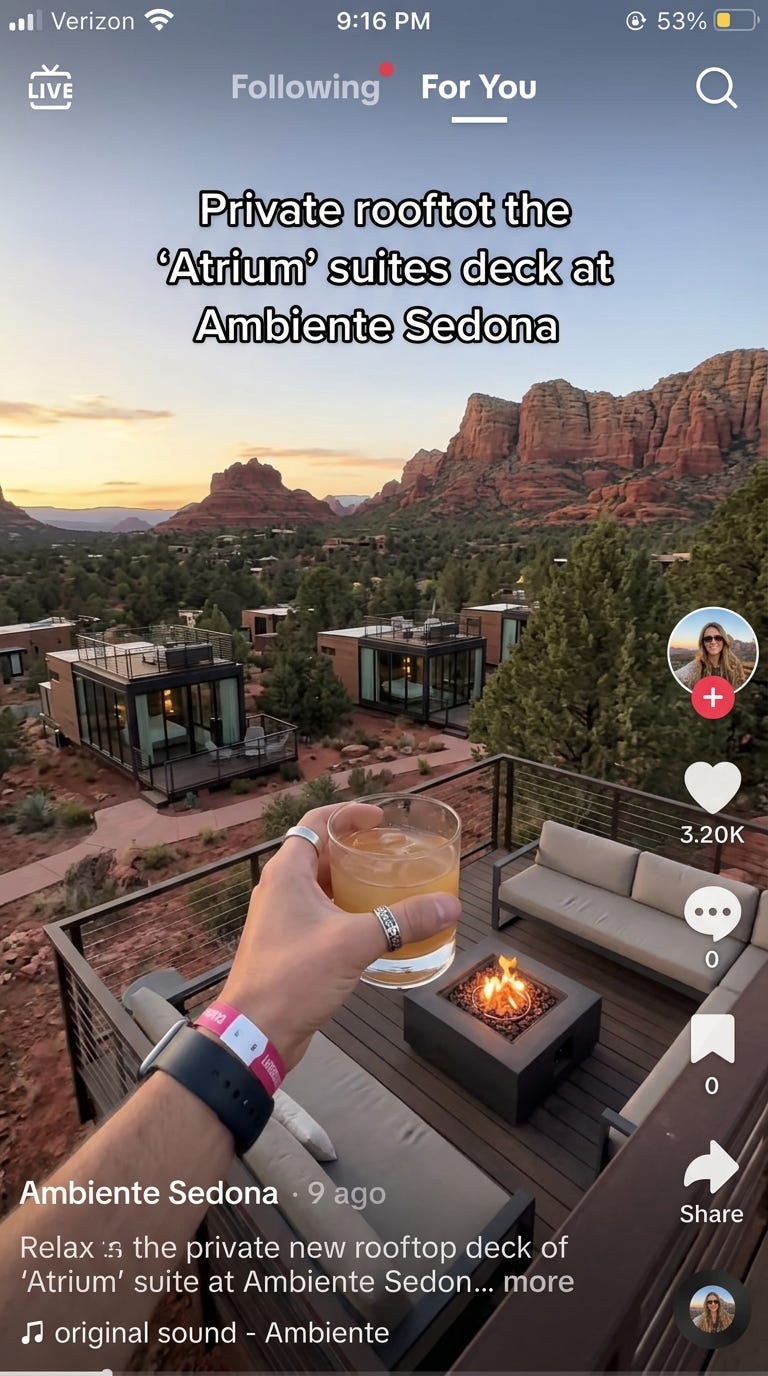
For travelers, the consequences are tangible. Rooms at the Ambiente Sedona start above $1,300 a night; a guest who books based on an invented suite or a nonexistent pond may simply be out of luck on arrival.
For hoteliers, the injury runs deeper than any single video. A brand identity built over years — the design, the service, the amenities a property actually offers — can be rewritten in fifteen seconds by a creator, or an algorithm, the hotel has never met. Properties can request that misleading videos be taken down, but say they cannot keep pace with how quickly new ones appear, and platform enforcement has been inconsistent.
 Tiktok failed to load.
Enable 3rd party cookies or use another browser
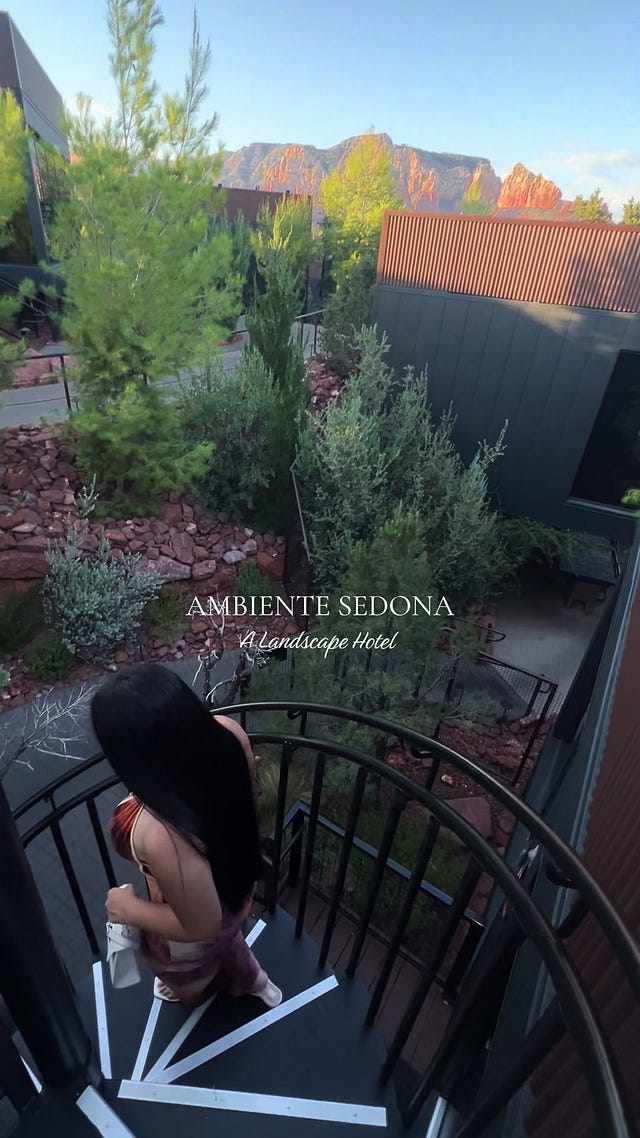
real experience presented on TikTok
That leaves owners with an uneasy calculation. Fabricated or not, the videos generate views, and views generate interest that can translate into real reservations. Ambiente Sedona’s ownership, while disturbed by the inaccuracies, acknowledges the attention has its upside. Rejecting that exposure outright is difficult to justify when the metrics keep improving — even as the hotel loses more say over what its own name now represents online.
The episode is likely to be an early test case rather than an isolated one. As AI-generated video becomes cheaper and harder to distinguish from the real thing, platforms that monetize influence will face growing pressure to verify what they are selling — and to whom the commission checks are really being paid.
TikTok Shop for travel was always going to end up here. The 5% commission doesn't care whether the pond is real 🙃 The wild part is hotels now have to police a booking channel they never signed up for - Expedia and Booking are quietly the pipes under all of it.