

Sponsored by 3137 Capital
Good morning. August is nearing it’s close, schools are slowly turning the lights back on while families return from their travels to prepare for all the fall activity arriving. I did touch grass and found it comforting. I just might give it another go. So let’s enjoy the lackadaisical summer finish with some relative ease.
Be First —
Spirit is bankrupt. And thus the tranches of Spirit’s old data was recently purchased by Google for the low price of $10M. Google won access to 100M emails and 500M Microsoft Teams chats, spreadsheets, calendars, marketing, productivity and operations data. This is a first for Google. The announcement of the data acquisition from Spirit caused a few waves, mainly due to privacy concerns over the handling of customer / employee data.
The latest Spirit bankruptcy court filing states that the data acquired will be de-identified — claiming that it won't be associated with individual people and that Google agrees not to attempt to re-identify any users.
But what I find fascinating is — why was this purchase action issued by Google and not the likes of an OTA or a rival airline? The depth of granularity in Spirit’s operation is extremely valuable. Spirit’s à la carte approach to flying might have been a nuisance for customers but rich for industry. A data gold mine that travel industry was potentially sitting on. $10M for Google can be ignored as a rounding error however that same $10M can also be considered a rounding error from the likes of Expedia or Delta. So why did Google purchase the data from the now defunct Spirit Airlines?
AI.
Shocking, I know. Google plans to use this data to improve it’s products and AI models. We must ask, what is Google building? Possibly an AI travel companion or something of the like? Whatever it may be, it will be well worth greater than $10M and probably would have been better suited and utilized within the travel sectors’ grip.
Be Smarter —
I haven’t thought about my passport photo since I was a young adult yet over the weekend the FT published an interesting article about the new trend of passport photo photography. Individuals are now seeking to develop the “perfect” passport photo. Why? Because travel is one thing, but traveling in style is another 😎. Happy Beginnings, founded in New York by Thomas Tran is taking portraits that are suitable for passport photo uploads by using a Polaroid Big Shot camera.
Is there a larger market opportunity, I asked myself? Does a passport photography market exists beyond the normal parameters we are aware of? What could the growth projection be for such a business idea that is birthed with almost no attention but soon emerges vital and then to be cemented in the market? Sometimes that’s how an idea truly solidifies - beginning in a minuscule studio on an uninterrupted NYC street side corner.
Let’s breakdown the market segment:
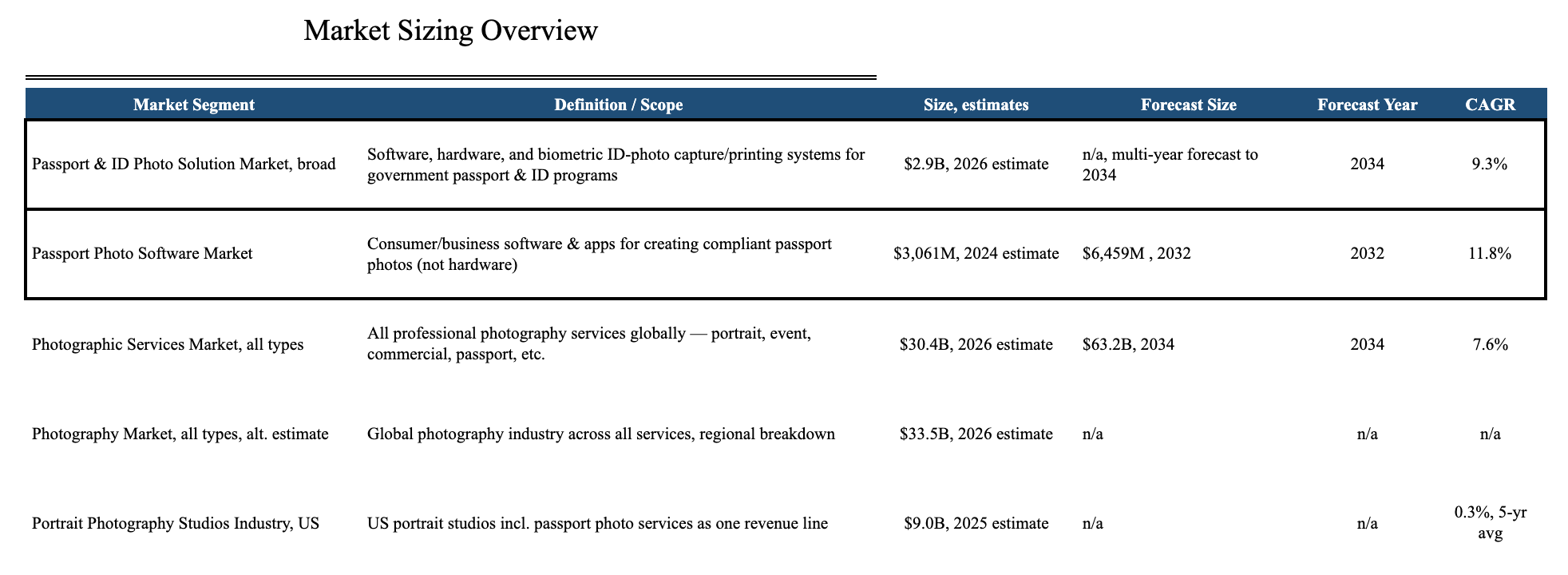
Focusing on block (1) and (2) presents an opportunity in which a software can be developed to expand on what Happy Beginnings is offering but perhaps on a larger scale and yielding similar results. The market could sprout.

Happy Beginnings is possibly onto something valuable. If so, Happy Beginnings should capitalize on. We can be myopic and hold a mentality that if you aren’t building data centers on the moon, you aren’t innovating or returning value. A great innovation that returns value advance from a rather mundane activity that suddenly becomes cool and considerably, smart.
Or Cheat —
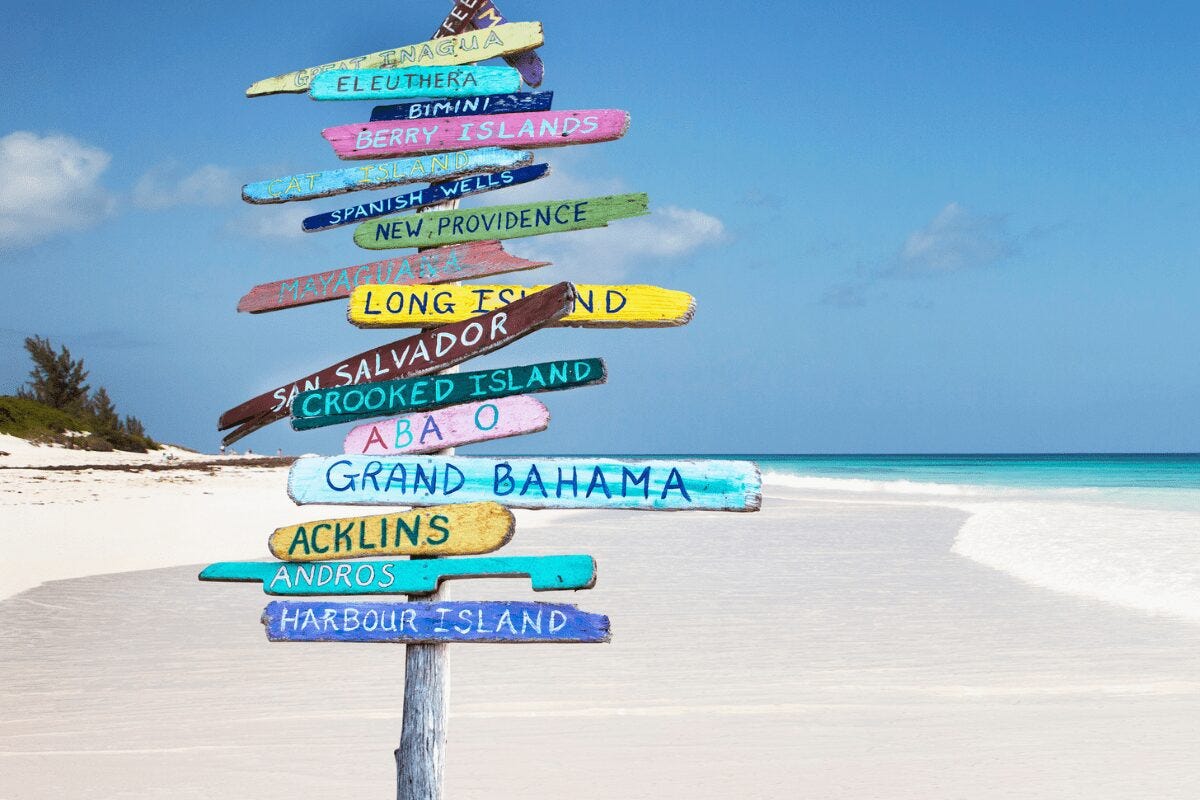
Just a couple of weeks ago, Zoe Galanis of On Coastal Tourism crafted a well thought out piece about how social platforms like Instagram and TikTok funnel travelers toward the same viral hotels, beaches, and experiences because algorithms optimize for what captures attention, not for what actually makes a trip meaningful. Galanis asserts that there is real value in travel advisors: not simply booking what a traveler already found online, but introducing them to what they haven’t found — drawing on context, perspective, and personal knowledge of the client that a recommendation feed can’t replicate.
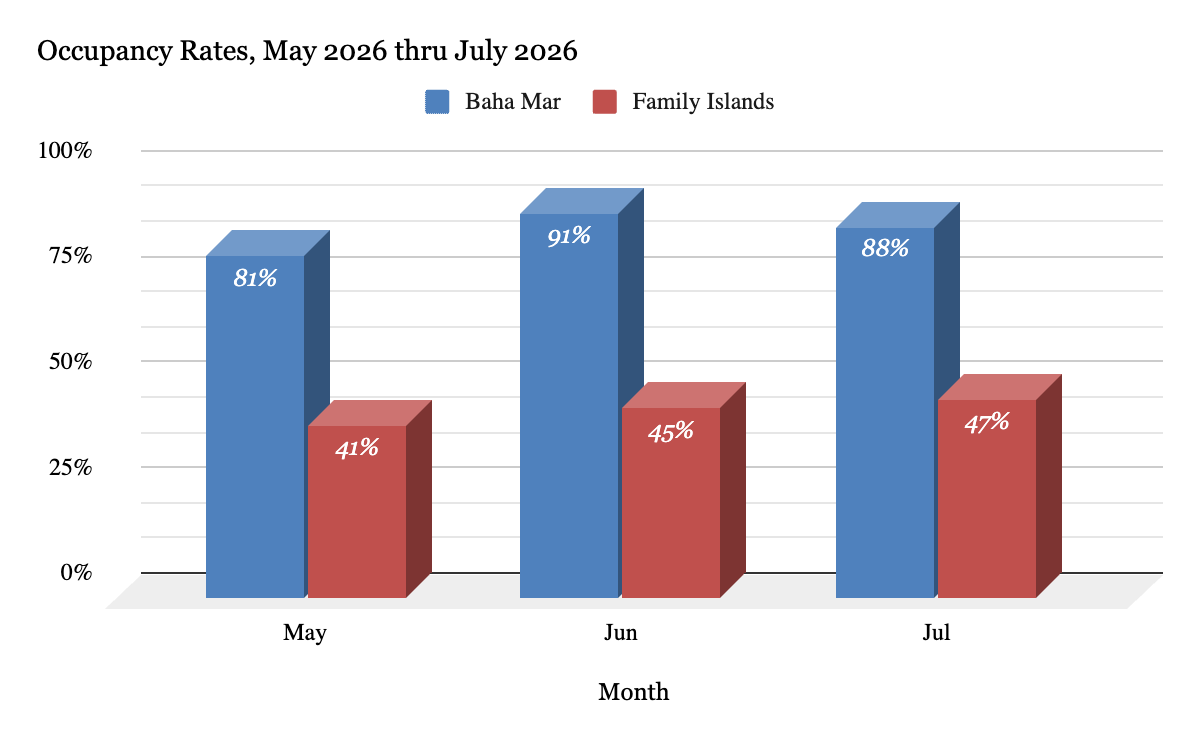
This affects many areas especially in Bahamas. I took some time to highlight the occupancy rates are grossly higher at mega-resorts Baha Mar region against the “family islands” which are too rich in history and hospitality yet hidden and can soon be categorized as cheated if the algorithm continues to dominate.
The variance in the occupancy rates are not directly due to the algorithms redirections. But can a correlation be formed if studied deliberated long enough. Let’s take a think and return back.
Till next week, you know the drill ✊🏾 Margin Call is issued weekly on Tuesdays, found only on Pay Me in Plane Tickets!