

Sponsored by 3137 Capital
Good morning. Nothing. Jensen’s return means absolutely nothing. I simply thought it was catchy.
Be First —
I’ve spent much of this autumn writing about airlines’ confidence that they can pass every cost on to passengers. Two new lawsuits argue that this pricing power isn’t entirely the product of competition. Filed on November 3 in Virginia and November 4 in federal court in Seattle, the proposed class actions accuse American, Delta, United, Southwest, JetBlue and Alaska Air Group of violating the Sherman Act by sharing competitively sensitive fare data through ATPCO, the fare-publishing company owned by American, Delta, United and seven foreign carriers. The core allegation is about a data repository ATPCO launched in 2023, after buying analytics firm 3Victors, which reportedly works on a “give-to-get” basis: airlines see rivals’ private discounts in exchange for sharing their own, with an alert when a competitor cuts a price. Steve Berman of Hagens Berman, which filed the Seattle case, says that lets airlines see “in real time what everyone is charging for any route in the U.S.,” and estimates passengers have paid 10% to 20% more than they should have, based on his economists’ comparison of airlines that use the data with those that don’t. On a $500 round trip, that’s $50 to $100. Some history matters here. A 1994 Justice Department case produced consent decrees that barred airlines from sharing nonpublic pricing information through ATPCO, and those decrees expired by 2011. The complaint’s argument, in effect, is that the industry has rebuilt with algorithms what the government took apart.
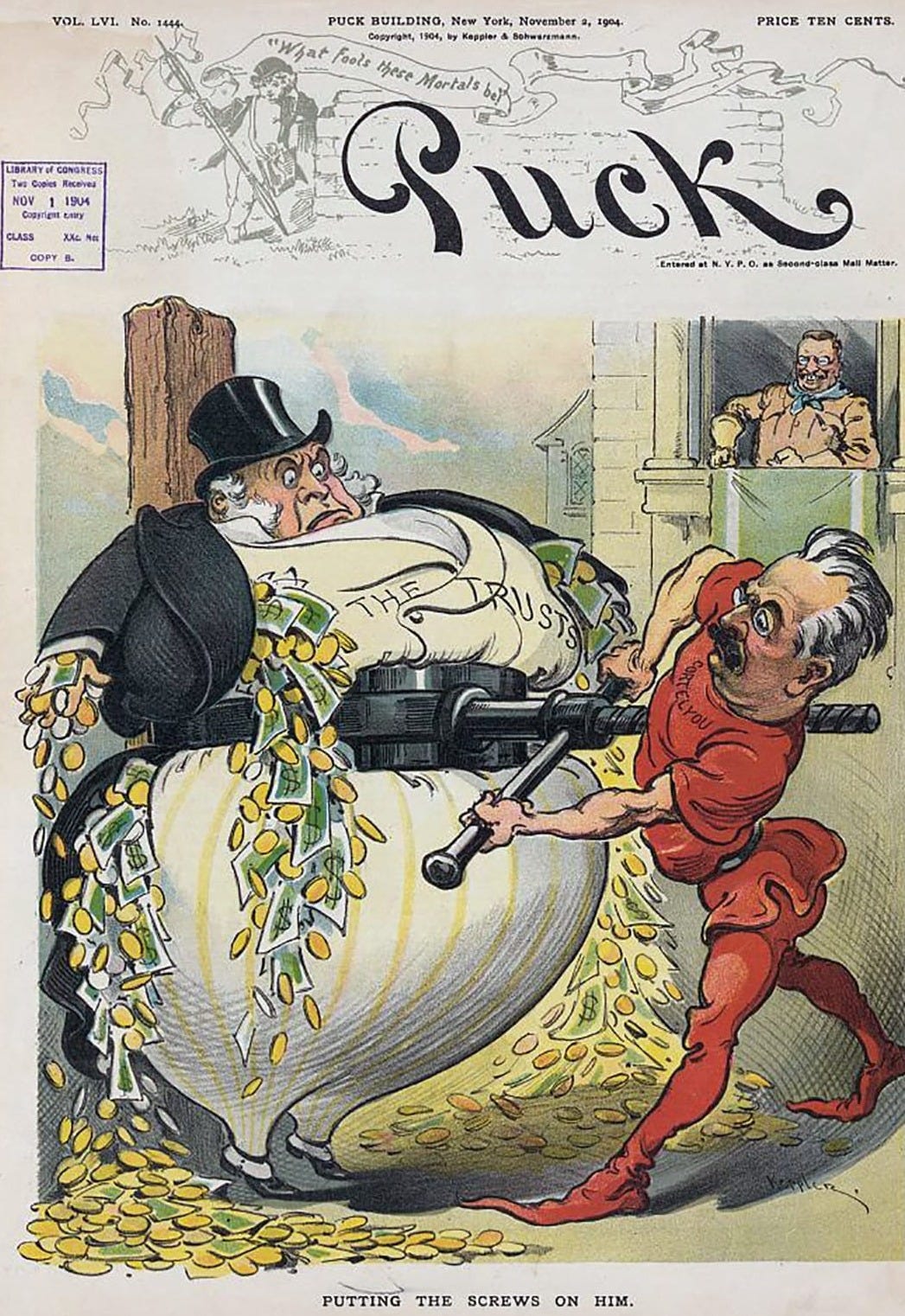
I’d be careful not to convict anyone on a complaint, though. American says it “categorically reject[s]” any suggestion its prices aren’t independent, Delta and Southwest declined to comment, and industry analysts note that publishing fares is standard practice and matching a rival’s price isn’t illegal. As one McGill aviation instructor put it, though, “if every airline is reading the same dashboard, the outcome can look a lot like coordination,” and I suspect that sentence will be quoted in a lot of court filings.
I’d treat this as a slow-moving risk rather than an immediate one. Antitrust class actions take years and usually end in settlements, but the case for discovery rests on exactly the pricing power airlines have been boasting about on earnings calls. An industry that tells analysts it can raise fares at will has made the plaintiffs’ opening argument for them.
Be Smarter —

When a union leader tells a room full of airline executives that the biggest raises are behind us, the right response is to check what she’s planning instead. That, in effect, is what Sara Nelson, president of the Association of Flight Attendants, did at the Skift Aviation Forum. She told the audience that the record pay gains of the last bargaining round, which she called the first real bargaining since 9/11 after contracts ran four to six years late, aren’t likely to be repeated. “I don’t think that we’re going to see the kind of increases that we saw this last time again,” she said. Before anyone in airline finance relaxes, though, the rest of her message was that labour costs won’t ease. They’ll just rise in smaller, more frequent steps, with shorter gaps between contracts. With mainline contracts at American and United “pretty much buttoned up,” the union has three new targets.
The first is regional carriers such as PSA and Endeavor, owned by American and Delta respectively, where Nelson says flight attendants earn roughly half of mainline pay, get no boarding pay and are increasingly based in expensive cities like Chicago and New York. The second is Delta, the only major U.S. airline whose flight attendants aren’t unionised, where she says the organising campaign is “really close” and the number of activists has risen 52% since January. The third, and the most novel, is worker data: the union objected after Google won Spirit’s employee data in a bankruptcy auction, won revised terms, and now plans to use them as a template for demands at other airlines. I can’t think of a clearer sign of how valuable airline data has become than flight attendants bargaining over who owns their records (more on this in the next section). On boarding pay, now standard at most major carriers, Nelson was blunt: “The public is on our side. So there’s no way they’re going to claw that back.”
I’d put this alongside the fuel bills we’ve been tracking. Regional carriers have historically been the cheap way for mainline airlines to fly smaller routes, and narrowing that pay gap raises the cost of the whole network, not just one line item. The era of big catch-up raises may be ending, but the era of airline labour costs that only go one way isn’t, and Delta’s non-union cost advantage is the one I’d watch most closely.
Or Cheat —
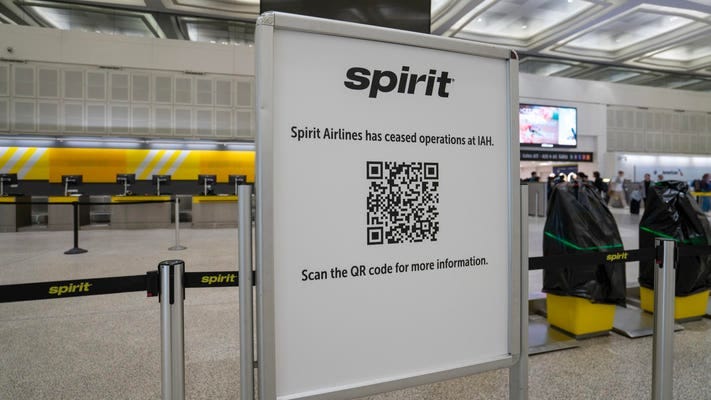
I’ve read plenty of bankruptcy filings where the most valuable thing left in a failed airline was its slots or its aircraft. Spirit’s may turn out to be its inbox. Reports that Google is paying $10M for a vast archive of the defunct carrier’s internal data, which it plans to use to train its AI models: roughly 1.9B emails across about 91,000 accounts, 664M Microsoft Teams items, 91M SharePoint and OneDrive files, around 30m lines of code, and commercial records including booking curves, vacation package data and airfare data. In my experience, any company’s email archive is mostly meeting invitations and arguments about the office fridge, but an airline’s booking curves are another matter. They show, in detail, how passengers respond to price as departure approaches, which is exactly the kind of information AI travel agents will need, and Google bought it for less than the price of a single regional jet. The original terms protected customers but not employees, and the Association of Flight Attendants objected. As mentioned above, it’s president, Sara Nelson, said that “without our union, there would have been no one to speak for workers in this fire sale of their private information.”
The revised deal adds de-identification by Tonic AI, at Google’s expense, excludes medical exams, payroll, drug tests, biometrics, crew pairings and union grievances, and commits Google not to re-identify anyone. Since then, bankruptcy judge Sean Lane approved the sale on November 17, finding the data procedures comply with privacy law, although critics argue that de-identified data can be linked back to individuals once it’s copied, licensed or breached. Spirit can also still sell its customer list to other travel, hospitality and leisure companies.
For me, the bigger point is about value. The same month that United blocked third-party AI agents from booking its flights, and Meta said it wants a cut of travel bookings made through Muse, a failed airline’s records went to a tech company for training data. Travel companies are learning that their data is worth more than they thought, and the price Spirit got suggests the buyers learned it first.
From airport shutdowns to Jensen’s return…what’s next? ✊🏾 Margin Call is issued weekly on Tuesdays, found only on Pay Me in Plane Tickets!