
Sponsored by 3137 Capital
Good morning. Warm welcome to quarter four of 2026, the last stretch for the year!
Be First —
Every so often I find it that an industry decides that a cost center is really a strategy, and the hotel trade's current candidate is wellness. Wellness tourism was an $894B market in 2024 and is heading toward $1T before the end of the decade. Luxury hotels should stop treating wellness as a spa-menu upsell and make it the product itself. Evidence is mainly about how expectations have shifted. Guests now assume features like circadian lighting, clean air and water, and rooms designed for sleep, in the same way they assume fast Wi-Fi. A brand still marketing a green juice menu, simply looks dated.
The more interesting point for investors is about where money is flowing. Citing Kearney, Moura says “affluent consumers with spare cash choose travel ahead of jewellery and watches, and that hotels and fine dining are growing at roughly 8% through 2028”. On that view, hospitality is not just a beneficiary of luxury spending but is replacing parts of the health, fitness and self-care industries. Essentially putting wellness first before previous leading dynamics.
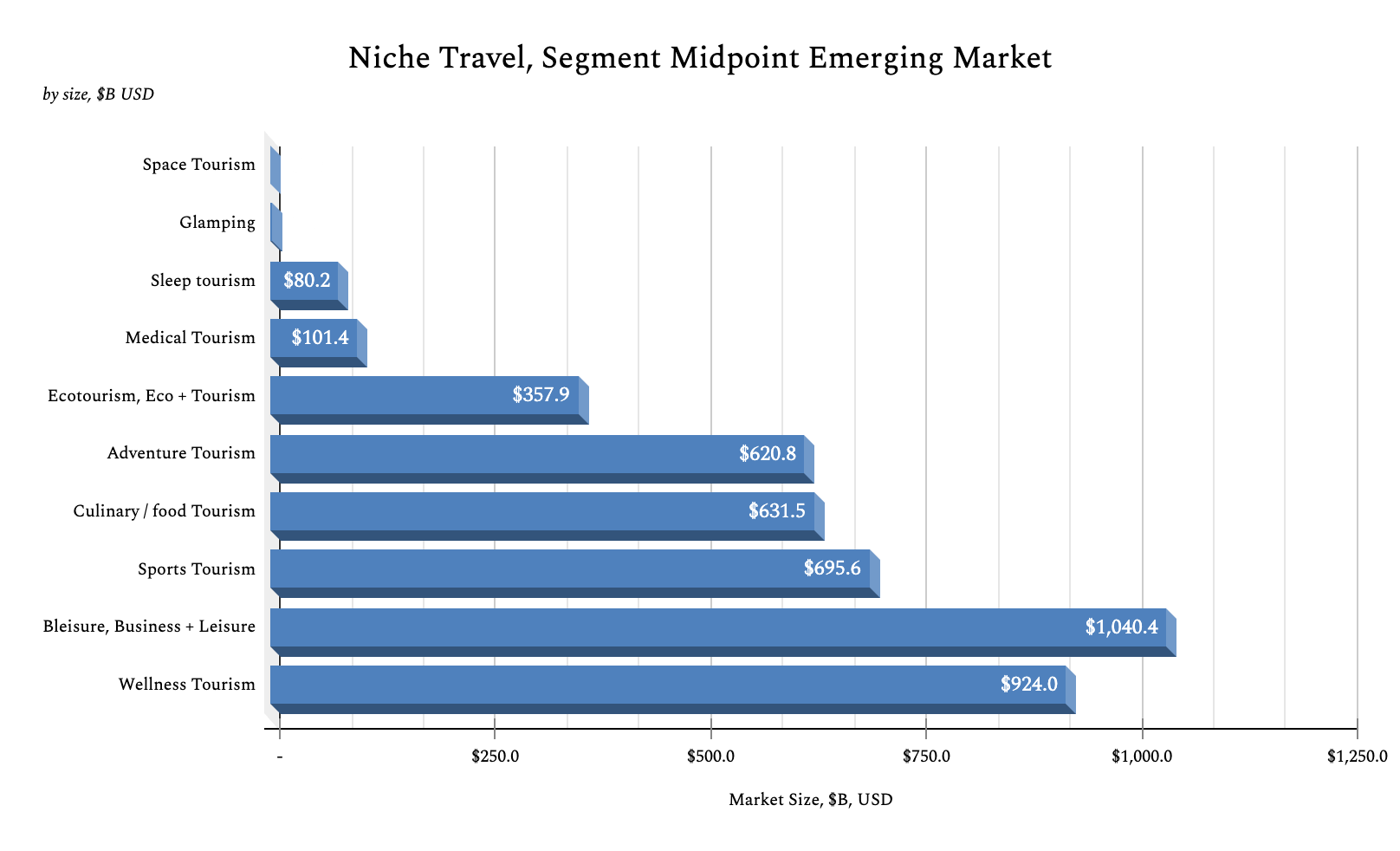
I took a glance at the Hilton's Signia Restore recovery concept, launching in Indianapolis in January 2027, is the kind of bet he has in mind. Investors should be cautious about one part of this argument. Once a feature becomes a baseline expectation, it usually stops earning a premium and starts consuming capital. In short, redesigning a building around sleep is far more expensive than adding a juice bar, and an expectation that guests take for granted is one they rarely pay extra for.
The winners will be properties with a distinctive cultural or architectural identity that competitors cannot easily copy. That may well be right, but it is a difficult strategy for a large chain to execute across hundreds of hotels.
Be Smarter —
I find it interesting, and somewhat smart when a company opens an interview by admitting that "our lines have been a little bit blurry", the right response is a skeptical "Go on, then."
Kayak for Business, the corporate arm of the Booking Holdings-owned metasearch brand, exhibited at the Global Business Travel Association convention for the first time in August. Its pitch was that it is no longer just the enterprise booking tool tied to a single travel management company, Blockskye. It now serves both small and midsize firms and large enterprises, and it has gone global by adding partners such as FCM and Altour.
Senior vice president Eva Fouquet describes the product as a content aggregator. It pulls in airline content through Amadeus but makes its money on the edge it claims in direct supplier connections for hotels, rail and ground transport. Travel management companies then add their own service layer on top, and in the paid small-business tier Kayak provides that service itself. That is a polite way of saying Kayak sells to the agencies while also competing with them, a balance that tends to hold only until one side's margins come under pressure. On AI, Fouquet is notably restrained. Kayak will run natural-language booking alongside traditional search instead of rushing to a one-prompt checkout, because, she says, users are not ready for that. Pilots have reduced agent involvement, though Kayak has not yet released numbers. The firmest figure in the interview comes from its events tool, which has handled policy-compliant bookings for 45,000 attendees across more than 130 events.
In a market where Navan, Spotnana and the large agencies are all building the same all-in-one platform, Kayak's real advantage is 20 years of leisure traffic and user-experience expertise. The question for investors is whether consumer polish can win over corporate procurement teams, a group that has historically cared more about the invoice than the interface.
Or Cheat —
Every marketing budget is really a capital allocation decision, and travel companies are moving a growing share of theirs to content creators.
The numbers explain why. eMarketer expects social media creator revenue to exceed $21B this year, up nearly 17% and 92% of destination marketing organizations say they are maintaining or increasing influencer budgets. Hyatt, IHG and Marriott all told Skift’s Creator Summit they are leaning harder on the channel. Why, again?
The appeal is lower customer acquisition costs: creators reach younger travelers more cheaply than search ads or online travel agency commissions, and the content keeps working long after the trip. The cost is less visible on the income statement. Leaving the strategy a viable cheat.
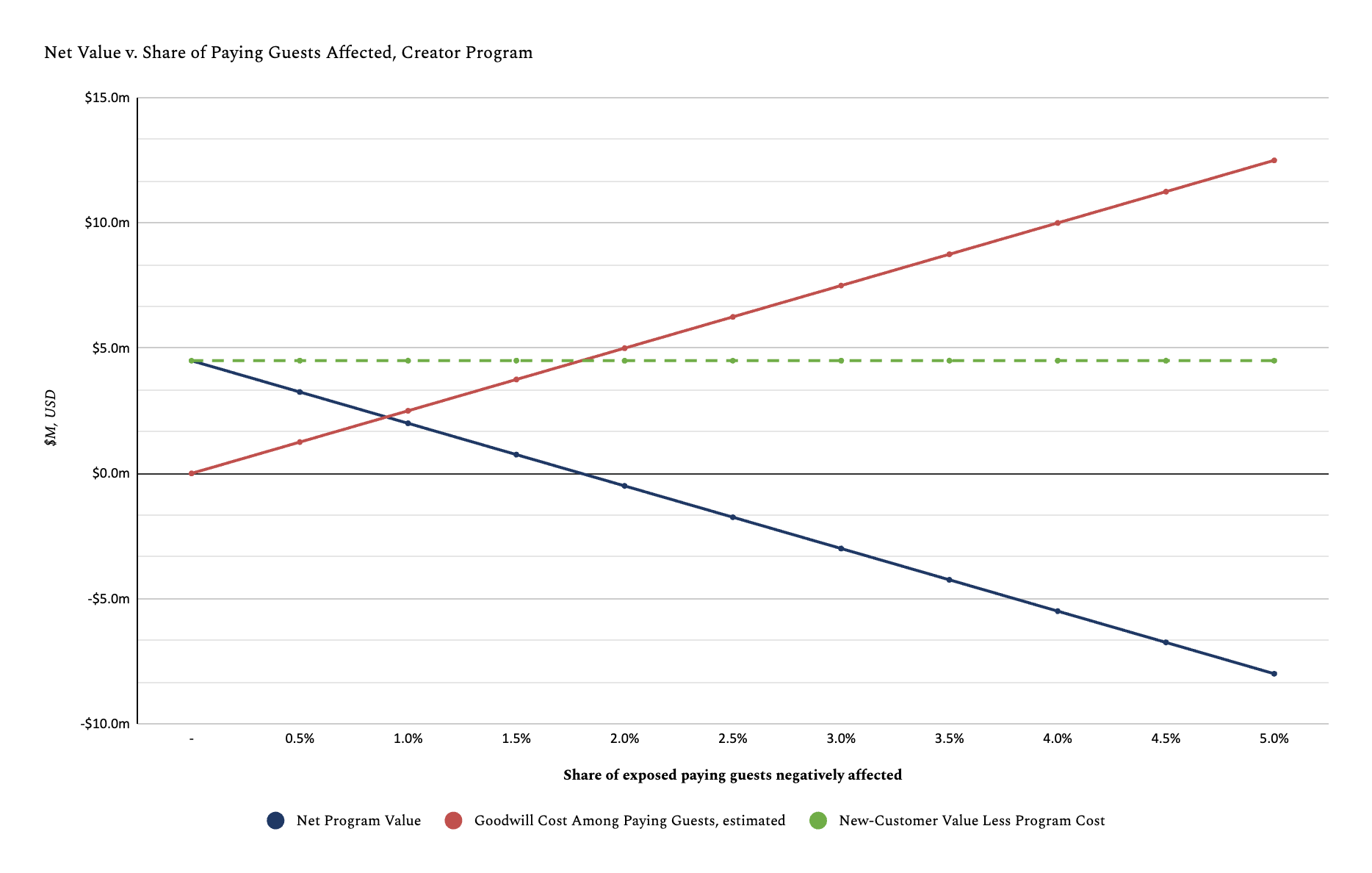
The U.S. Open nearly doubled creator credentials to almost 100 this year for a tournament that drew more than a million attendees, over 40% of them from outside New York. Paying guests noticed, from a viral clip of a ring light set up mid-match to Norwegian Cruise Line passengers objecting to a creators-only first look at a new waterpark.
I perceive that in effect, the business is running a subsidy: the acquisition cost of future customers is being paid partly by current ones, in the form of a worse experience, and those current customers are often the most valuable. Hospitality-suite holders and repeat cruisers are the high-margin, high-loyalty segment that marketing budgets exist to replace, not to annoy.

Some of the backlash may be misattributed. The U.S. Open says the disruptive suite guests were not credentialed creators, and Norwegian calls its preview a routine launch. But that is part of the problem. Creator programs are easy to fund and hard to measure, so the reach tends to be counted while the damage to existing customers often is not. I’ll conclude with this; that until companies weigh the reach a creator brings against the lifetime value of the guests seated nearby, they cannot really say whether the program pays for itself.
Let the fall season sprinkle in. ✊🏾 Margin Call is issued weekly on Tuesdays, found only on Pay Me in Plane Tickets!