
Sponsored by 3137 Capital
Good morning. It’s the last week in September, last week in Q3. Are we really ready to close this out 🤔
Be First —
Here is a curious business proposition: sell hotel rooms and deliberately make no money doing it. Uber began offering hotel bookings in April through a partnership with Expedia, and chief executive Dara Khosrowshahi told the Skift Global Forum that the business runs at break-even by design. The logic, such as it is, rests on customer acquisition costs, the quiet tax on every online travel agency. Because Uber generates its own traffic rather than buying it from Google, it can pass the booking margin back to Uber One subscribers as discounts of 10%, and up to 20% at some properties.
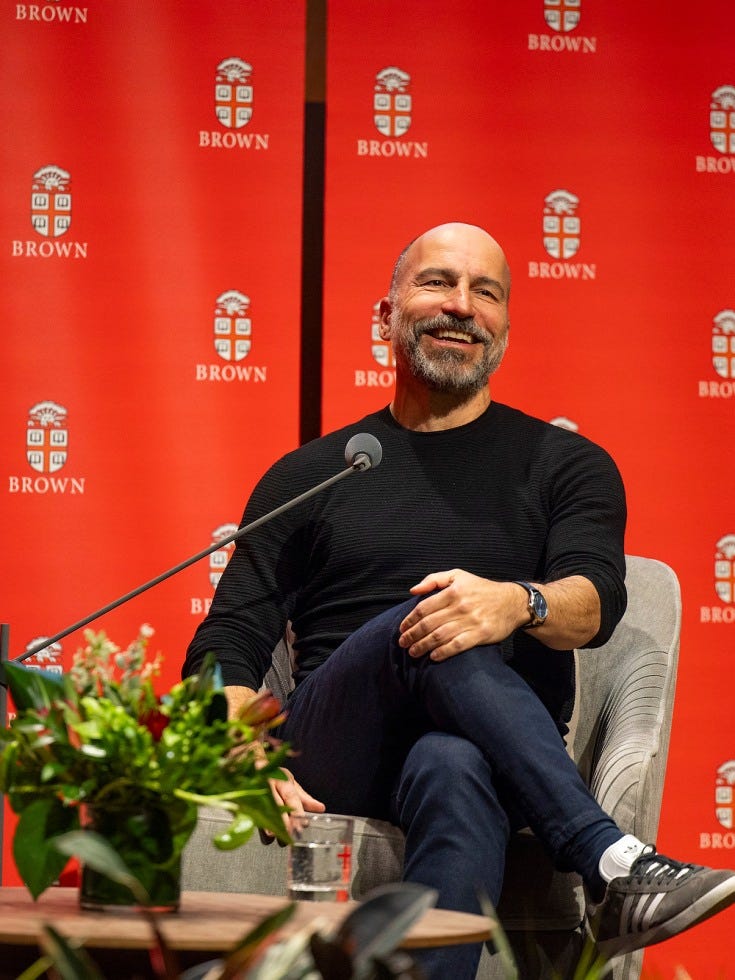
The real asset is the membership base: more than 50M paying members who, by Khosrowshahi's account, spend three times as much as non-members. So hotels are less a revenue line than a retention tool, which is a perfectly respectable thing for a subscription business to want. Khosrowshahi points to precedent. Uber was 95% rideshare when he arrived in 2017 and is now roughly evenly split between rides and delivery. Vrbo rentals are due in the app later this year via the same Expedia plumbing, while flights wait until Uber learns whether travelers will actually book trips in an app built for impulse. That is the open question. Ordering dinner and choosing where to spend a week are different decisions, and it is not obvious they belong on the same screen.
One more detail worth noting first: Khosrowshahi ran Expedia before joining Uber and still sits on its board, which makes Expedia the supplier to what could become a front door that competes with its own.
Be Smarter —
Now, what does a cruise company do when it’s thirsty for growth, and a sinking stock?
It buys dry land which is kinda sorta smart. Royal Caribbean said on Wednesday it had agreed to acquire a 50% stake in Caribbean resorts operator Sandals Resorts International for $3B, which values the resort chain at $6B. The price is not outrageous: roughly 10x forward EBITDA, paid for with committed debt financing from Morgan Stanley, with closing expected in early 2027 and the deal expected to add to earnings next year.
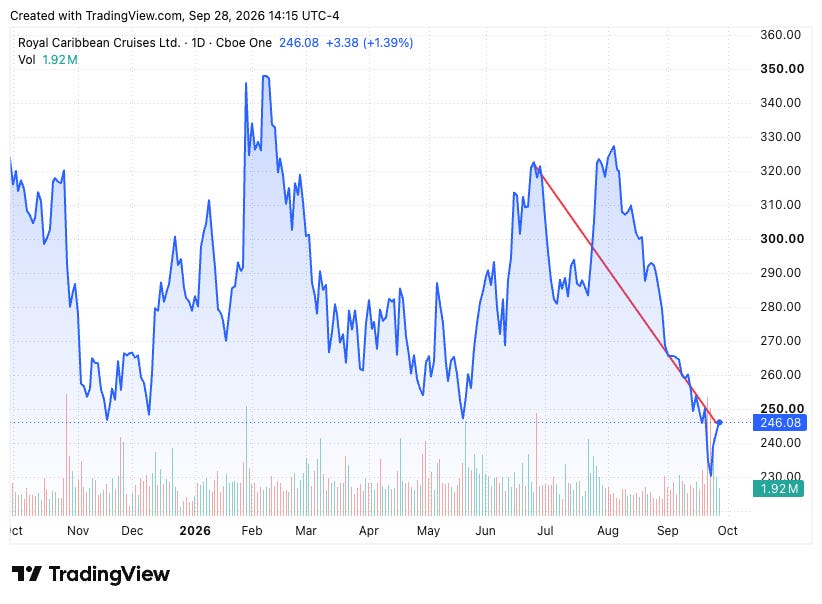
Borrowed money, a mid-cycle multiple, and a promise of accretion is a familiar recipe. It tends to look clever or reckless depending on what demand does next. The context matters. Royal Caribbean's shares have fallen about 25% over the past year after it cut its revenue growth forecasts on weaker demand for European sailings, and the industry is again in turmoil, with the war in the Middle East denting its post-pandemic recovery. The strategic logic is reasonable enough. Caribbean cruising and Caribbean all-inclusives have increasingly been chasing the same traveller, and Royal Caribbean plans to combine cruises with resort stays, so the company has chosen to join its competitor rather than fight it. But this is half a company, not a whole one.
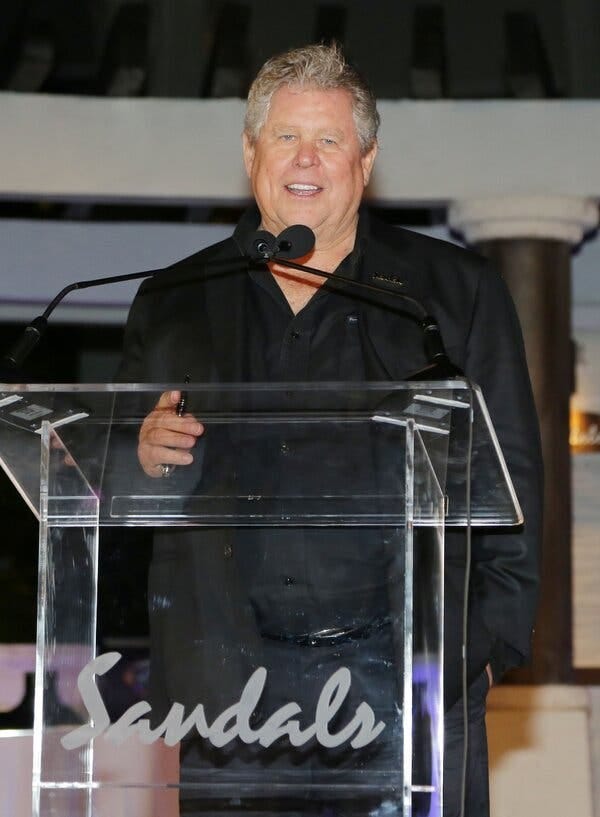
The family of Sandals founder Gordon Stewart, who died in 2021, keeps the other half, and the joint venture's board will be jointly led by Royal Caribbean chief Jason Liberty and Sandals executive chairman Adam Stewart. For investors, the question is whether a cruise line can earn resort-level returns while sharing control with the family.
For travelers, the question is whether ship plus beach is a product people want or simply a bundle that is convenient for the seller.
Or Cheat —
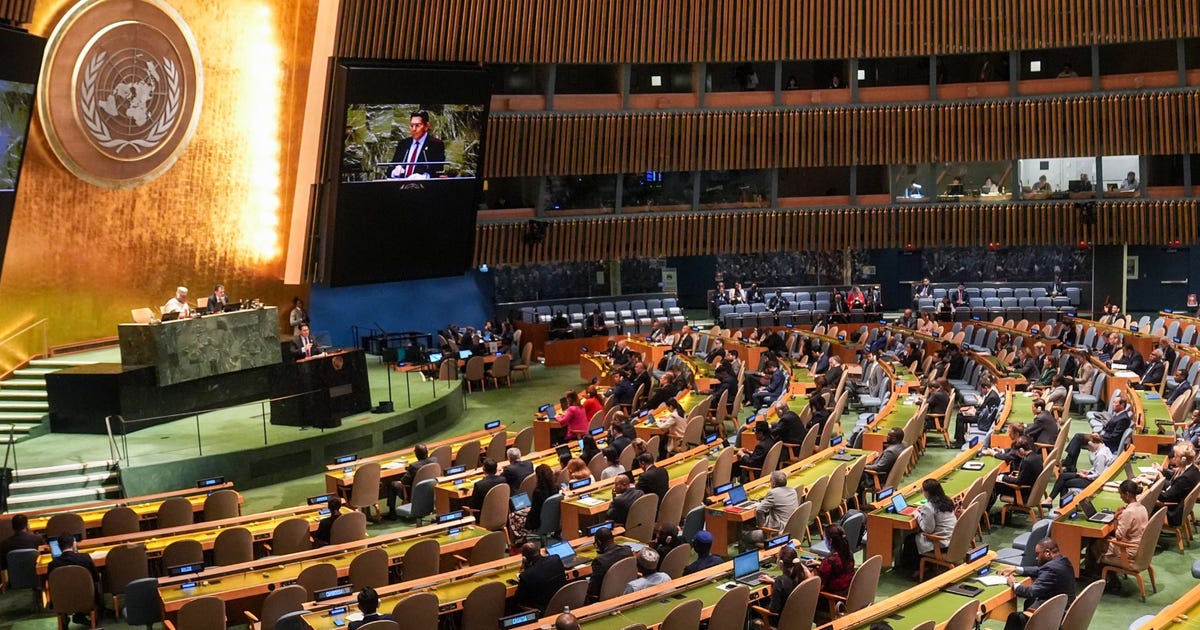
I did listen in on a few UN talks over the past week. Some I skimmed.
Although when the UN starts worrying about your distribution strategy, it is worth paying attention, since regulators tend to follow. António Guterres used this year’s World Tourism Day message, themed on AI, to warn that the technology is changing how travelers choose destinations and how the industry operates, and that, left unchecked, it can funnel tourists to the same few places and platforms, leaving many worthwhile destinations behind. In plain terms, this is a warning about cheating disguised as concentration, and concentration is what every large travel company is trying to achieve, from Uber positioning itself as the front door to hotels to the online travel agencies angling to be the default inside AI chatbots. For platform shareholders, that sounds like a moat; for a boutique hotel in a secondary city, it looks more like a toll booth. Nothing binding follows from a World Tourism Day message. But with US-China rivalry making it harder for the UN to build unified and enforceable governance frameworks for AI, rules are more likely to arrive country by country, and travel companies would do well to show that their AI spreads demand rather than concentrating it before someone else frames the issue for them.
See y’all in Q4! ✊🏾 Margin Call is issued weekly on Tuesdays, found only on Pay Me in Plane Tickets!