


To understand the fraying of the Dubai safety net, one must first understand the audacity of its weaving. The city did not emerge organically from the soil like London or Damascus; it was summoned, through a kind of geopolitical alchemy, from a salt-crusted coastline that offered little more than heat and ambition.
The Creek and the Pearl: A Pre-Modern Hustle
Before the glass towers, there was the Khor Dubai (currently known as Dubai Creek), a natural saltwater inlet that served as the city’s primary artery. In the 19th century, the Bani Yas tribe, led by the Al Maktoum family, settled here, pivoting away from the interior’s tribal wars to embrace the uncertainties of the sea.
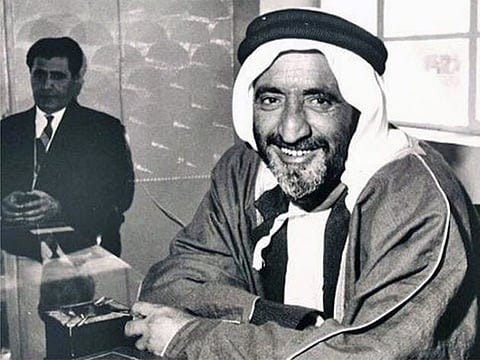
Dubai’s first “safety net” was the pearl. By the early 1900s, it was the Gulf’s busiest port, a duty-free haven even then. But the safety net broke for the first time in the 1930s when the Japanese invented the cultured pearl and the Great Depression collapsed global luxury markets. The lesson learned by the young Sheikh Rashid bin Saeed Al Maktoum was foundational: Diversify or vanish.
The Dredging of Destiny (1950s–1960s)
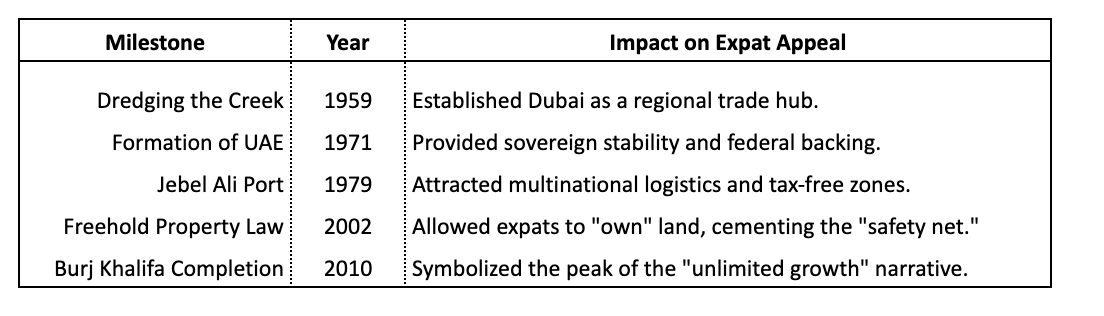
The true origin of modern Dubai isn’t oil—it’s mud. In 1959, Sheikh Rashid borrowed £600,000 (approx. $16.2M in 2026) from Kuwait to dredge the Creek, which was becoming too shallow for large trade ships. Critics called it a folly. Instead, it was a masterstroke. By the time oil was discovered in the Fateh field in 1966, Dubai already had the infrastructure to move goods.
“My grandfather rode a camel, my father rode a camel, I drive a Mercedes, my son drives a Land Rover, his son will drive a Land Rover, but his son will ride a camel.” — Sheikh Rashid bin Saeed Al Maktoum
This quote became the city’s unofficial mantra—a haunting recognition that their wealth was a finite parenthesis in history.
The Era of Superlatives (1970s–2000s)
When the British withdrew in 1971 and the United Arab Emirates (dubbed the ‘UAE’) was formed, Dubai found itself the scrappy, commercial sibling to oil-rich Abu Dhabi. To survive, every element had to become grand.
Jebel Ali (1979): The world’s largest man-made harbor was built in the middle of the desert. It was a “Field of Dreams” gamble: build it, and the supply chains will come.
Emirates Airline (1985): Launched with two leased planes, it effectively turned Dubai into the world’s transit lounge.
The Real Estate Fever Dream: The 1990s and 2000s saw the creation of the Burj Al Arab (the “seven-star” hotel) and the Palm Jumeirah—landscapes literally reclaimed from the sea to provide a playground for the world’s elite.
The Safety Net as a Service
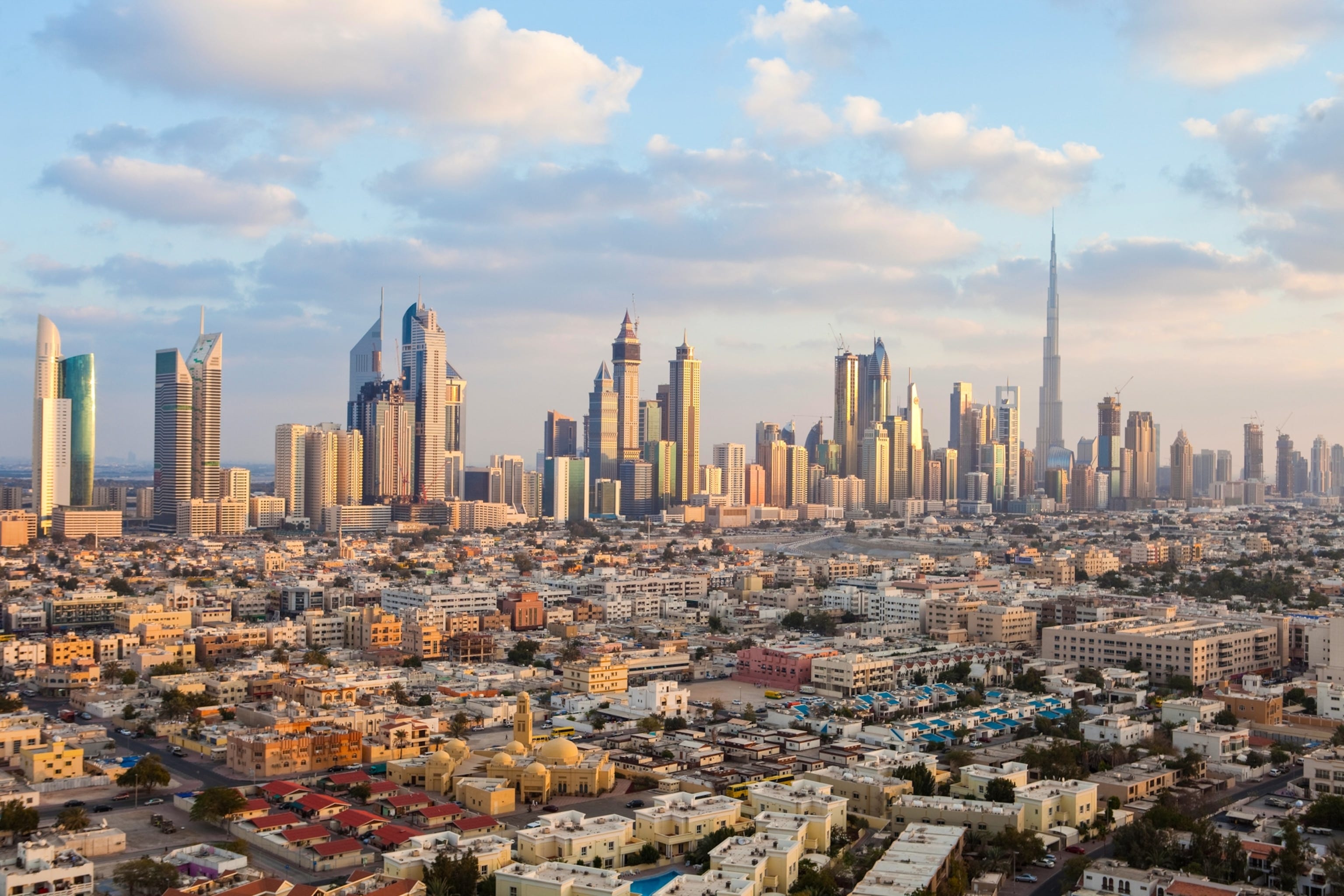
By the 2010s, Dubai had perfected its product. It offered a “Western-plus” lifestyle: the safety of Switzerland, the sunshine of Miami, and the tax code of a pirate ship. It became the default destination for “High Net Worth Individuals” fleeing the chaos of the Arab Spring or the stagnation of European economies.
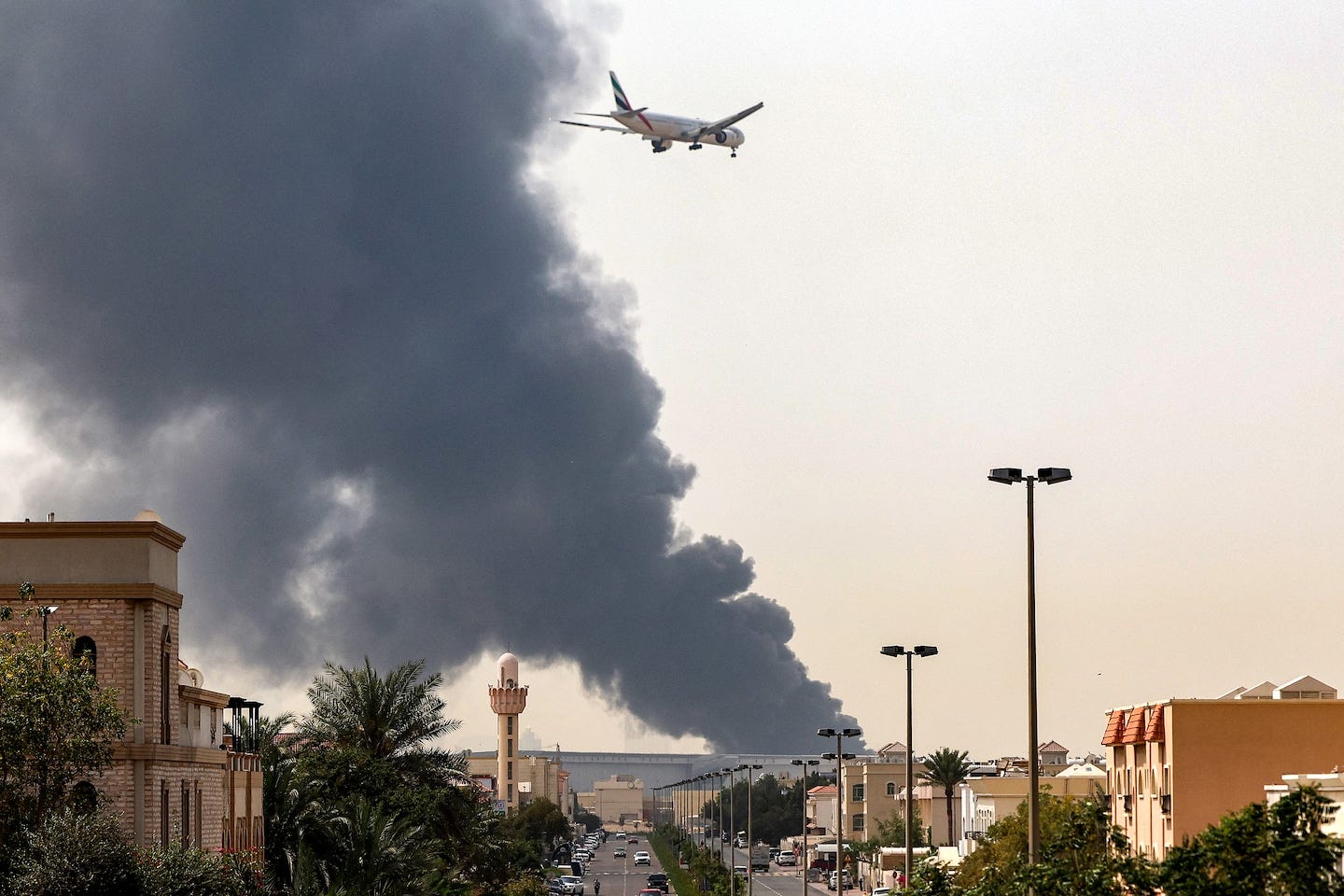
But this history reveals a recurring theme: Dubai thrives on the instability of others. It is a counter-cyclical asset. The current anxiety stems from the realization that for the first time in its short, spectacular history, the “others” are no longer far enough away. The regional war isn’t just a news cycle; it is a threat to the shipping lanes of Jebel Ali and the flight paths of Emirates—the very pillars Sheikh Rashid built to replace the camel.
Expat Built on Slave Labor
The great “expat safety net” was always segmented by passport and paycheck, but the current volatility exposes the deep cynicism of that segmentation. The professional class is re-evaluating their risk premiums, calculating if their tax-free incomes are worth the claustrophobia of a city located just a missed missile away from disaster. Their commitment to Dubai was always mercenary, a strategic choice in their personal financial algorithms. When the risk factor in that algorithm spikes, they will, as they must, calculate a new best option.
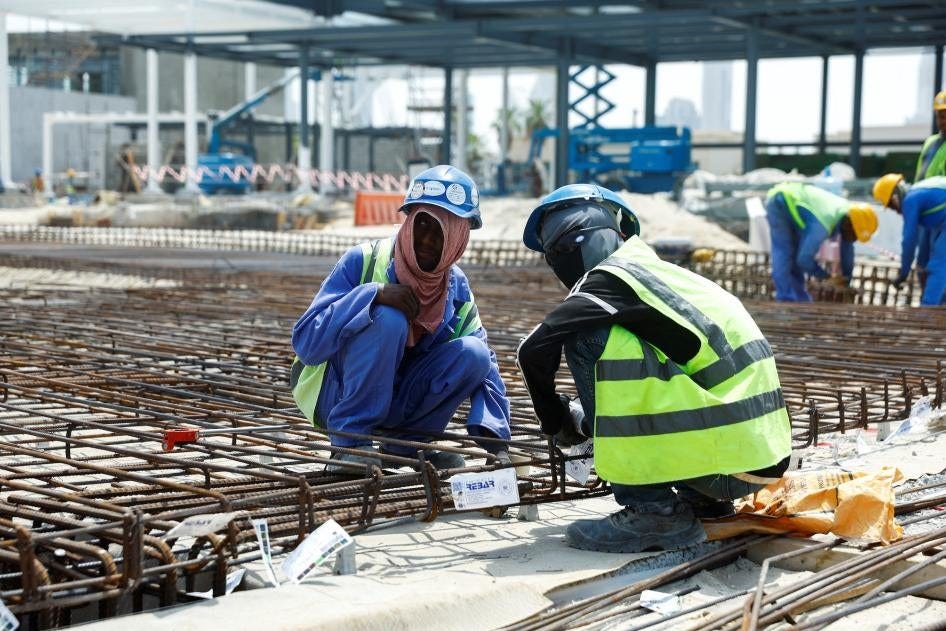
But the critique must penetrate deeper than the calculations of the elite. The entire apparatus of Dubai is predicated on a profound and deliberate invisibility. Beneath the glittering condos of Dubai Marina and the air-conditioned malls where professional families debated the “safety net,” there exists the massive, silent scaffolding that builds and services the mirage: the migrant labor force.
These millions, largely from South Asia, are trapped within the kafala system, a structure that bonds them to a single employer, restricting their mobility, stripping them of labor rights, and granting them zero hope of citizenship or true belonging. Their safety net was always non-existent; they were the disposable fuel for the economic engine.
The war doesn’t just make the elite nervous; it highlights the fundamental cruelty of a system that they, and the multi-national corporations who set up regional headquarters in “neutral” Dubai, were all too happy to ignore. The city’s “cosmopolitanism” was never a melting pot; it was a carefully segregated salad bowl where the ingredients that added “flavor” (the labor, the service) were confined to the bottom, unseen. The war peels back the top layer, forcing us to witness the structural precarity that has long been the city’s actual foundation.
The Cost of War for Dubai
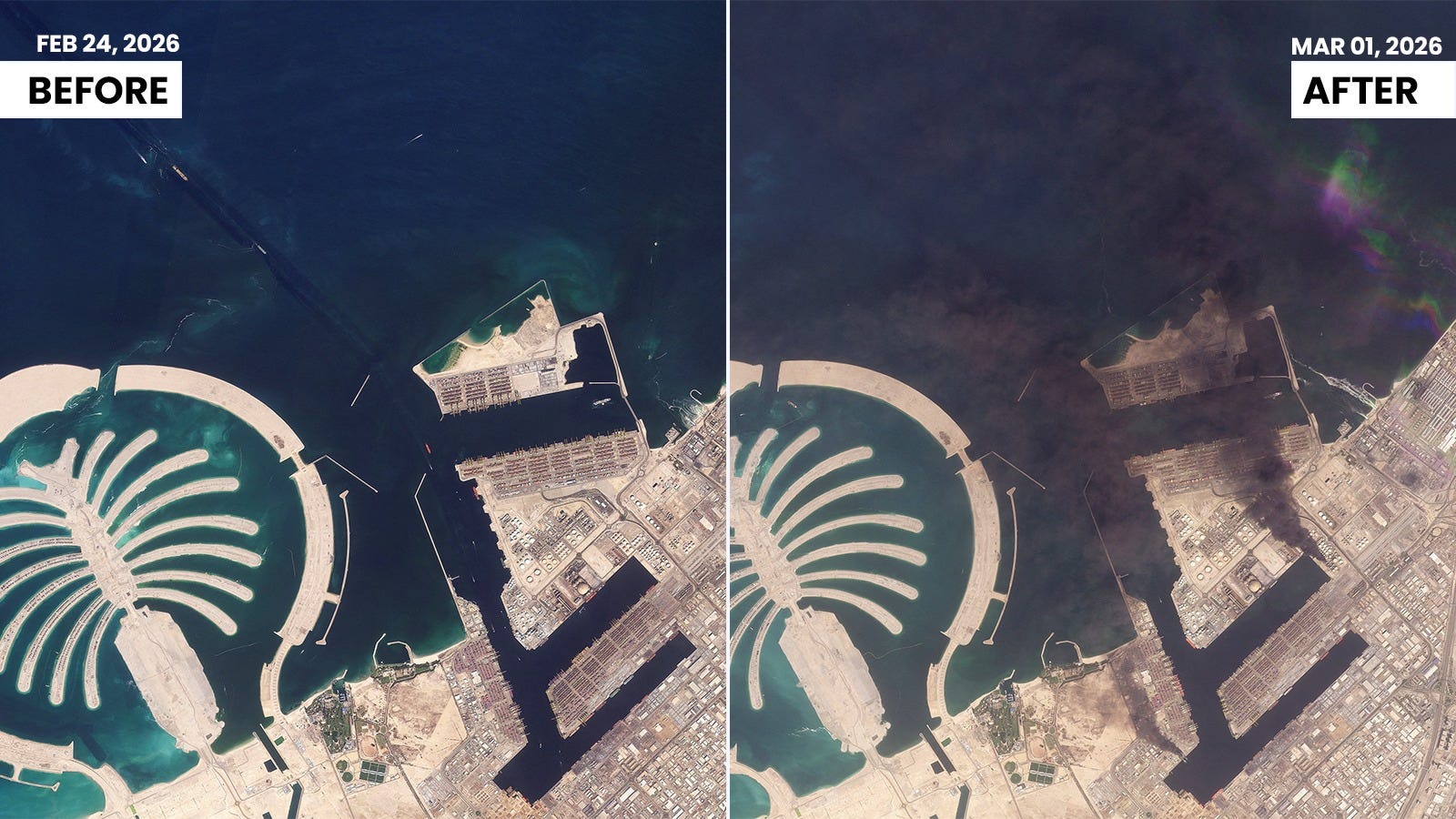
This historical trajectory, magnificent in its sheer will, has reached its logical limit. The error was not in the construction of the Jebel Ali port, or the launch of an airline, or even the stacking of one audacious skyscraper atop another. The fundamental error, now exposed with a terrifying clarity, was the conceit that a city could, through enough imported capital and clever rebranding, achieve escape velocity from its own geography and its human reality.
The current war has not introduced new flaws to Dubai; it has acted as a solvent, stripping away the expensive veneer of “exceptionalism” to reveal the precarious and ultimately transactional nature of the entire enterprise. It has exposed the city as not a resilient, organic society, but as a gilded, delicate structure whose very existence is a wager against regional reality—a wager it is now losing.


The Performance of Placelessness
Dubai’s true flaw is its deep lack of there-ness. It is an exercise in profound place-less-ness, seeking to be London one moment, Singapore the next, a perfect simulacrum where all inconvenient history, authentic culture, and genuine societal dialogue have been carefully bleached out in favor of “brand identity.” It doesn’t have a culture of its own; it imports performances of culture.
This has left the city fundamentally brittle. There is no authentic, resilient fabric to a city that is merely a collection of shopping malls and freehold properties. When the imported people and capital are threatened, there is nothing there to hold the structure together, no deep roots of shared history or mutual obligation. Dubai is a city that performs “metropolis” with dazzling technical skill, but the current conflict has turned off the stage lights, leaving the actors scrambling to find their actual exits.
The Shattered Illusion of Neutrality
Ultimately, the UAE’s strategy—the Al Maktoum gamble—was based on a radical denial of geography. It was the audacious attempt to build a global safe harbor on the edge of a geopolitical fault line and convince the world it was an island. They marketed neutrality not as a moral principle, but as a premium service, like business-class travel.
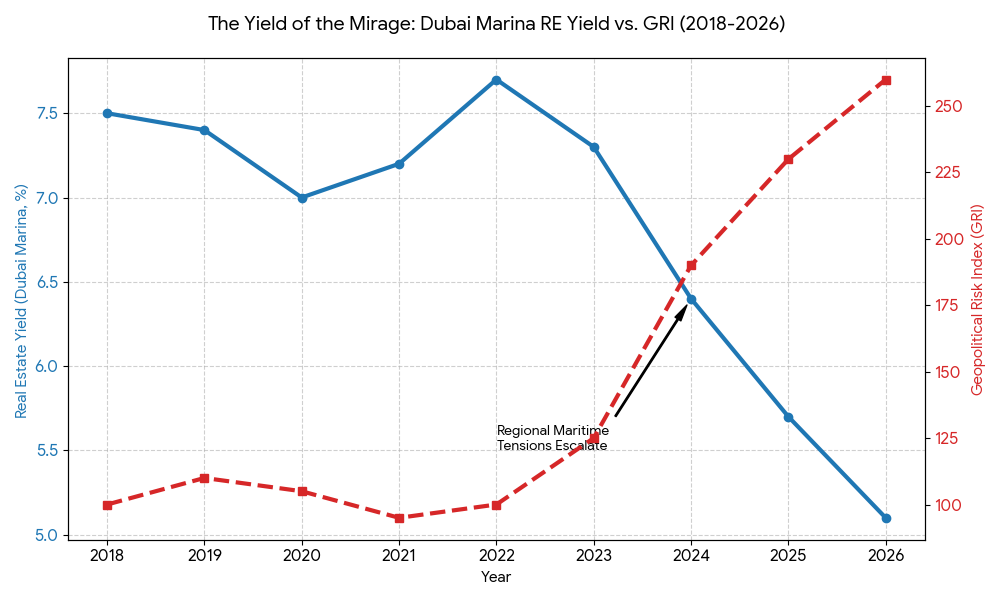
The above chart illustrates how this premium is failing. As the Geopolitical Risk Index (GRI) spikes due to regional maritime tensions, the real estate yields in prime locations like Dubai Marina—once the gold standard for secure investment—begin a precipitous downward trend. “Safety” is no longer being priced in as a guarantee.
The current conflict proves that in this region, at this time, that form of commercialized neutrality is either non-existent or carries a price too high even for Dubai to pay. The Strait of Hormuz is not a generic shipping lane; it is the lane, and its security is tied to powers far larger and more unpredictable than any city-state can manage. The fallacy was that money and clever logistics could build a perimeter robust enough to withstand the inescapable reality of the desert beyond.
Simply put, the sand is winning.