

For most of the travel industry, the Falklands have long been a footnote: a windswept stop on the way to Antarctica, a penguin colony visited by cruise passengers who spend a single afternoon ashore before sailing on. That footnote is now attached to a geopolitical dispute involving the presidents of Argentina and the United States, and travel companies that build itineraries a year in advance are starting to pay attention.
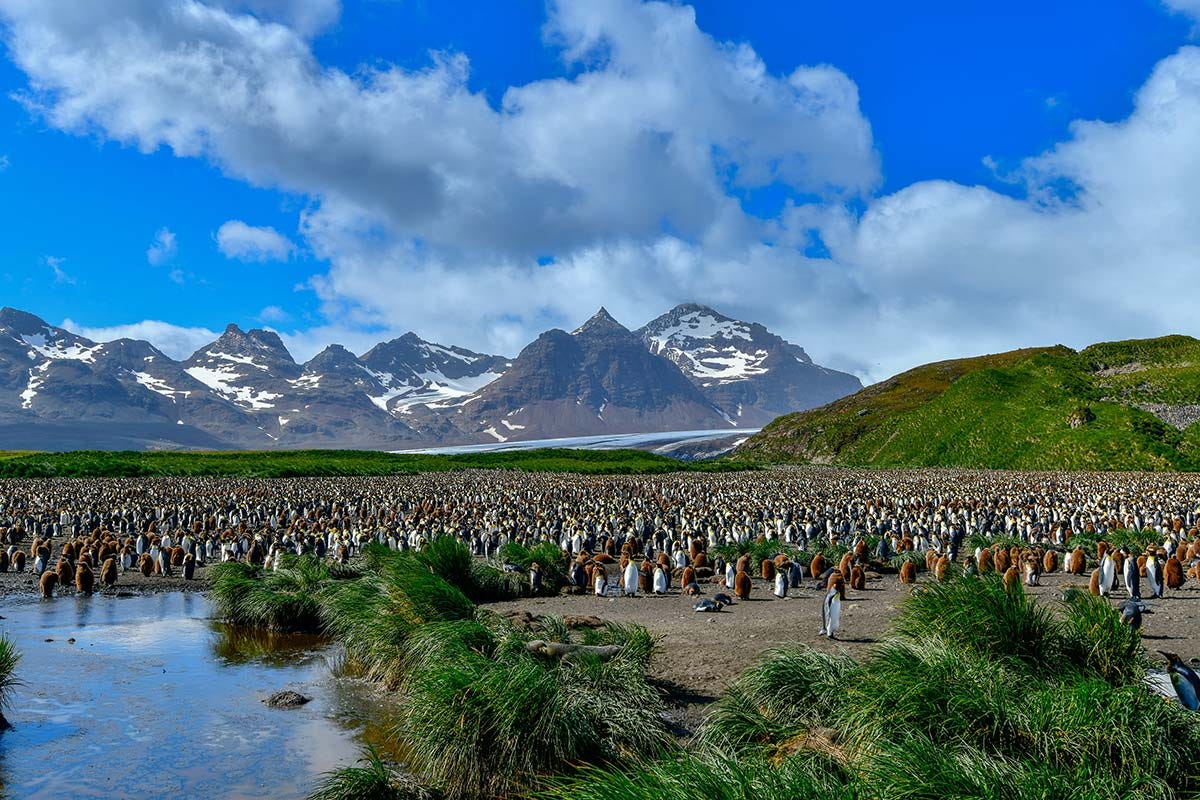
The dispute is not new. Britain and Argentina fought a ten-week war over the islands in 1982, and the sovereignty question never went away. What changed this month is the involvement of Washington. President Trump said in an interview that the American position on the islands — officially neutral for decades — was “one of many” under review. Argentina’s president, Javier Milei, seized on the remark, telling the country in a national address that “winds of change” favorable to Argentina’s claim “are blowing around the world.” He has since argued that the roughly 4,000 Falkland Islanders do not have a legitimate right to self-determination, a position that breaks with the overwhelming outcome of a 2013 referendum, in which more than 99 percent of islanders who voted chose to remain British.
The people most directly affected have been notably measured in public. The Falkland Islands Legislative Assembly, the territory’s elected government, issued a statement responding to Mr. Milei’s address that pointedly did not name Argentina and mentioned him only once, in passing. “The Falkland Islands are a self-governing British Overseas Territory, and our future is a matter for the people who live here to decide,” the statement said, adding that this right is grounded in international law and “is not altered by the statements of any other government.”
That restraint is deliberate, longtime observers of Falklands politics say. Islanders have heard sovereignty rhetoric from Buenos Aires before and have learned not to let it dictate their own posture. When Britain’s government followed up with formal guidance reassuring companies that do business in the islands, Jack Ford, chair of the Legislative Assembly, welcomed it in strikingly commercial terms, calling it confirmation that things remain “very much business as usual.” He described the guidance as reaffirming the islands’ “rights to develop our natural resources for the benefit of the people in the Falklands,” and said it gave reassurance “to those within the Falklands but also companies seeking to do business here.”
That framing matters for travel executives. The islanders are not describing a security crisis. They are describing a commercial reassurance exercise — which suggests that, for now at least, the people who actually run tourism, fishing and hospitality operations on the ground do not consider bookings or access to be at risk.
For travel executives, the diplomatic back-and-forth matters less than a simpler fact: getting to the Falklands is not easy, and it depends on very few moving parts.
Most visitors reach the islands on one LATAM Airlines flight a week, departing Santiago, Chile, on Saturdays and stopping in Punta Arenas before landing at Mount Pleasant, a Royal Air Force base outside Stanley. A second, twice-weekly option is a British military charter from Oxfordshire, refueling at Ascension Island, open to civilians on a limited number of seats. There is no other scheduled commercial service. A destination that depends on one airline’s single weekly rotation has, in effect, no backup plan if that rotation is disrupted.
That thinness has not mattered much in ordinary times. It becomes more relevant when one of the two governments with influence over regional air corridors — Argentina controls airspace and airports the LATAM route depends on — is the same government escalating a sovereignty dispute. There is no indication Argentina intends to interfere with the flight. But travel risk managers say they now have to consider it, where a month ago they did not.
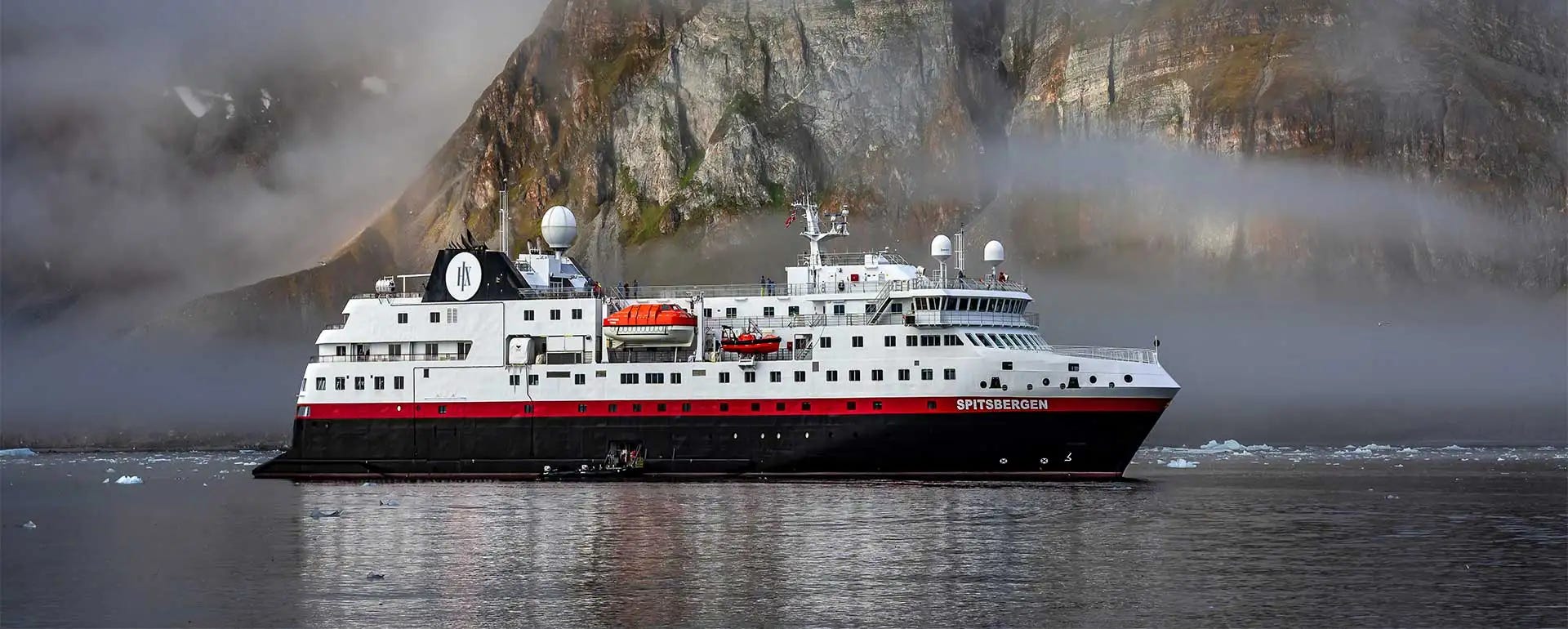
The bigger commercial exposure may be at sea. More than 40 expedition ships call at the Falklands each austral summer, from November through March — a season that begins in about six weeks. Many of those voyages originate in Ushuaia, the Argentine port at the tip of Patagonia, where the government has announced plans for a new integrated naval base explicitly intended, officials said, to help “monitor and control natural resources and sovereignty” in the South Atlantic. Ushuaia is also the fastest sea link to the islands, cutting nearly a day and a half off the alternative route.
Cruise operators say they have received no signal that itineraries are at risk. But the coincidence of a naval buildup at a departure port and a sovereignty dispute over the destination is the kind of thing insurers price in before it becomes a problem, not after.

Underlying all of it is money. Mr. Milei has called an offshore project near the islands, known as Sea Lion, an “urgent danger” that could give companies the capacity to extract oil within months, entrenching what he views as illegitimate British control. Argentina’s government has opened proceedings against 45 companies it says are linked to unauthorized drilling nearby, and lawmakers are considering a bill that would toughen penalties for resource extraction in the area.
The irony, largely unremarked on so far, is that the oil development Argentina wants to stop would also make the Falklands a larger, wealthier, more accessible market — more flights, more infrastructure, more reasons for travelers to come. Stopping the oil, in other words, may also mean keeping the islands exactly as thinly connected as they are today.
British officials have shown no sign of budging.
“The Falklands are British because Falkland Islanders choose to be British”
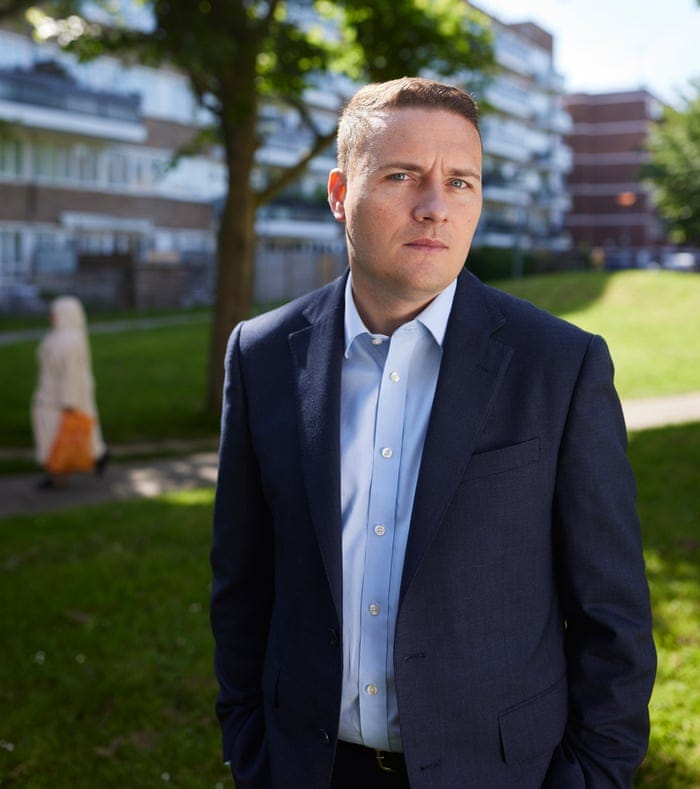
Wes Streeting
Defense Secretary Wes Streeting said, calling the country’s commitment “absolute and unshakeable.” Whether Washington’s ambiguity resolves in Britain’s favor, or Argentina’s, remains the open question.
For tour operators, cruise lines and their insurers, the practical checklist is narrower than the diplomacy: whether the United States makes any formal policy change, whether LATAM’s routing through Argentina holds, how cruise lines handle their Ushuaia departures this season, and how political-risk premiums move in response. None of it has shifted yet. But a dispute that seemed settled in 1982 is, once again, something the travel industry cannot simply ignore.