
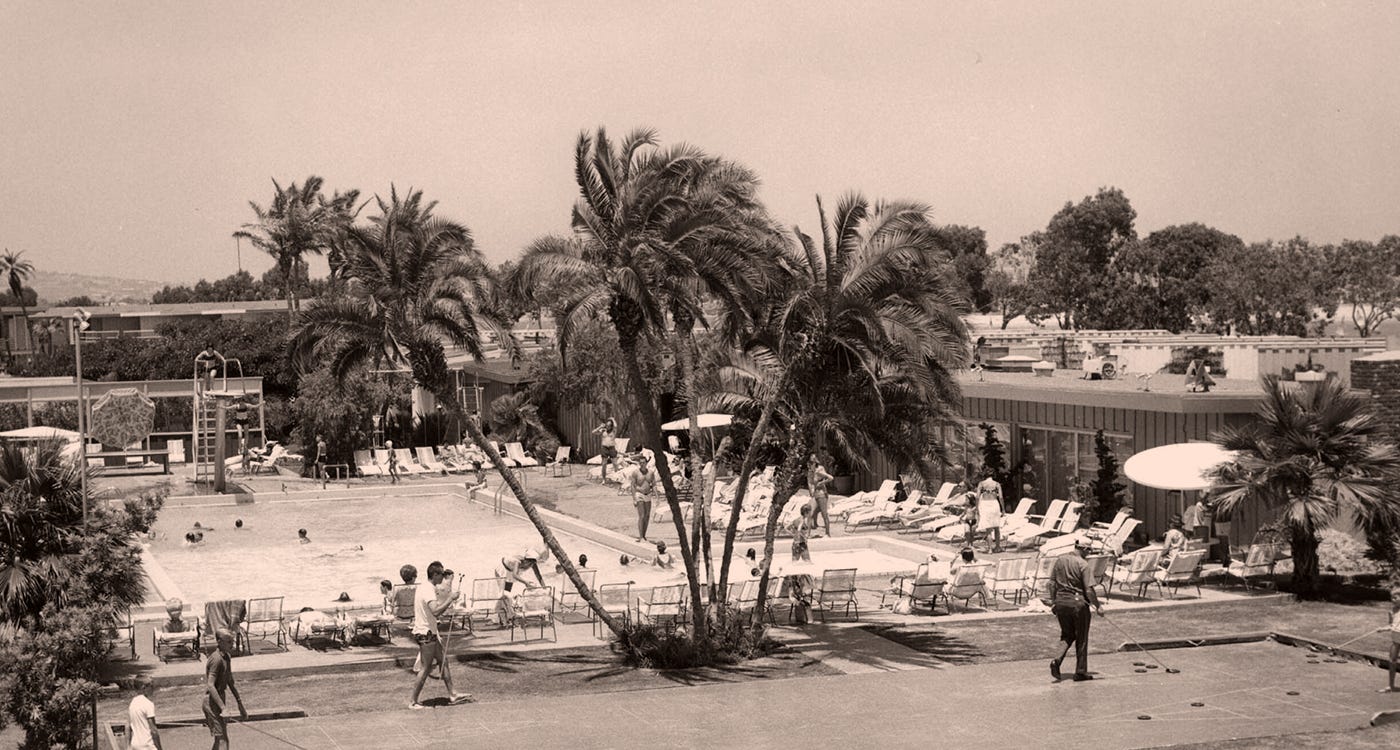
In the late nineteen-forties, Mission Bay was not yet a postcard. It was a tidal marsh at the edge of San Diego, and when the city offered parcels for commercial development, William and Anne Evans walked out onto the mud and saw a beach resort. In early 1953, the Bahia opened with fifty-two rooms, the first commercial lease on the bay. Across the water, on grounds the Scripps family had once used as a summer estate, the couple built the Catamaran, a tiki fantasia of carved idols and beach luaus, and in 1961 they bought a ferry and rebuilt it as a Mississippi sternwheeler, the Bahia Belle, to paddle guests between the two. In 1995, the family added the Lodge at Torrey Pines, razed it, and reopened it in 2002 as a Craftsman-style retreat that has held AAA’s Five Diamond rating ever since. Evans Hotels employs some fifteen hundred San Diegans, manages its own properties, and has never sold a core asset. In an industry of flags, franchises, and REITs, it is a rarity: a hotel company that is still, quite literally, a family.
Which is what makes the family’s current notoriety so strange. William (Billy) Evans, the founders’ grandson, did not go into hotels. He went to M.I.T., then to LinkedIn and the lidar company Luminar. In the fall of 2017, at a Fleet Week charity event in the Bay Area, he met Elizabeth Holmes, nearly a decade his senior, whose nine-billion-dollar blood-testing company was coming apart under federal scrutiny. He came from a family that sells calm; she was, just then, the most scrutinized woman in Silicon Valley. In 2018, Vanity Fair‘s Nick Bilton reported that Holmes had been at Burning Man with a new boyfriend, and the tabloids soon named him. Evans has said he proposed during a Taylor Swift concert. The couple married quietly and had two children, a son in 2021 and a daughter, Invicta, in 2023. His family, according to the Post, was alarmed.
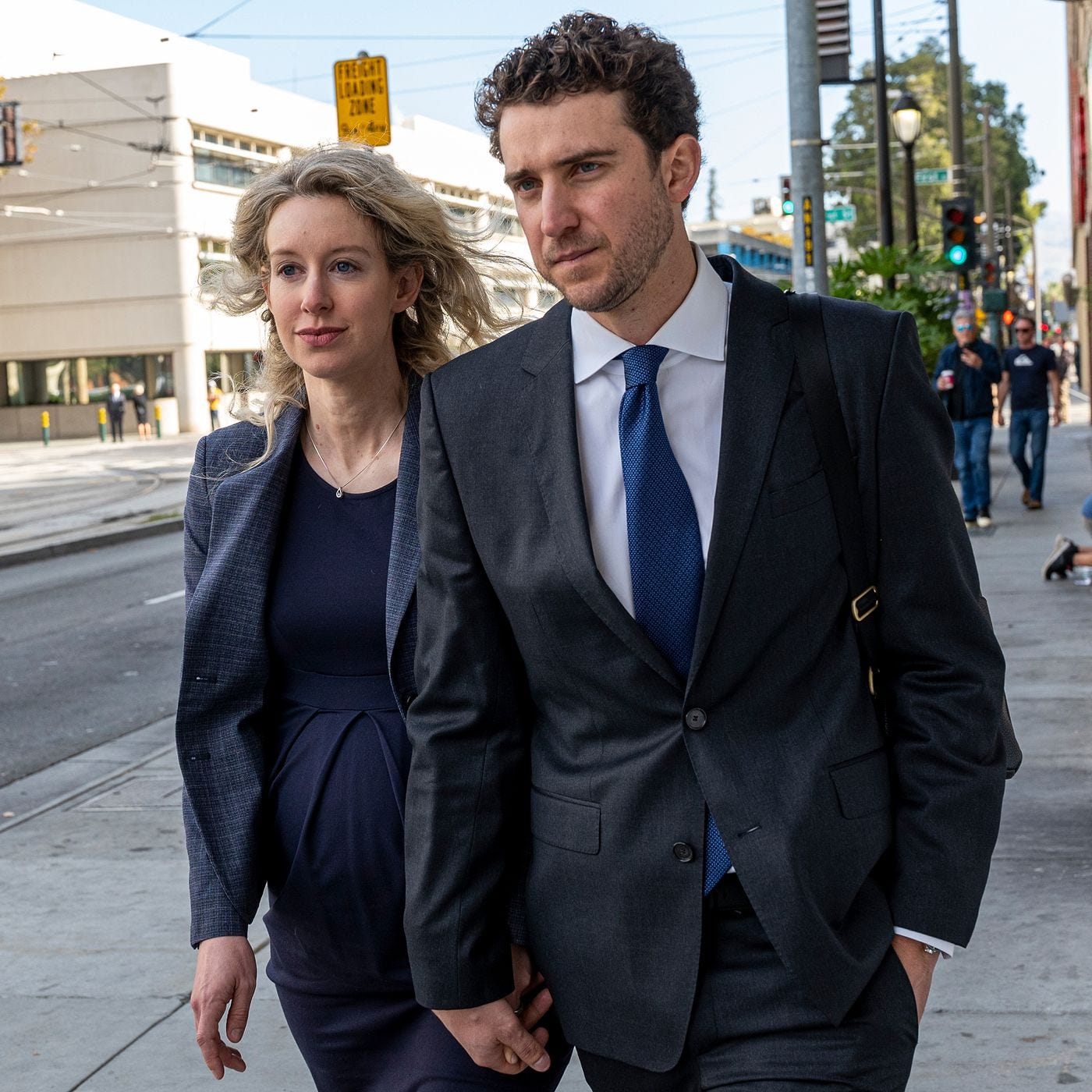
If they were, they kept it out of the lobby. Evans sat through nearly every day of Holmes’s 2021 fraud trial in San Jose. His father, Bill, who runs the hotel company, slipped into jury selection in a baseball cap and told reporters he was a curious citizen named Hanson who found the coverage unfair. It was, in its way, a hospitality instinct: smooth things over, protect the guest. In January 2022, a jury convicted Holmes on four counts of fraud; she was sentenced to more than eleven years and reported to a federal prison camp in Bryan, Texas, in the spring of 2023.
Evans did not wait for her. In February 2024, about two hours west of the prison, in Austin, he incorporated a startup called Haemanthus, after a flower sometimes called the blood lily. Its machine uses lasers to read the molecular signature of blood, saliva, and urine; it plans to start with pets and then move to people. The pitch, first reported by the Times in May 2025, sought more than fifty million dollars. Jim Breyer, the early Facebook investor, declined, for reasons he likened to his decision to pass on Theranos. The company insisted that it was not “Theranos 2.0” and that Holmes had no involvement, though NPR’s sources said she had been advising Evans from prison.
So who is paying? The tempting answer, for anyone who has ordered a mai tai at the Catamaran, is the beach. Haemanthus’s first three and a half million dollars reportedly came from friends and family, and later reports put its total at as much as twenty million. But nothing published shows Evans Hotels, the company, writing those checks. What a hotel fortune lends is subtler than cash: a surname that reads as old California money, a safety net, the presumption that a man with a Five Diamond lodge in his family is not the sort who needs to cut corners. In hospitality, that presumption is the only collateral that really matters. A hotel sells trust by the night.
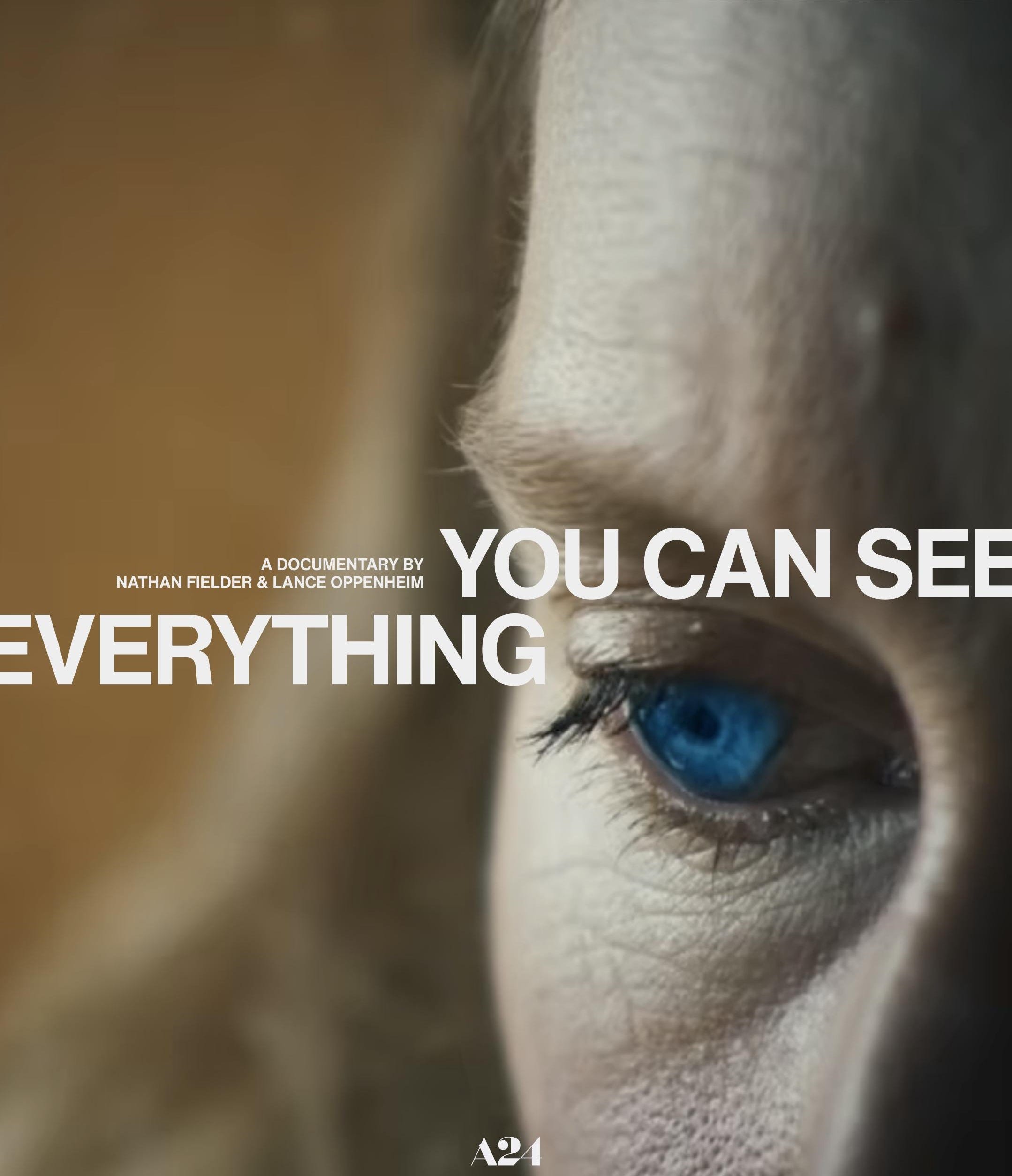
Then came the movie. You Can See Everything, directed by Nathan Fielder and Lance Oppenheim and released by A24 on October 16th, was, by its makers’ account, the couple’s idea. Holmes and Evans approached the studio; Evans had shown Holmes a clip from “Nathan for You” as a kind of audition tape. The cameras arrived thirty-four days before she was due in Bryan, and Fielder wound up sleeping in the guest house. The film was kept secret for three years, premiered unannounced at Telluride in September, and runs nearly three hours, which is about how long it takes to notice that its real subject may not be Holmes at all.
The first half is a domestic portrait, close enough to count pores. Holmes cannot see the joke in “Who’s on First?” and Evans comforts her, explaining that she simply thinks differently, a tender line that critics have noted doubles as a theory of her defense. He tells Fielder their relationship is about building “monuments of love.” Asked whether he ever worried she was scamming him, he concedes that he did, then wonders what she could have gained. When Fielder raises his family’s money, Evans answers that there are “a lot of different levels of wealth.” It is the closest the Lodge at Torrey Pines comes to a cameo.
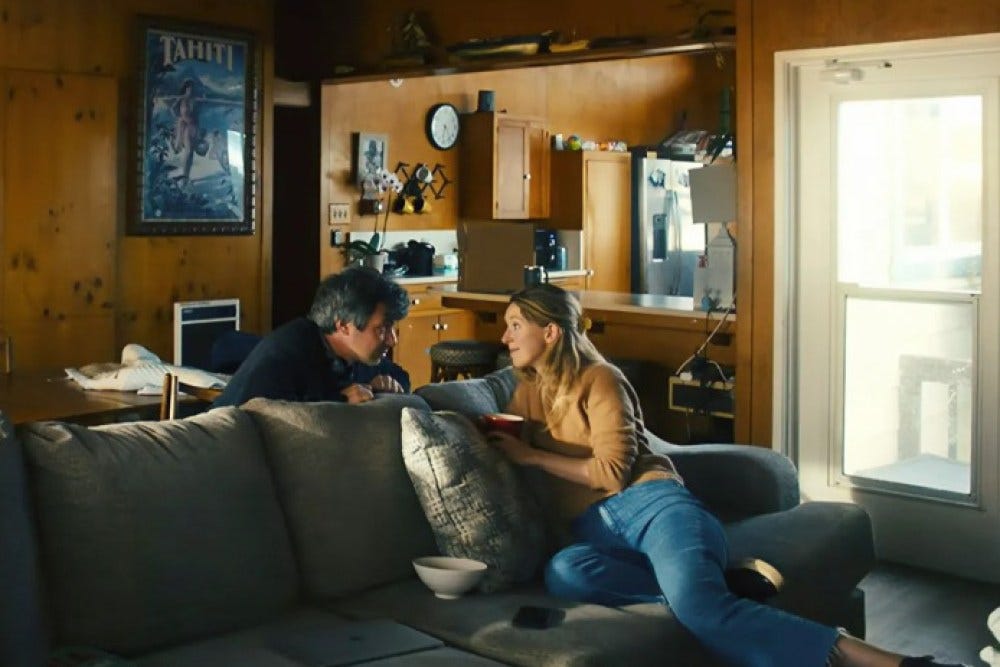
The second half is stranger. With Holmes behind bars, Evans becomes her proxy. The film shows the pair on calls with prospective partners about what is openly described as a Theranos 2.0, a company Evans means to build while she serves her time. Before she leaves, they scan her face and body and clone her voice so that she can keep appearing in videos. Evans acknowledges holding power of attorney and says he can post as her online. The loyal plus-one, it turns out, is the producer. Fielder told the Telluride audience that Evans began trying to exert “a lot of control over the process,” and that communication broke down; the movie becomes a contest over who gets to tell the story. Amanda Seyfried, who played Holmes in “The Dropout,” turns up and spars with Evans. Reviewers have been rough on him. One headline said the film makes Holmes look bad and Evans look far worse. Evans, for his part, told the All-In podcast that agreeing to it might have been “the dumbest thing I’ve ever done.”
For the travel trade, the lesson is uncomfortable. The great selling point of a family-owned house is the name over the door, and a name travels in ways a brand standard cannot control. Nearly every review of the film introduces Evans as a San Diego hotel heir; at least one names the Lodge. A guest searching for a tee time at Torrey Pines this fall will find, a few links down, a man brushing his teeth in the shower on an A24 screen. Holmes’s sentence was cut by a year in March, and she is now slated for an Austin-area halfway house in August, 2027: the same city as the startup.
The film’s title promises total visibility. The hotel business has always promised the opposite. Its whole art is the back of house, the laundry and the arguments kept out of sight so the guest sees only the view. On Mission Bay, the Bahia Belle still makes its slow evening loop between the two old resorts, lit up and in no hurry, a riverboat on a saltwater bay that has never pretended to be anything else. The Evans family built its fortune on that kind of honest illusion. Its heir has bet his name on a different kind, and this month they let everyone see everything.