


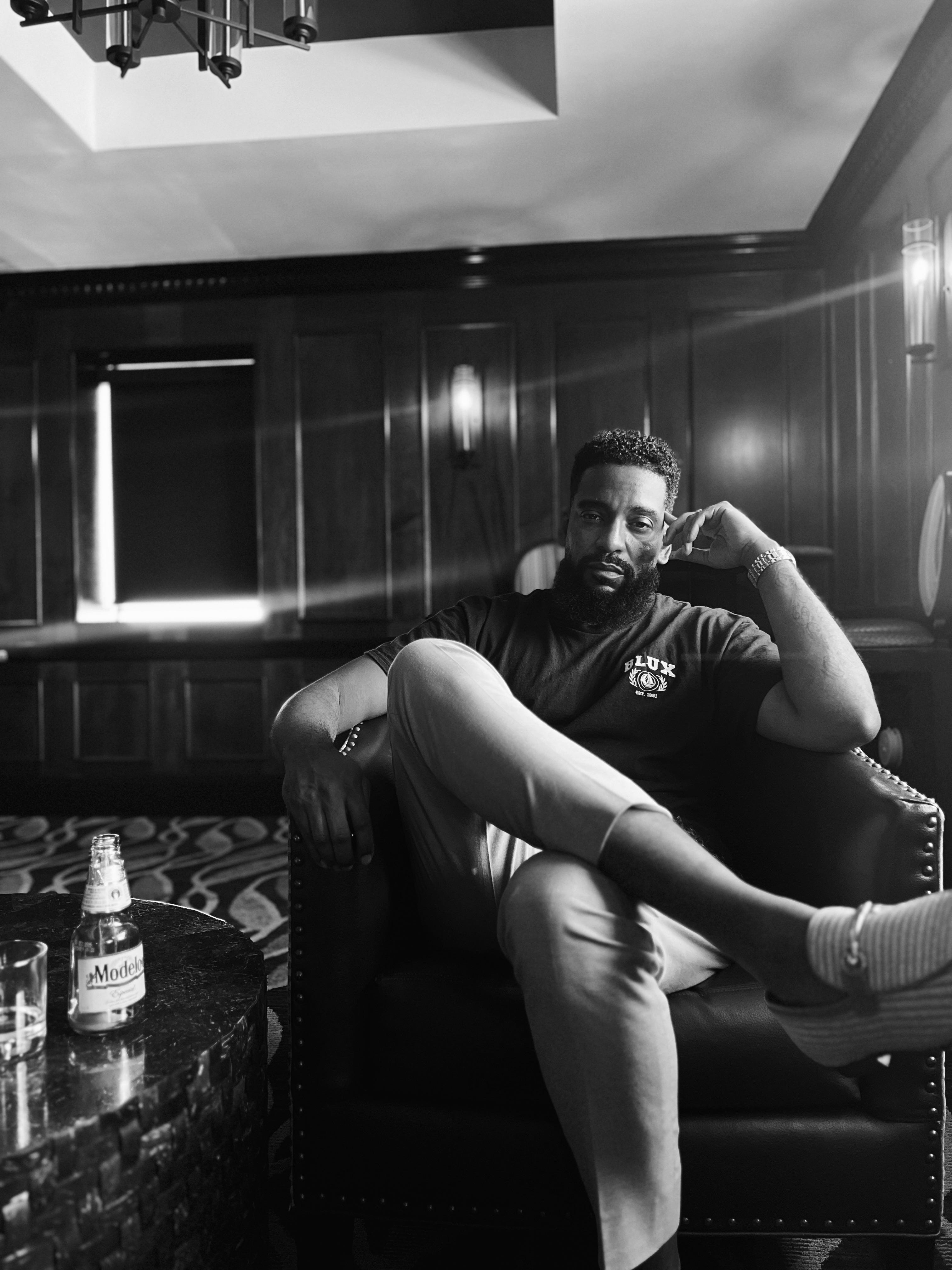
To sit with Rafael Peña, the founder of the travel collective BLUX is to engage with a man who views the passport as a curriculum and the horizon as a mirror. He speaks of travel not as an escape from reality, but as a rigorous confrontation with it. In a world increasingly obsessed with the “aesthetic” of exploration, Peña is performing a quiet autopsy on the American soul, contrasting our frantic materialism with the slow, resonant pulse of human connection found in the world’s far-flung corners.
Listen to Rafael Peña on Pay Me In Plane Tickets Radio
The Poverty of Abundance
Peña’s philosophy begins with a critique of the domestic status quo. We build cathedrals of consumption, yet find ourselves increasingly spiritually hollow. Peña posits that this materialism is a form of sensory deprivation. Travel, in Peña’s view, is the antidote to this calcification. By placing oneself in a context where your titles and possessions are illegible, you are forced to rely on the only currency that truly matters: your capacity for human connection.
The State of Travel Journalism
Perhaps most striking is Peña’s sharp rebuke of modern travel journalism. Travel has been reduced to a commodity—a backdrop for a personal brand rather than a transformative experience. He critiques the commercialization that suggests a country can be “done” in forty-eight hours or that a culture can be distilled into a curated photo gallery. To Peña, this is a form of intellectual tourism that avoids the necessary friction of true cultural exchange. Real travel, he insists, should be inconvenient. It should challenge your assumptions and leave you feeling slightly less certain about the world than when you arrived. Peña’s soundbites echo phrases announcing the body of today’s travel journalism have turned the world into a stage set for the ego. Places not to see them, but to be seen in them.
BLUX: A Legacy of Departure
It was from this intellectual restlessness that BLUX was born. On the surface, BLUX offers luxury travel—private villas, seamless logistics, and exclusive access. But Peña’s definition of “luxury” is subversive. It isn’t about the thread count of the sheets; it’s about the depth of the engagement.
BLUX operates on the principle of “reciprocal legacy.” Peña’s model ensures that these high-end experiences are inextricably linked to the prosperity of local communities. It is luxury with a conscience, designed to foster a sense of stewardship rather than ownership.
Through BLUX, Peña is attempting to build a bridge between the resources of the West and the profound cultural wealth of the global North, East and South. He envisions a world where the traveler is not a consumer, but a student—and where the “luxury” is the privilege of contributing to a community’s future rather than just taking a photo of its past.
Ultimately, Rafael Peña is advocating for a new kind of literacy—As we navigate an increasingly fractured global society, Peña’s message is a resonant one: that our self-worth is best measured by how well we can see ourselves in the “other,” and that the most profound journey is the one that leads us, finally, away from our things and toward each other.